





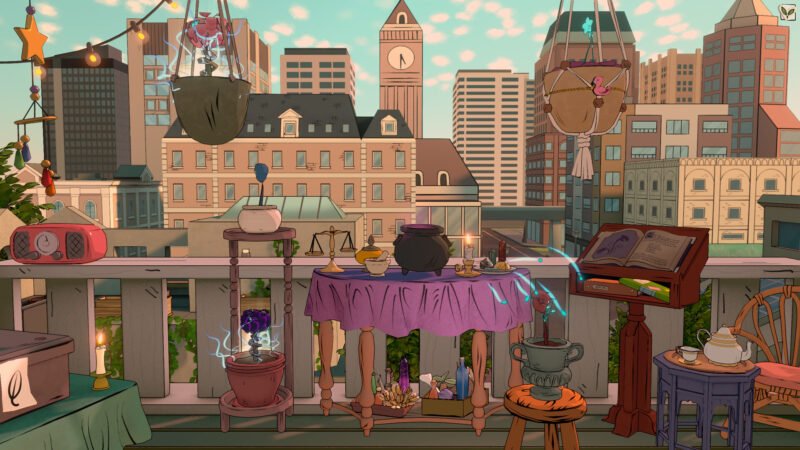
Greenhearth Necromancer is a cozy, witchy, semi-idle game about caring for living and undead plants alike. Grow cute plants in your balcony garden, cast spells, and brew potions, enjoying the chill idle gameplay and ambience throughout your day.
Developed by: Silverstring Media Inc
Played on: Steam
Length: ~9 hours
A review key was provided by indie.io.
Greenhearth Necromancer has the kind of development story that I love. The idea was first conceived in a game jam, then developed into a fully fledged project after two years of production with financial support from the Canada Media Fund. The final result is a semi-idle gardening game that blends witchy vibes, authentic and diverse stories, and a magical approach to gardening that sets it apart from most farming simulator type games.
You play as Echo, a young necromancer who is bequeathed your late grandmother’s garden after her death. Not blessed with her green thumb, you must rely on necromancy and the help of your grandmother’s familiar spirit, Compostifer, to nurture a garden of the undead. As you tend to your garden, you also get to know your neighbours and learn the legacy that your grandmother left behind.
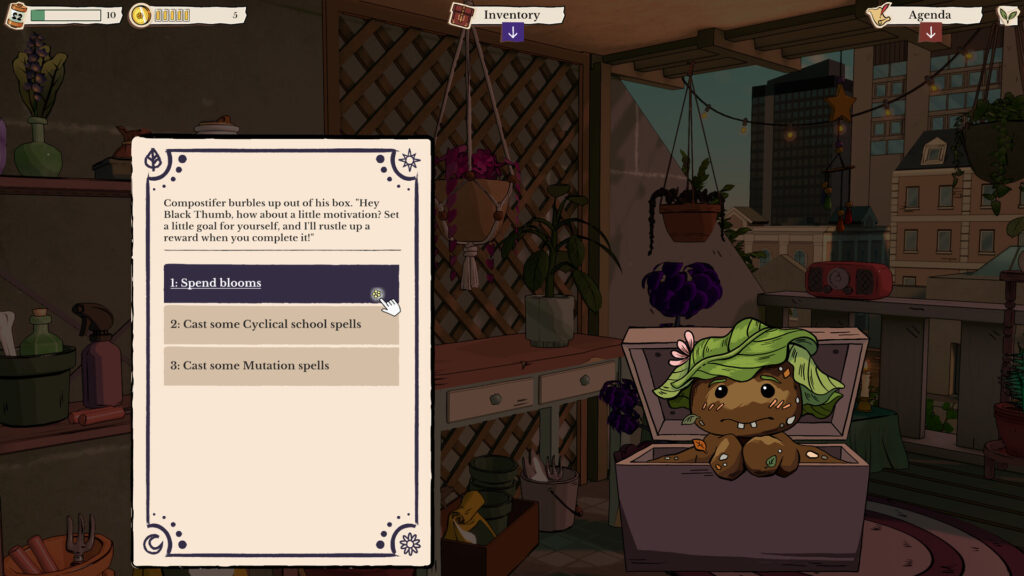
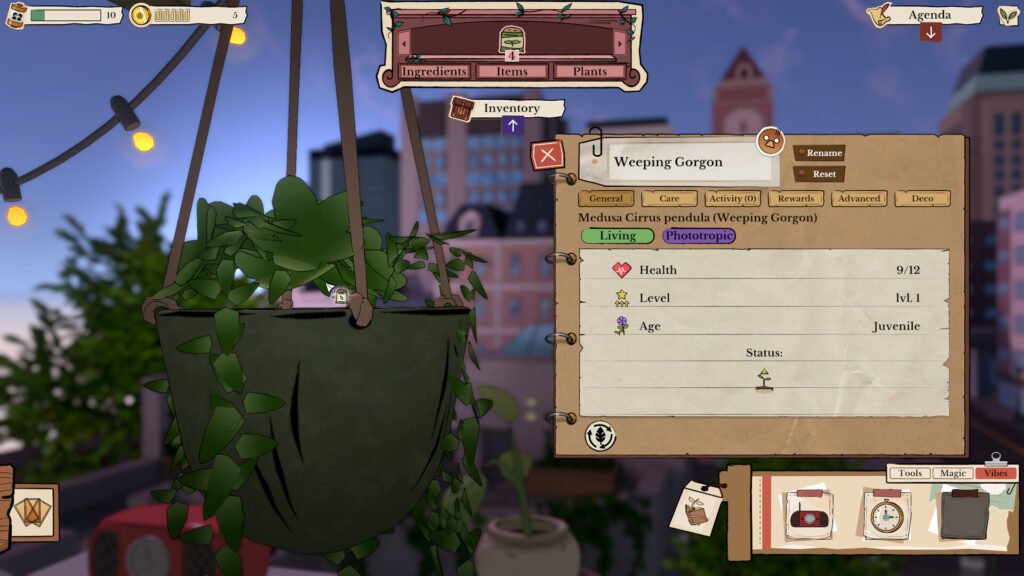
Greenhearth Necromancer has a gameplay loop that takes some getting used to; mainly because it goes against everything you’ve learned from other gardening or farming simulators. Of course, it begins with trying to keep your living plants alive. You have to water and fertilise them regularly, keep them free of harmful pests, and prune them regularly to encourage growth.
But keeping living plants alive is harder than you think. Plants need the right amount of sunlight, water, and plenty of attention if you want to keep them alive. Most importantly, living plants aren’t receptive to your necromantic magic, and there’s only a handful of non-magical solutions available to you.
Thankfully, the goal of Greenhearth Necromancer isn’t to keep your garden alive, but instead to embrace death as a natural part of the cycle. When living plants in your garden die, you can resurrect them with necromantic magic to transform them into undead plants. Undead plants, much like living plants, require water, fertiliser, and pruning in regular intervals. But unlike living plants, you can cast powerful spells to do everything from speed up growth to repelling plants. That’s where the game really begins.
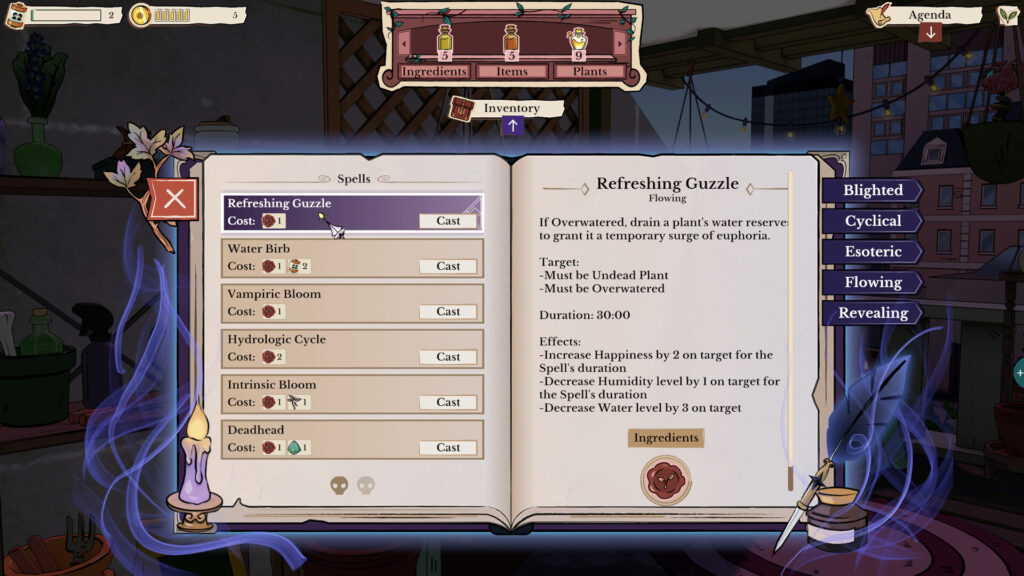
Most of the gameplay in Greenhearth Necromancer comes down to mastering your necromantic magic. There are five schools of magic in total, and each of them do a mixed variation of the same thing, but each cost different resources. It’s up to you whether you want to become an all-rounded witch, or rely on one or two schools of magic to get by, but expect to do a lot of reading either way.
Each of the spells are a delicate balance of buffs and debuffs, with their own time limits and resource costs. I found it impossible to memorise the names and terms for everything, and had to keep referencing my Spell Book to make sure I was casting the right ones. But once you get used to your spell roster, it can be pretty satisfying to stack different spell effects onto undead plants and make them self-sufficient — at least for awhile.
Spells aren’t the only thing in your arsenal as a witchy gardener. You also have a cauldron where you can brew fertilisers, pesticides, and potions. Each batch takes five minutes to brew, and you can queue up multiple tasks to automate in the background. The same goes for one-off tasks like learning new spells or conducting plant research. This is when you can take a break from active play for a short while.
It’s important to note that Greenhearth Necromancer is only a semi-idle game, and not a fully idle experience. The game definitely punishes you for leaving it alone for too long, and I learned this the hard way after I came back to a completely dead garden more than once.
I found that the safest interval to check the game is once every 10-15 minutes. You can also rely on in-game sound effects that tell you when your timers are up, or when your plants are in danger. These are all helpful features to have, but definitely proved a little too distracting when I was trying to juggle between play time and work time.
Instead, I found it best to play this game in short daily bursts. Pop in for an hour or two, then pop out to focus solely on my tasks for the day. The game even encourages this through its Market card, which allows you to participate in the in-game flea market, and the Bee event, which invites spectral bees to produce honey from your garden. Both of these cards only spawn once every eight hours, or to put it simply, once every real-life day.
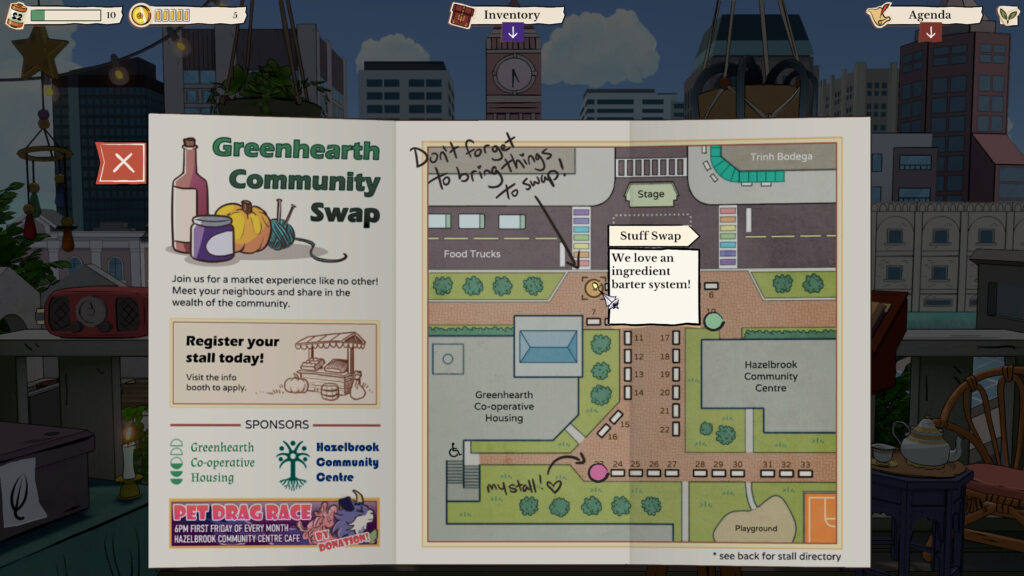
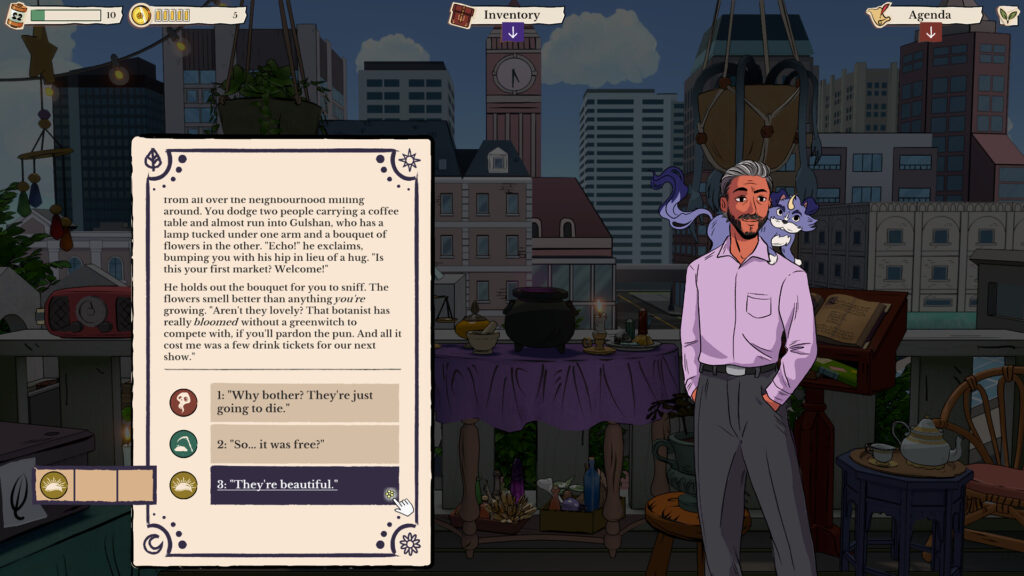
Greenhearth Necromancer’s narrative operates in a similar fashion. The game tells its story through randomised Event Cards which spawn over time. Playing each card triggers an event with one of your neighbours in the commune, or you can discard each card to earn a small amount of resources. This system colours the game with small narrative disruptions, while leaving the ultimate choice up to you. Whether you decide to play or discard, Event Cards will continue to spawn over time regardless.
The narrative itself is one of the main highlights of the game. With a heartfelt story written by the BAFTA-nominated writer of I Was a Teenage Exocolonist, it handles the complexities of early adulthood, grief, and community with stunning delicacy, against the backdrop of a garden that is both alive and dead in equal measure. Much to my surprise, there was even an overarching narrative that unfolds over time, but it might require days or weeks of persistent playtime before you reach its conclusion.
Greenhearth Necromancer is the kind of game that is rare today. It is a game that demands you slow down and take your time with it, and truly can’t be enjoyed if you don’t give yourself to the experience. While I found it difficult to get around the magical jargon and occasionally overcomplicated gameplay, I did enjoy the type of experience it was trying to curate; even if the execution was a little rough around the edges.
Verdict: An Ungardening Game
Greenhearth Necromancer is an exploration about grief and early adulthood, disguised in the form of a semi-idle gardening simulator. Unlike most games of this nature, it features real-time gated events that are designed to accompany you across days if not weeks. While the gameplay is a little involved for an idle game, I found its strong narrative and cozy vibes worth the time spent.