




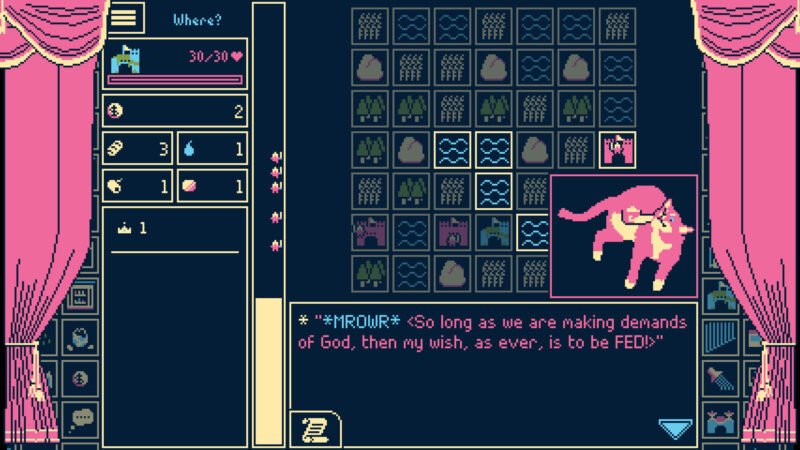
Titanium Court is a match-3 tower-defense roguelike, or maybe it’s a tower-defense puzzle strategy card roguelite? Creator AP Thomson would describe Titanium Court as a critically-acclaimed surreal masterpiece if not for the curse he bears as a punishment for his hubris.
Developed by: AP Thomson
Played on: Steam
Length: 15 hours (31 hours for completionists)
A review key was provided by Two Frogs In A Trenchcoat.
Call it an indie gaming trend, or a reclaiming of the genre from our mobile overlords, but there has been a recent resurgence of match-3 games on PC. The genre itself sits in the intersection between universally known and widely overdone. Everyone and their mother has played at least a round or two of Candy Crush or Bejeweled in its hey day, but very few will claim match-3 games to be their favourite genre of all time.
Then comes games that combine familiar match-3 mechanics with other genres, from Spirit Swap that injects speedy match-3 rounds into their dating simulator, to Creepy Redneck Dinosaur Mansion 3 where you fight dinosaurs by matching DNA bubbles. But the one that truly comes out of the left field is Titanium Court, a match-3 tower defense roguelite that won the Seumas McNally Grand Prize at this year’s Independent Games Festival.
If that alone wasn’t enough to convince you to play it, allow me to reiterate that Titanium Court is best experienced completely blind. Let the game take you on its intended surrealist experience and enjoy the uncomfortable meta rollercoaster that comes with it. I can assure you it’s more than worth the 15-20 hours you’ll spend finishing it.
Are… you still there? Alright, fine. Read on.
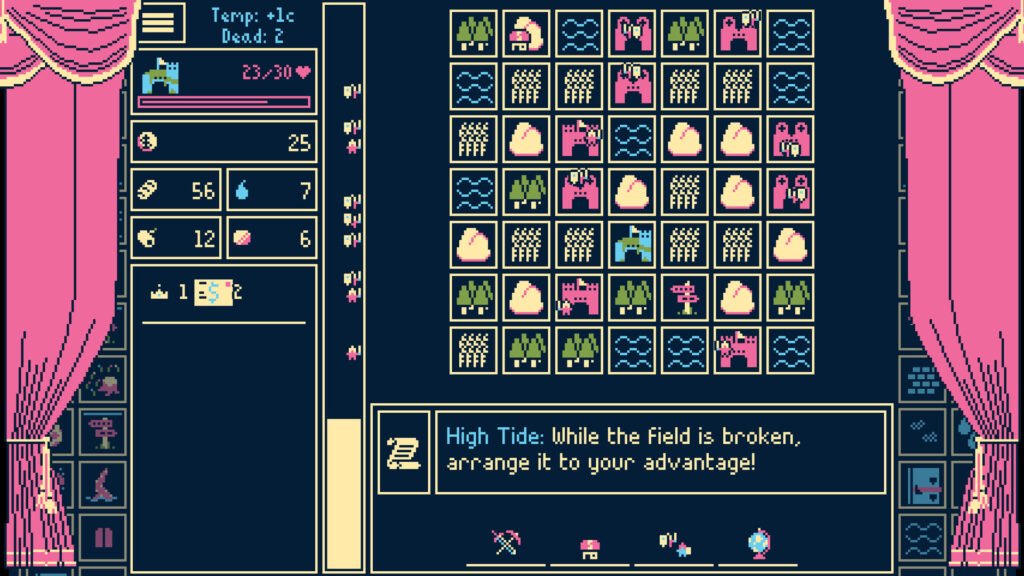
If I’m being honest, Titanium Court is an acquired taste. Match-3 and tower defense aren’t genres that you typically stumble into, and those who do, tend to be looking for a specific kind of challenge. But if you’re willing to step out of your comfort zone, this strange fusion of mechanics made for the most absorbing gameplay experience I’ve had in years.
In the game, you essentially take on the role of a war general, commanding the Titanium Court and its denizens through an endless, cyclical war. Each run begins with a match-3 phase that allows you to manipulate your battlefield, then a tower defense phase where you deploy troops to battle or collect resources. If you survive long enough to defeat the boss, then in true roguelite fashion, you earn the pleasure of experiencing it all over again.
While match-3 games tend to focus on matching speed and creating the biggest matches, Titanium Court takes a more tactical approach that places emphasis on positioning. You have a limited number of turns to place the Court in an advantageous position before the start of battle, whether its by matching and removing enemies, positioning natural obstacles around your tower, or directly moving the Court into a better position.
But once the battlefield is locked, you’re forced to reckon with the consequences of your match-3 skills. Troops can be deployed into battle to protect the Court, but each troop costs a certain amount of resources. You can also choose to tank enemy attacks, but your run comes to an end when the Court’s health depletes completely and you’re brought back to square one.
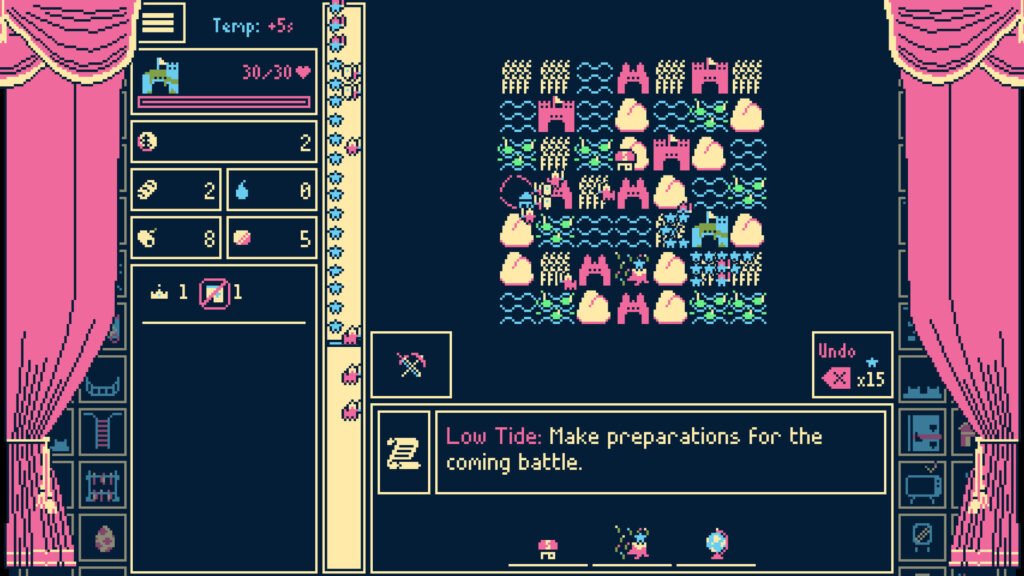
Besides the absolute genius of combining two seemingly unrelated genres and making it work, what struck me immediately about Titanium Court was how much room there was for variance. It’s not just different enemies, but different environments, merchants, abilities, and even starting builds (or “jobs”) that completely change your experience with each new run. You can play the game defensively, offensively, and even economically, with each playstyle leading to a completely different narrative outcome.
While the goal with most roguelites is to reduce randomness, whether it’s through permanent upgrades or introducing more predetermined elements, Titanium Court largely places the burden on the player to simply become better at the game. Most upgrades are restricted to the run and don’t carry forward, and any buffs (or “comforts”) are completely randomised at the start of each run.
The result is a game that you cannot play with your brain turned off. Every single run requires you to think on your feet, which makes each victory feel extremely earned, but can also be mentally taxing to play for long hours. Personally, I couldn’t tear myself away from Titanium Court even after facing the same boss for hours; partially because I’m an insufferable completionist, and partially because the developer keeps dangling dopamine hits like these in the middle of my runs:
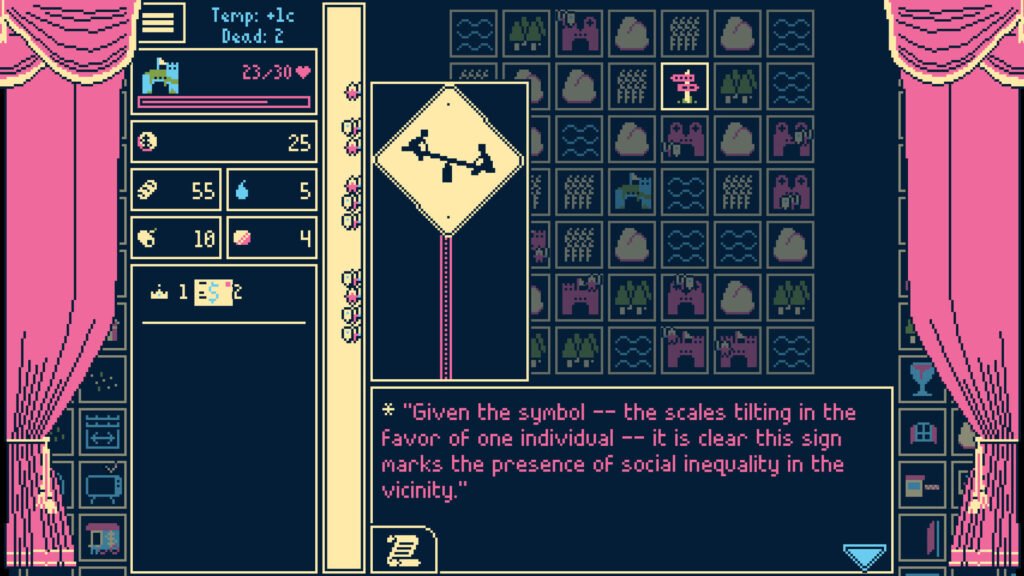
Titanium Court would be a decent game without its writing, but its unnecessary verbosity is what makes the game such an absorbing experience. AP Thomson has such a distinct voice and sense of humour as a writer that every bit of dialogue is a complete delight to read. What more when it’s packaged together with this surreal, Wonderlandian tale about the power of fiction and player agency.
Despite its roguelite execution, there’s also a surprisingly meaty linear narrative here. Whether you succeed or fail, there’s a bit of new narrative that gets unlocked each time you complete a run. A lot of it is meta, a lot of it is unexpected, and as a great bonus, none of it is going to make sense to anybody who hasn’t played the game. (What do you mean I have to merge the three goats to play Monopoly?)
At this point, there is nothing I can say about Titanium Court that wouldn’t spoil the entire experience for you, so if you’re still here eight hundred and seventy words later, consider this a sign to pick up one of the best indie games of the year. I’ll see you at the Feast.
Verdict: Uncomfortably Good
Titanium Court is one of the most absorbing gameplay experiences I’ve had in years. Not only is the game a masterful example of narrative game design, but the fusion of match-3 and tower defense mechanics makes for a uniquely addictive approach to both genres. Easily one of the best indie games of the year, if not the decade.