



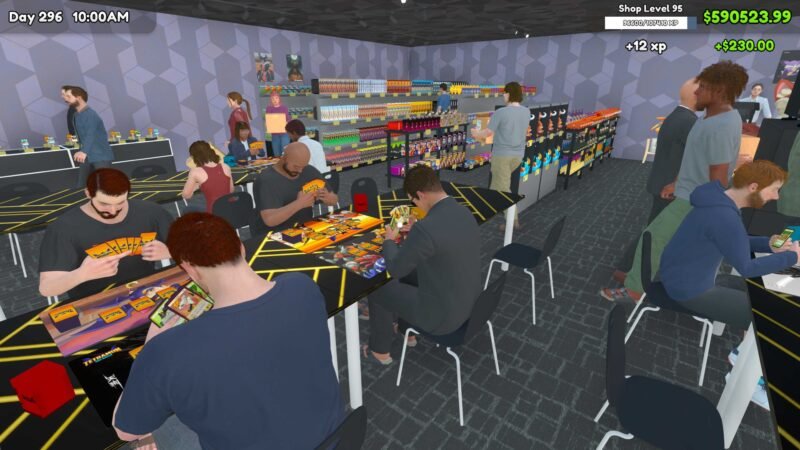
Open your own local game store. Stock shelves with the latest booster packs, or crack them and collect the cards for yourself. Set your own prices, hire staff, host events, and expand your card shop.
Developed by: O.P.Neon Games
Played on: Steam
Length: 30 hours (90+ hours for completionists)
A review key was provided by Goldpact Goblins.
Running a trading card shop sounds like serious business. You need to manage stock, watch prices, keep customers happy and somehow make enough money to expand. Then, five minutes later, I am throwing a delivery box across the shop because walking it over to the shelf feels like too much effort.
That contrast is exactly why TCG Card Shop Simulator works. It gives you enough management systems to make running the shop satisfying, but it never becomes so strict that you cannot mess around with them. I can run an efficient card empire one day, then try completely stupid business ideas the next just to see what happens. Surprisingly, the game usually has an answer for my nonsense.
With TCG Card Shop Simulator reaching its full 1.0 release after a long Early Access run, it has grown far beyond the simple pack-opening simulator it first appeared to be. More importantly, it understands what makes this type of game difficult to put down.
A Simple Loop That Becomes Dangerously Addictive
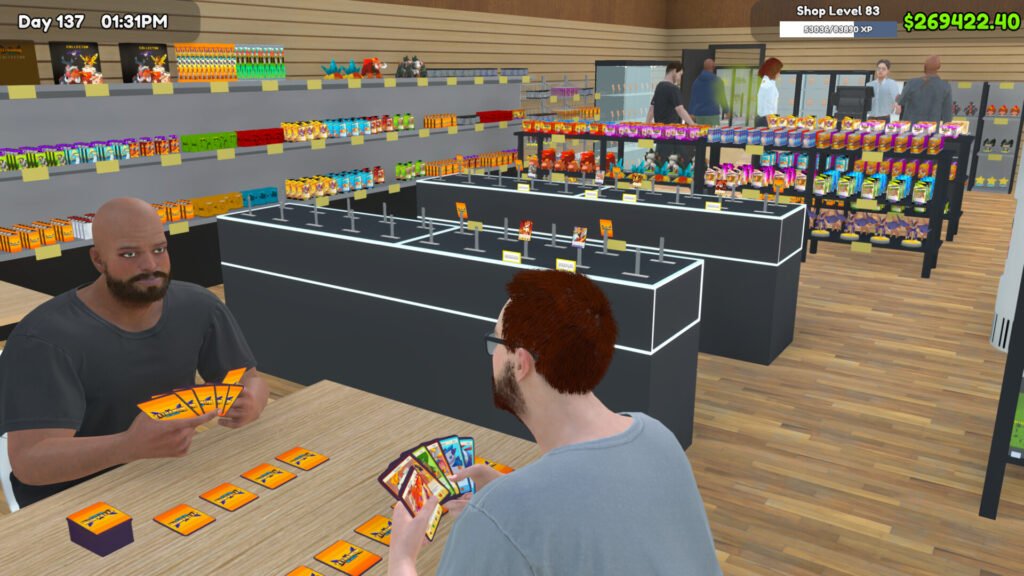
The basic gameplay loop sounds almost too simple. Buy products, put them on shelves, set a price, sell them, make money and buy more products. Yet TCG Card Shop Simulator keeps adding small choices around that loop.
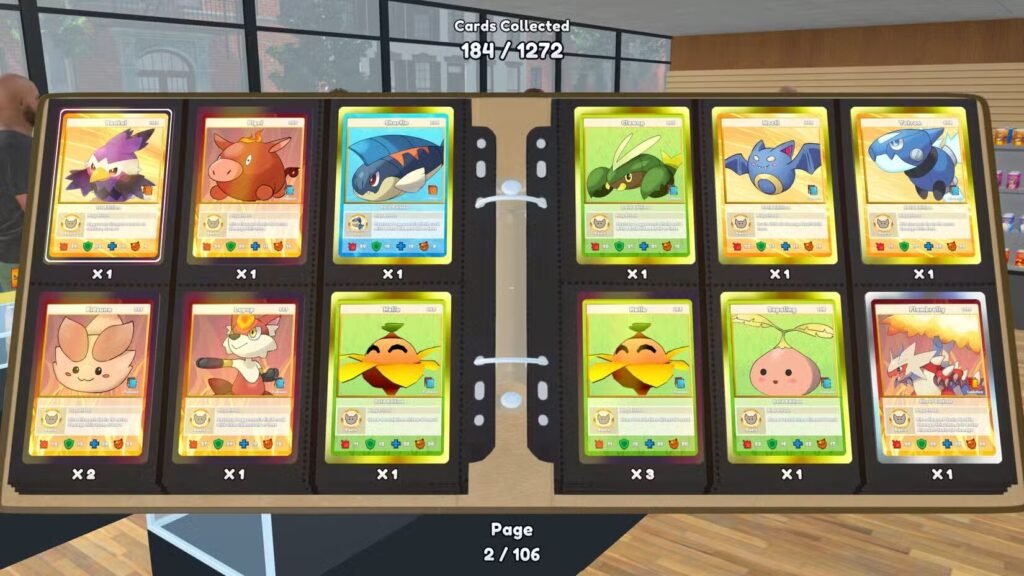
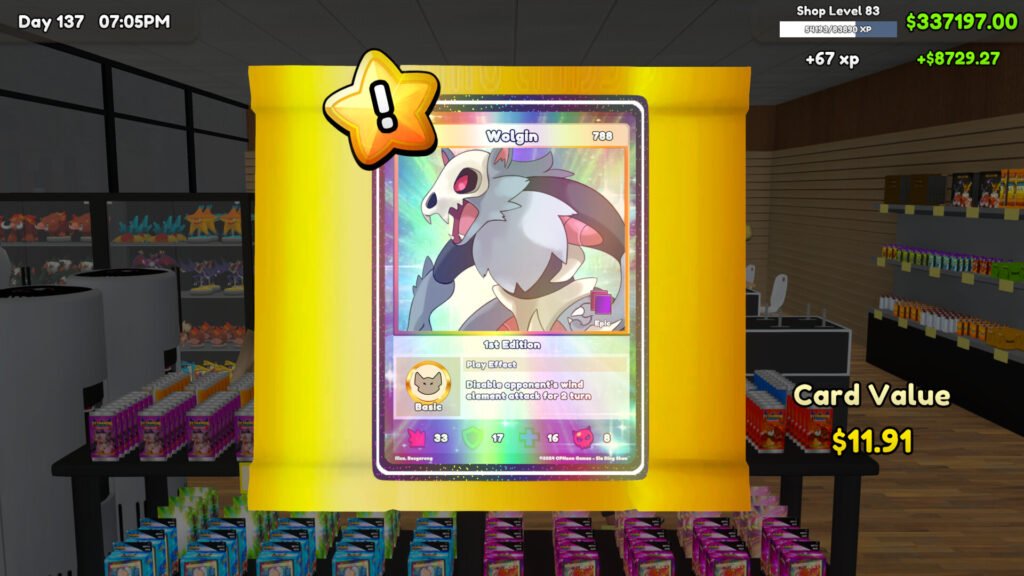
You decide which booster packs deserve shelf space, how much customers will pay and whether an expensive card belongs in your collection or inside a display case with an equally expensive price tag. Then there is another problem: you can open your own stock.
This is where every responsible business decision immediately starts falling apart. A box of booster packs represents potential profit, so logically I should put those packs on a shelf and let customers buy them. Alternatively, I could open all of them myself because maybe there is an incredibly rare card inside.
One more pack quickly becomes another, and suddenly the box is empty. I have achieved absolutely nothing except adding several average cards to my collection.
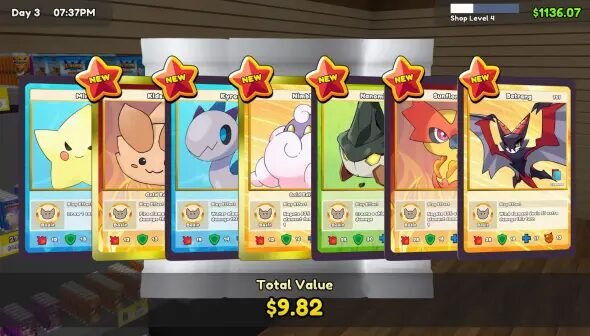
That is what makes the loop so effective. The business and collecting systems constantly fight for your attention. Do I want to become rich, or do I want shiny cardboard? Apparently, shiny cardboard wins surprisingly often.
That obsession also appears often in player feedback. Pack opening and collecting remain some of the biggest reasons players keep coming back.
When Bad Business Decisions Become Good Entertainment
What I appreciate even more is how much fun TCG Card Shop Simulator allows outside its intended shop-management loop. Simulator games often become more interesting when you stop asking, “What should I do?” and start asking, “What will the game let me get away with?”
So naturally, I started experimenting. What happens if I set ridiculous prices? Can I convince somebody that an ordinary product deserves a huge mark-up?
Sometimes, somebody still buys it. More often, customers complain, refuse to pay or simply walk away. That might sound like a small detail, but it makes these experiments genuinely funny because the game does not simply tell me, “You cannot do that.” Instead, it lets me try and then makes me deal with the result.
Retail Management, Except I Keep Throwing the Stock
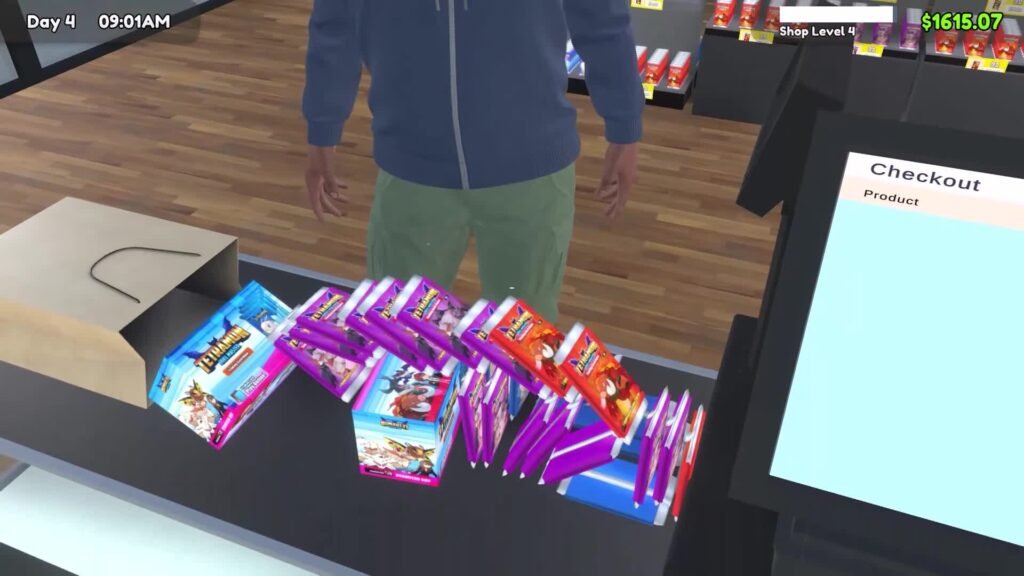
Throwing things around creates the same kind of entertainment. Why carefully carry a box when I can launch it toward the general area where I need it? Sometimes it works. Other times, I create more work for myself. Either result is entertaining.
That is the important part. TCG Card Shop Simulator rarely feels like it is fighting against the player. Its systems create limits, but there is still enough freedom to behave like either a smart businessman or somebody who should never legally operate a retail store.
There are even customers whose body odour becomes an actual shop problem, and you can spray them. That sentence alone probably explains the tone of this game better than most reviews ever could. These strange little interactions are what give the game personality. They turn normal shop tasks into stories you actually remember.
Beneath the Chaos Is a Proper Management Game
Underneath the comedy sits a satisfying progress system. Your small store gradually becomes larger, more product types become available, better furniture gives you more ways to organise the shop, and employees eventually take over simple tasks.
You also begin thinking differently as the store grows. Early on, every sale matters. Later, I am thinking about shelf space, customer flow, staff and whether another part of the shop can generate more money.
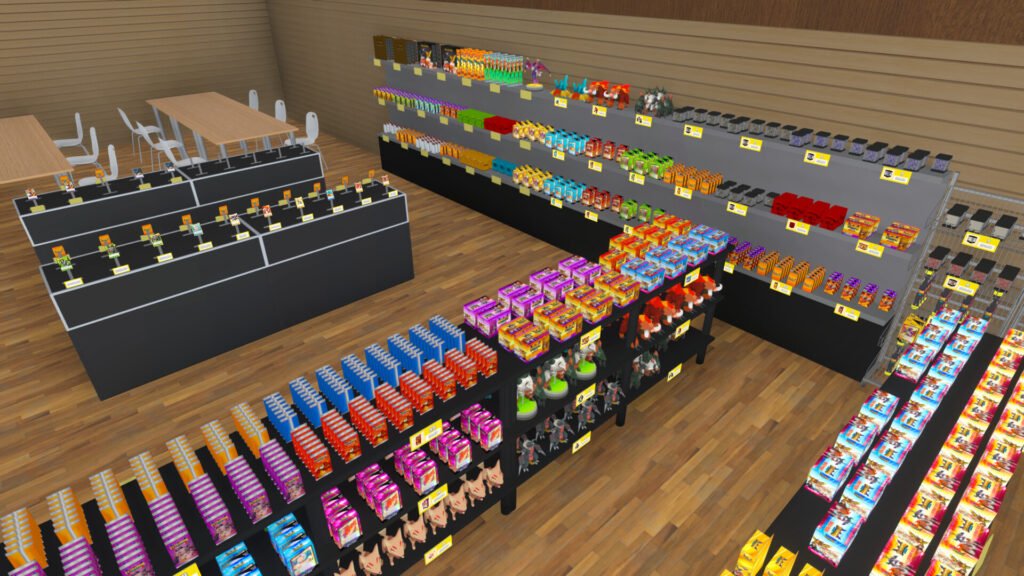
Card trading and grading add another layer to the economy, while tournaments also give your play tables more purpose. None of these systems become too complex, and I actually think that helps.
TCG Card Shop Simulator understands that its appeal comes from constantly giving the player small things to improve. It never forces you to study charts or manage dozens of complicated menus. As a result, it is extremely easy to play while listening to music, watching something else or relaxing after work.
You tell yourself you will manage the shop for another 20 minutes.
It will not be 20 minutes.
Version 1.0 Finally Lets You Play the Cards
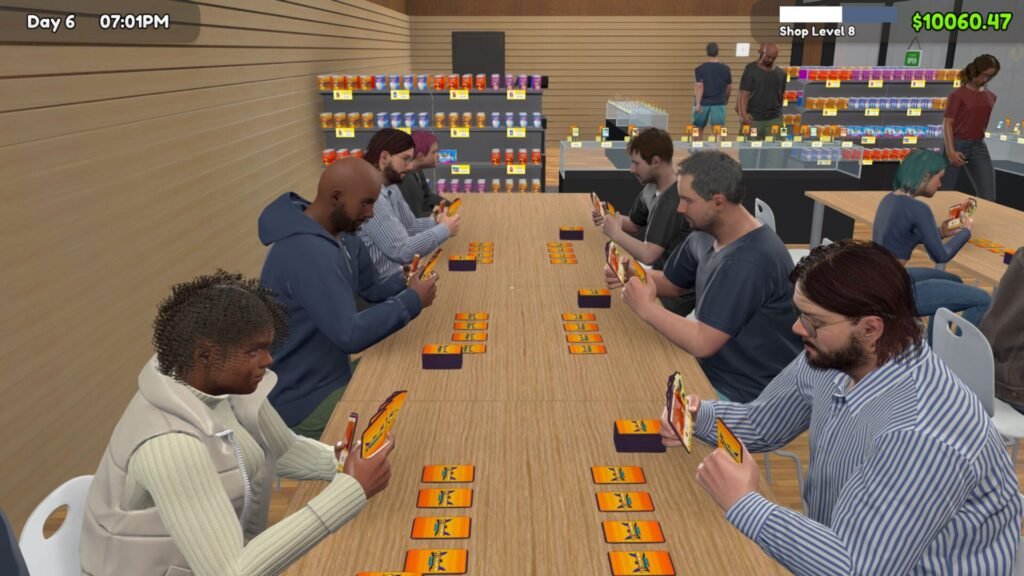
One of the biggest additions around the 1.0 release also helps solve a long-term problem with the game. You can finally play Tetramon.
Until now, players have spent countless hours collecting these cards while customers apparently got to enjoy the actual card game. We were basically merchants watching everybody else have fun.
Tetramon Duel Master changes that by turning the fictional TCG into a real playable game. Players can build 50-card decks, use elemental areas, evolve Tetramon and fight opponents while trying to reduce their Tamer Points to zero. New Tetramon cards also give collectors even more to chase.
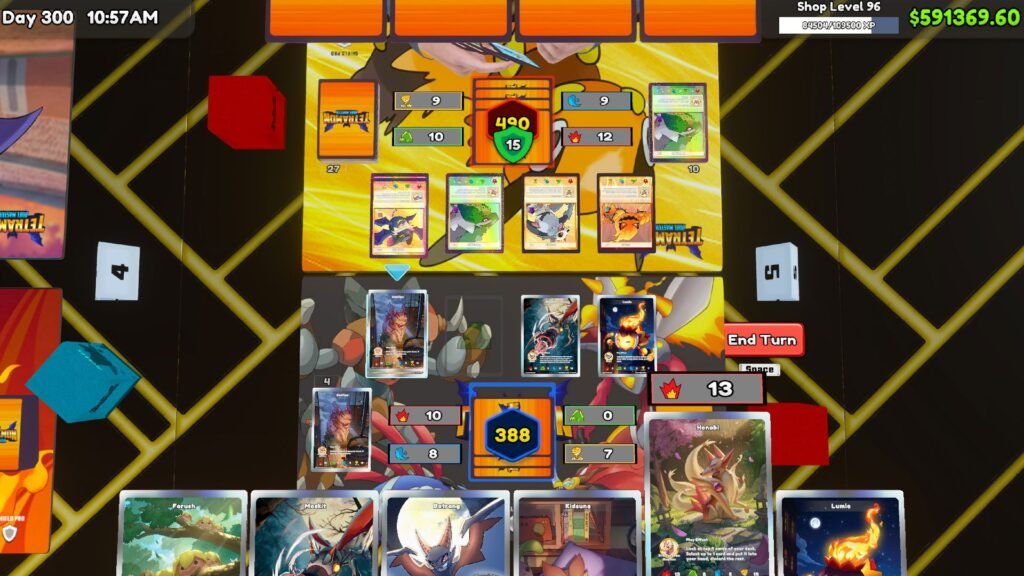
This change is more important than simply adding another side activity because it gives your collection another purpose. Finding a rare card no longer needs to create only two questions: do I keep this, or how much can I sell it for?
Now there is another question: Can I actually use it?
For a game built heavily around collecting, that extra layer could help its long-term appeal. It also makes the entire card shop idea feel more complete because you are no longer just selling a fictional card game. You can finally understand why your customers are interested in playing it.
The Grind Eventually Shows
However, TCG Card Shop Simulator does have one weakness that becomes harder to ignore the longer you play. Eventually, you become too successful.
At first, running the shop keeps you constantly moving. You restock shelves, work the register, adjust prices, order products and solve whatever problem appears next. Then you hire employees, and eventually those employees become good enough that large parts of the business start running themselves.
Ironically, achieving your goal can make the game less interesting. Once the shop operates smoothly, you spend more time opening packs, chasing collection goals and repeating familiar tasks.
This remains one of the most common complaints from long-term players. Even many positive reviews point out that the later game can become repetitive once most of the shop work has been solved.
The Late Game Loses Some of Its Chaos
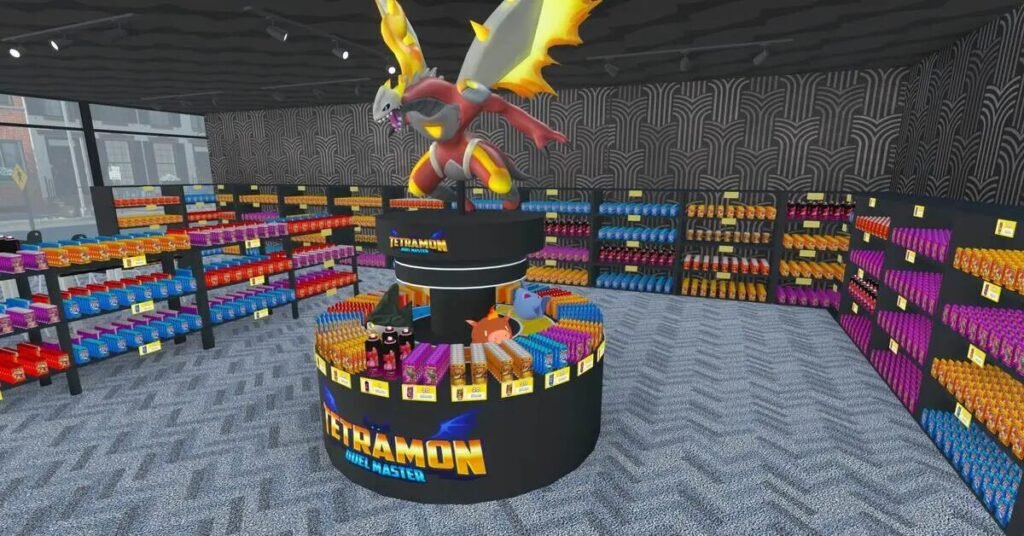
That does not mean the game suddenly becomes bad. Pack opening remains addictive, collecting rare cards still feels rewarding and expanding the store is satisfying. The problem is that fewer new problems appear. Once your staff can handle the basic work, the game loses some of the chaos that made the early hours so enjoyable.
The presentation can also look fairly basic. Nobody will confuse TCG Card Shop Simulator with a graphical showcase, and some NPCs and parts of the environment have that familiar low-budget simulator look.
Still, I rarely cared. The visuals communicate everything clearly, while the cards themselves provide most of the excitement. More importantly, the game creates personality through its systems rather than expensive graphics.
I remember my strange customers, my terrible pricing experiments and the times I ruined my own stock plan because I wanted to open more packs. Those moments matter more than realistic shelf textures.
Why TCG Card Shop Simulator Works
TCG Card Shop Simulator succeeds because it understands something many simulator games miss: being efficient cannot be the only reward.
Building the perfect store is satisfying, but deliberately running an imperfect one can sometimes be even more entertaining. The game gives you enough money pressure that decisions matter, yet enough freedom to mess around.
That means you can approach it almost however you want. You can become an obsessive collector, build a highly efficient retail machine, open every booster pack you were supposed to sell, charge stupid prices or throw boxes around because apparently normal logistics are too boring.
The systems push back just enough to make these choices funny instead of pointless. That controlled stupidity is a huge part of the game’s charm.
Verdict: A Playground For TCG Culture
There is a reason TCG Card Shop Simulator has built such a strong player following. It takes a simple idea and combines several addictive gameplay loops. While the late-game repetition remains its biggest weakness, the 1.0 additions make that loop feel more complete by giving Tetramon TCG a bigger role.