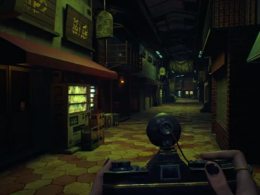




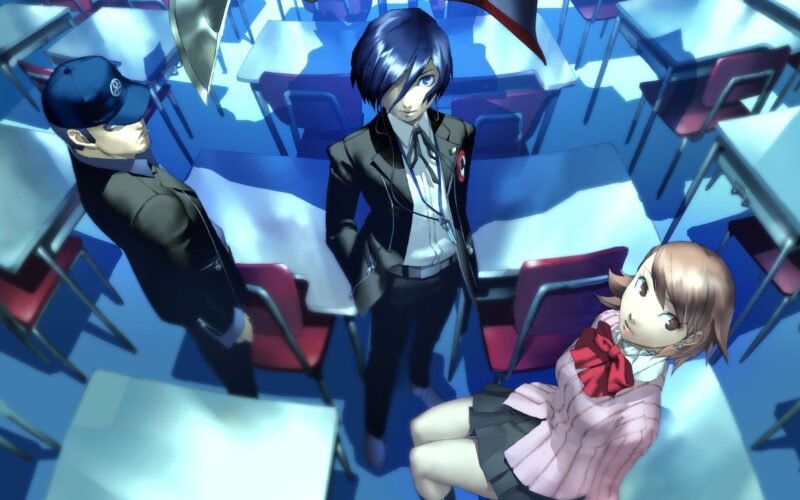
Welcome to the first instalment of Across the SMTverse, a new series where I try out random Shin Megami Tensei games just to see how I feel about them. To kick off this column, and in honour of Persona’s 30th anniversary, we look back at the original Persona 3.
The Persona series recently celebrated its 30th anniversary with a year-long rollout of merchandise and announcements – mainly surrounding the upcoming Persona 4 Revival, but with a few surprises for the other games as well, such as Persona 3 protagonist Makoto Yuki being added to Arknights as a guest character.
All of this fanfare made me want to revisit Persona 3, arguably the title that originally put the series on the map (though I will get around to talking about Persona 1 and 2 at some point, I promise). It’s probably a strange choice – I was asked a few times why I didn’t just play the remake instead – but I felt oddly compelled to go back to the game that, for many, started it all.
Before we get started, note that this retrospective-slash-review will mainly focus around the original 2006* release of Persona 3 specifically. I have yet to play the 2024 remake, Persona 3 Reload; and haven’t touched the other games in at least a decade, so I will avoid direct comparisons to other titles.
*I’m aware that the English release of Persona 3 technically released in 2007, but ‘Revisiting Persona 3, Nineteen Years On’ just didn’t have the same ring to it.
Gameplay
Persona 3 places you in the shoes of a nameless Protagonist (though later media will retroactively name him Makoto Yuki), a high school student who’s just transferred to the bustling Japanese town of Iwatodai. His parents are dead, it’s strongly implied that he’s clinically depressed, and his dormmates seem to be hiding something from him.
That something turns out to be Shadows – strange monsters that are attacking the people of Japan, sucking out their souls and leaving them as zombie-like husks. Makoto’s dormmates are part of a Shadow-fighting organization known as S.E.E.S., who have the power to summon Personas – god-like figures who represent a person’s innermost thoughts, channeled through the image of a mythological figure.
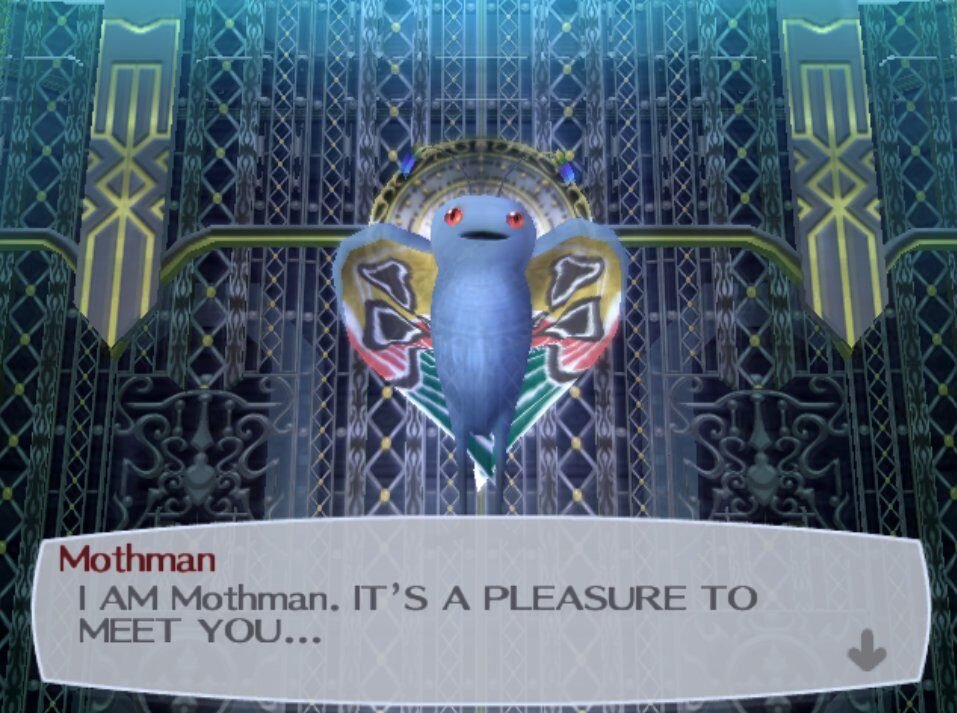
Makoto, of course, can also summon a Persona. In fact, he’s the only person in the team who can rotate between multiple Personas, which gets him immediately drafted into S.E.E.S. While you can fight Shadows by hitting them with weapons, it’s much more effective to use your Personas to hit them with magic. You can collect new Personas through a literal card shuffle that happens at the end of certain fights, or by fusing a number of them into new forms.
Each Persona and Shadow comes with their own sets of strengths and weaknesses. A Frost Shadow might be weak to a Persona that can use Fire attacks, allowing you to get a hit in. Striking an enemy’s weakness also gives you “One More” hit, giving you one more turn to deal additional damage. If you manage to hit every enemy’s weak point, your party can execute an “All-Out Attack”, a team-based attack that deals massive amounts of damage.
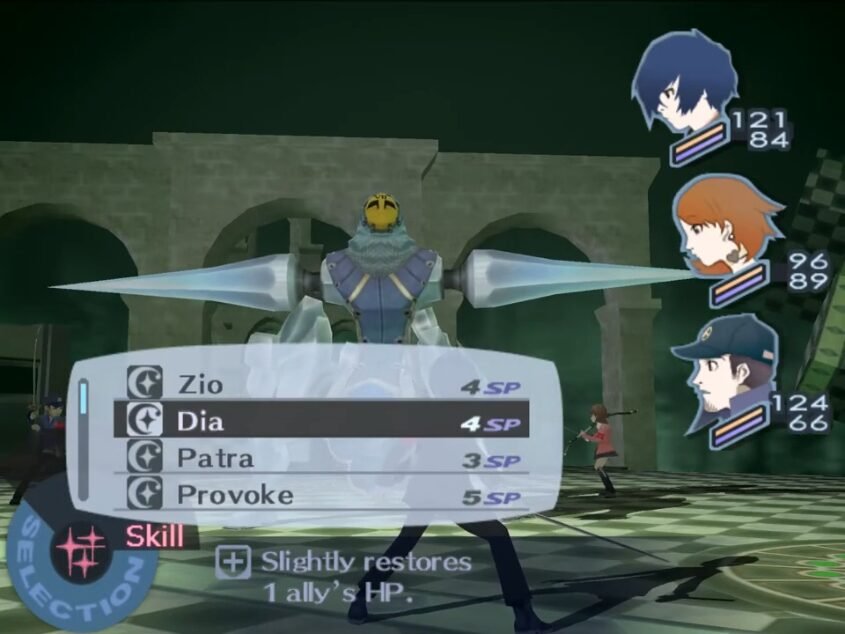
While the game is overall quite straightforward, one aspect that took some getting used to is that Persona 3 does not let you directly take control of your party members. Though you can give them general directions like ‘provide support’ or ‘conserve MP’, you cannot dictate the exact spells or attacks they can use. Your main gameplay loop will be memorizing what each Shadow is weak to, throwing out a Persona with attacks that best counters them, and praying your teammates follow through with good attacks.
For the most part, you’ll do most of your level grinding by hunting Shadows in Tartarus, a mysterious dungeon that only appears at a certain time of night called the Dark Hour; though once a month, the town will also be attacked by a larger, more unique Shadow tied to story events. These story bosses weren’t too challenging once I figured out their weaknesses – I had a far harder time with some of the dungeon bosses in Tartarus, which often ended with me scraping past a boss on my last dregs of HP while the rest of my team was down.

But fighting Shadows is only half of the game. Makoto’s still a high school student, after all, so you still have to study for exams, answer questions in class, and attend after-school clubs. And then there’s the matter of Social Links – bonds you can form with a great number of characters in the game, from your party members to various side characters you can find all over town.
You are encouraged to form and complete as many Social Links as possible, as the further you advance on a Link, the more HP it will contribute to your future Persona fusions. The challenge lies in maintaining each of these relationships. Should you attend Student Council meetings today to advance your Social Link with the councilmembers, or work on bonding with the Music Club instead? Spend the night training in Tartarus, or studying so you can hit the required Academic rank to be able to pursue one of the romantic links?
For my playthrough, I more or less just kind of ended up doing Social Links at random whenever I remembered to check on one, but a more completionist player might feel the need to draw up a spreadsheet just to keep track of it all.
Story and Writing
I don’t think it’s too much of a spoiler to say that Persona 3 is about death – or, to be specific, finding meaning in life despite the certainty of death. The game opens with you being told that Makoto’s parents tragically died in a car accident. Nearly every character in the game deals with a loss of some kind, and will have to decide how they want to move forward in life.
For the most part, I think this theme was handled quite beautifully, with as many poignant moments as there are action-packed or comedic ones. Some standout arcs to me include the character of Aigis, a robot girl who discovers what it means to be human; the romance between party member Junpei and side character Chidori; and getting to know a terminally ill man in one of your Social Links. If you somehow haven’t played any version of Persona 3, I implore you to complete his Sun social link when you do.
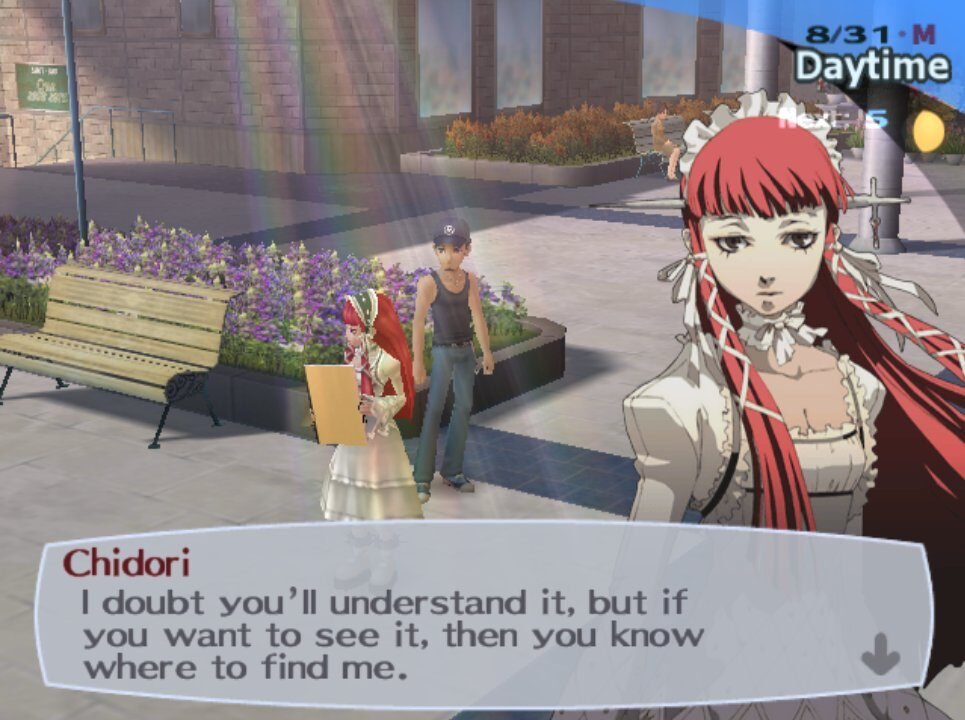
Speaking of the characters, there seems to be a common sentiment among fans that Persona 3’s main party feels less like a friend group and more like co-workers. I’d like to offer a slightly different perspective: Persona 3’s main cast perfectly captures what it feels like to join a club or organization.
Being part of a club means hanging out with people you have little in common with, who you usually wouldn’t have any reason to talk to if you weren’t all brought together by a common goal; but it’s that pursuit of the same goal that brings you together. Ultimately, being exposed to these new perspectives makes you a stronger person – something the game reinforces with how Social Links are tied to the strength of your Personas.
The only mild criticism I have of this game’s writing is the odd decision to exclude Social Links for your male party members (though all of the female members have Social Links that can optionally be turned into romances). This led some emotional scenes to fall a bit flat as I felt that I hadn’t really gotten to know the characters that well. Still, it is only a mild criticism because future games, and indeed future re-releases of Persona 3, would fix this issue.
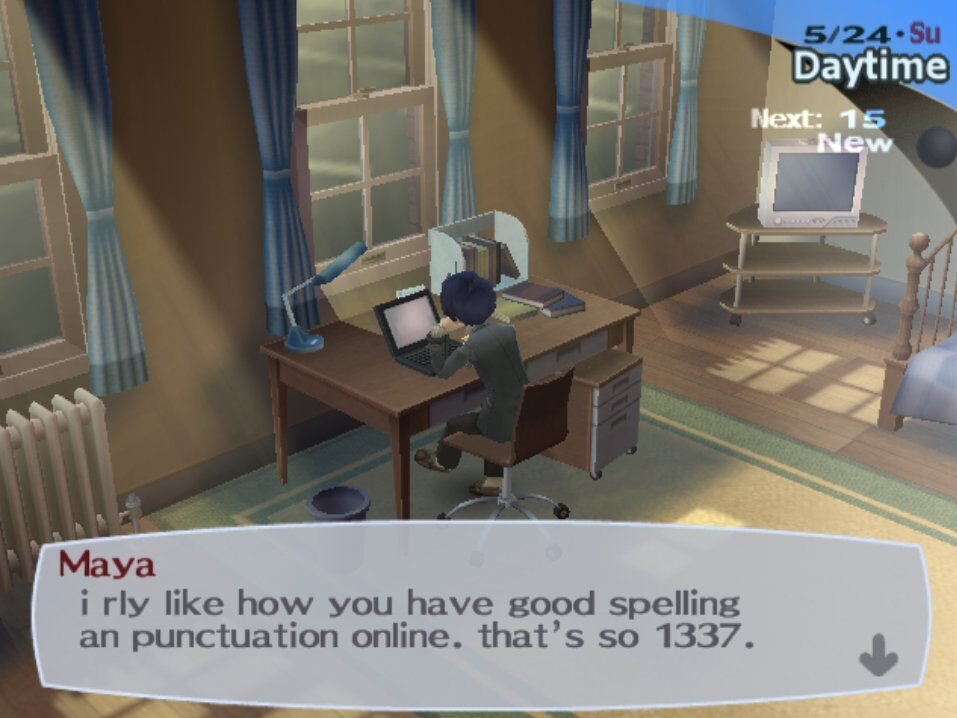
I also found a lot of enjoyment in how unapologetically 2006 some of the dialogue is. I’d especially like the localiser who translated the Hermit Social Link to know that I cringed in the best way when I read words like ‘pwned’ in 2026. There’s really something to be said about games as a time capsule of the era they’re made in.
Art & Music
The iconic Japanese artist and character designer Shigenori Soejima served as art director for Persona 3, which marked his first time working on the Persona series. He would go on to essentially define the look of the modern Persona games as a whole, moving away from previous art director Kazuma Kaneko’s dark, gritty designs in favour of a sleeker, cleaner aesthetic.
It’s interesting, then, to go back and see a moment in time when Soejima and Atlus were still figuring out Persona’s new visual aesthetic. There’s a sort of sketchy, rough-around-the-edges quality to the character portraits that I found really endearing, with wonderfully expressive faces and body language. The fashion also deserves a shout-out – many of the characters’ outfits teeter on the edge between being realistic and fantastical, but without tipping over into feeling out of place for the setting.
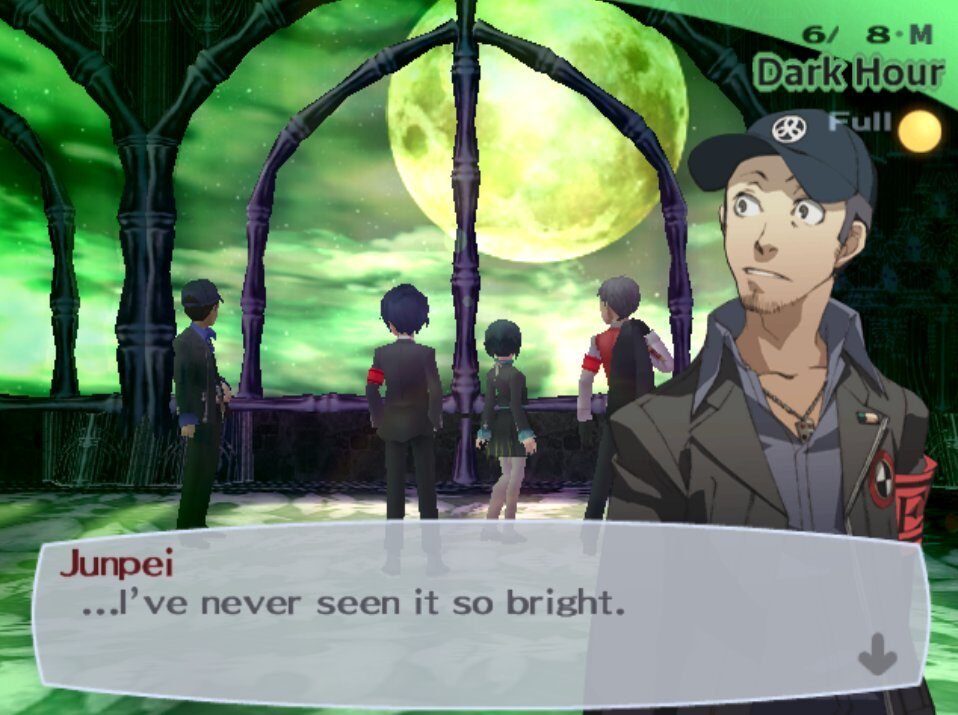
Much of the game’s imagery is still vivid and even shocking, even if you know it’s coming, like I did. You’ll still get chills the first time you see someone raise a gun to their forehead to summon their Persona, even if you know nothing bad will happen. The PlayStation 2-era low-polygon graphics also give scenes in Tartarus and the Dark Hour an eerie sort of liminality that, from what I’ve seen of the remake, just can’t be recaptured in higher definition.
The music, composed by the visionary Shoji Meguro, is legendary, and I’d dare say timeless. A lot of the tracks still sound as fresh and exciting in 2026 as they did in 2006, and I still think the game’s ending theme, Memories of You, should be up there as one of the greatest videogame songs ever made.
Final Thoughts
Is Persona 3 still worth playing in 2026? Honestly, if you’re someone who’s curious about the series, and for whatever reason doesn’t want to start with a more modern title, I’d say it’s a pretty decent entry point. It may be a little dated twenty years on – there’s certainly a few story beats that haven’t aged well – but the gameplay is easy to pick up, and the core theme of memento mori will always be relevant.
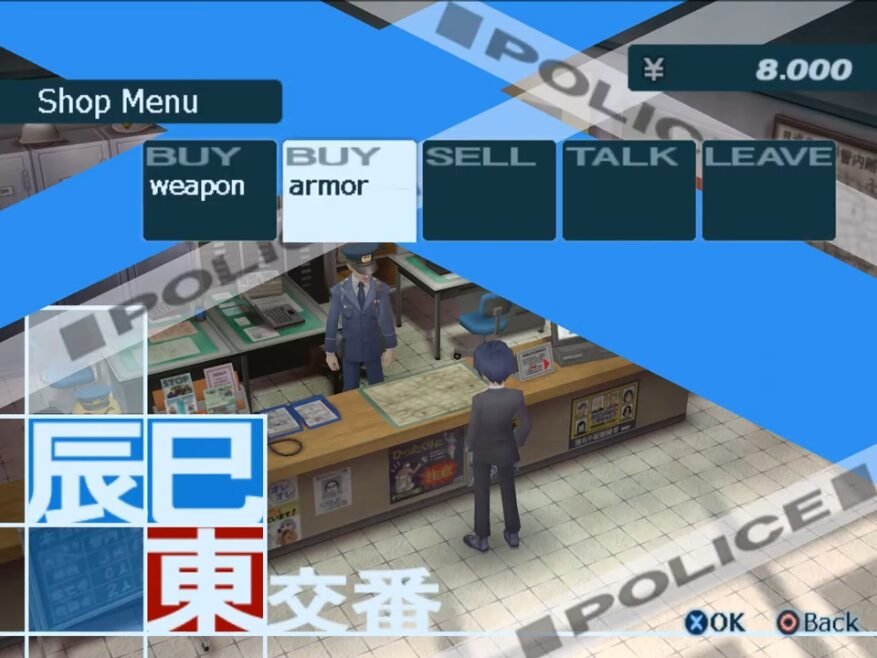
For players who, like me, are revisiting the game after many years, I think there’s also a certain charm in seeing the origins of the modern systems that would come to define the later Persona games, as well as the JRPGs that would follow in its wake. There’s the Social Link system, of course, but also it could be argued that this game is where Persona started to experiment with its UI, moving away from its more traditional game menus of the past in favour of a more futuristic look, which would of course later culminate in Persona 5’s Internet-breaking super-stylish game menus.
And for those that know what happens to Makoto at the end (spoilers!), there’s still a real tragedy to seeing him live out his year at Iwatodai, being told by each Social Link that they wish to see him do something great in the future. For me, sitting here in 2026, the tragedy was further compounded by knowing that the protagonists that would come after him got to live out adventures past the original events of their games.
Thank you for reading the first-ever entry for Across the SMTverse! In our next edition, I will be venturing into my first real attempt at playing a non-Persona game under the SMT umbrella, featuring Devil Summoner: Raidou Kuzunoha vs. King Abaddon.