





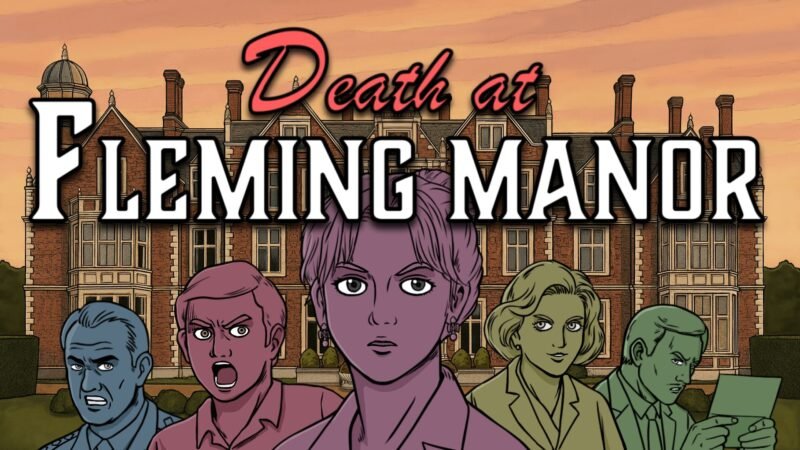
A forensic mystery with art inspired by 1960s European detective comics, Death at Fleming Manor has you investigating a mysterious death in a British manor in 1959. Explore eerie scenes, analyze evidence, and complete death certificates and emergency reports.
Developed by: SUPERTHUMb
Played on: Steam
Length: 7 hours
A review key was provided by SUPERTHUMb.
I’m always on the lookout for the next detective game to sink my teeth into, so Death at Fleming Manor knocked on my door at just the right time. Developed by Korean indie game studio SUPERTHUMb, the game takes heavy inspiration from 1960s European detective comics for its aesthetic and premise, placing you in the center of an intertwining mystery that feels like an Agatha Christie novel come to life.
You step into the shoes of a coroner on the first day of your new job, assigned to issue death certificates at accidents and crime scenes. But before you dot your I’s and cross your T’s, you have to first examine each scene, study the condition of the body, and question the people involved. From the evidence you’ve gathered, your role is to identify the victim, the cause of death, and decide whether the death was accidental, self-inflicted, or caused by malicious forces.
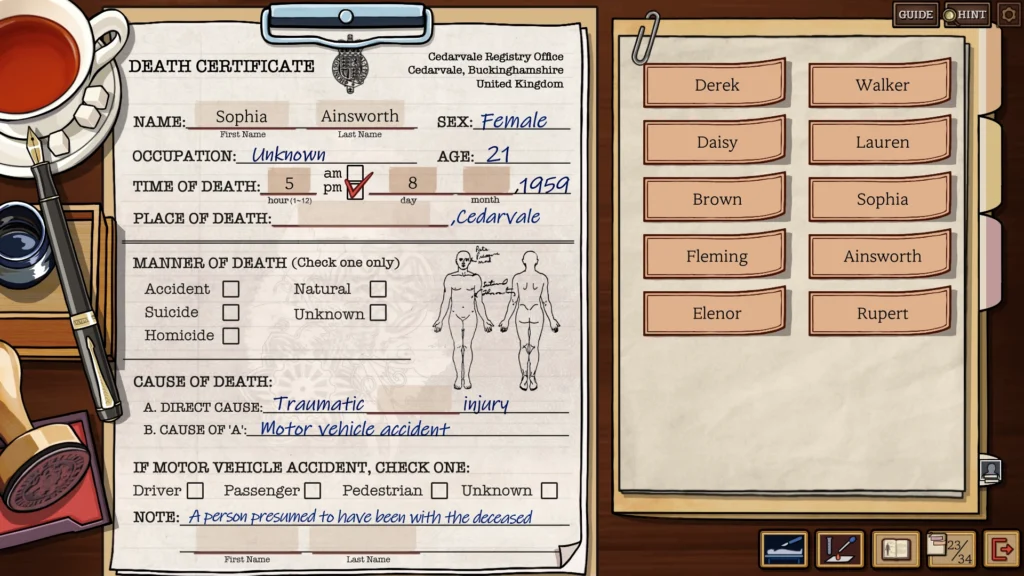
For those familiar with games like Return of the Obra Dinn and The Case of the Golden Idol, you will find plenty of similarities in the mechanics for Death at Fleming Manor. Each level involves collecting keywords, referencing notes and medical texts, and piecing together the final document for submission. But make sure you get every detail in the document correct, or you won’t be allowed to proceed to the next stage.
That said, Death at Fleming Manor has a pretty relaxed approach to hints. You get three chances to submit each document before the hint system (the teacup in the top left) kicks in, and clicking it will highlight which part of the document you got wrong without telling you the answer outright. If you get really stuck, you can also click the hint button (in the top right of the screen) to get more detailed hints or the answer outright. As far as I could tell, there was no punishment for submitting wrong information or using hints, which makes the game a fairly relaxed detective experience.

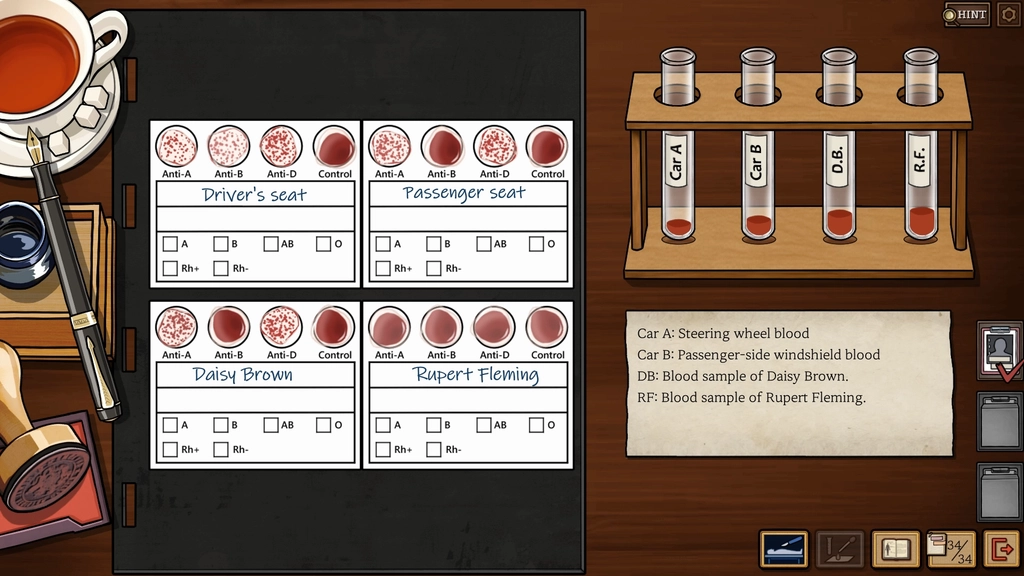
The overarching story of Death at Fleming Manor takes place over twelve distinct and intertwining chapters. Not only does each chapter expand on the twisted events surrounding Fleming Manor, but it also introduces new gameplay elements at every turn. Even after playing the game for hours, I was surprised at how much new content awaited me in every chapter — whether it was piecing together death certificates, to conducting blood tests, and even learning how to set up a medical triage.
Needless to say, you don’t actually need a medical background to get through the game, although the sheer amount of jargon might be overwhelming at first. All you need is logical deduction skills, a careful eye for detail, and a good memory will do you wonders.
In my playthrough, I found myself the most stuck when trying to recall a specific piece of information, only to find it mentioned once in a note in a victim’s pocket, or pinned to a notice board in a specific room. Since the game doesn’t compile all your notes in one place, you do have to commit the crime scene to memory and revisit certain spots as you piece together the documentation. It does get a little tiresome to click around so much, but not so much that it hindered my enjoyment of the game.
By the end of the game, I found myself fully drawn into the world that SUPERTHUMb created. The Ligne Claire artwork is a breath of fresh air, the storytelling is surprisingly gruesome, and the writing pays homage to some of the best classic detective stories out there. The game even features multiple endings at the very end, which was a pleasant surprise considering the narrative is mostly linear throughout. Overall, a great way to spend an afternoon for detective game fans.
Verdict: If You Liked The Case of the Golden Idol…
Death at Fleming Manor is a forensic mystery game that places you in the shoes of a coroner instead of a detective. Inspired by 1960s European detective comics and classic detective novels by the likes of Agatha Christie, the game keeps you engaged from start to finish with a twisting narrative and wide variety of unique forensic puzzles. If you liked games like The Case of the Golden Idol and Return of the Obra Dinn, this game will scratch the same itch.