



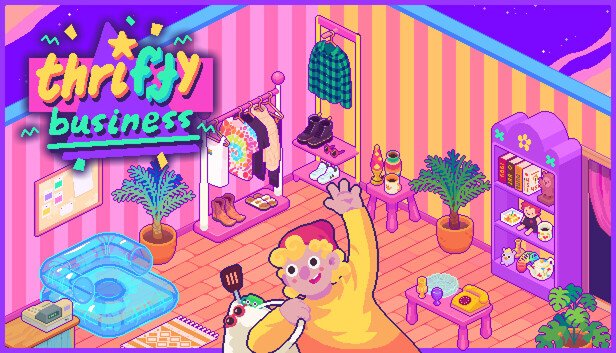
There is something strangely satisfying about turning somebody else’s unwanted junk into the centrepiece of a carefully organised shop.
Thrifty Business understands that feeling incredibly well. Developed by Spellgarden Games, the studio behind Sticky Business, this laid-back management sim puts you in charge of a colourful 1990s-inspired thrift store filled with old electronics, clothes, toys, books, decorations and plenty of other questionable treasures.
Rather than turning retail management into another spreadsheet simulator, Thrifty Business is far more interested in the simple pleasure of finding stuff, arranging stuff and watching people buy your stuff. And surprisingly, that is enough to make it difficult to put down.
Running Your Own Thrift Store
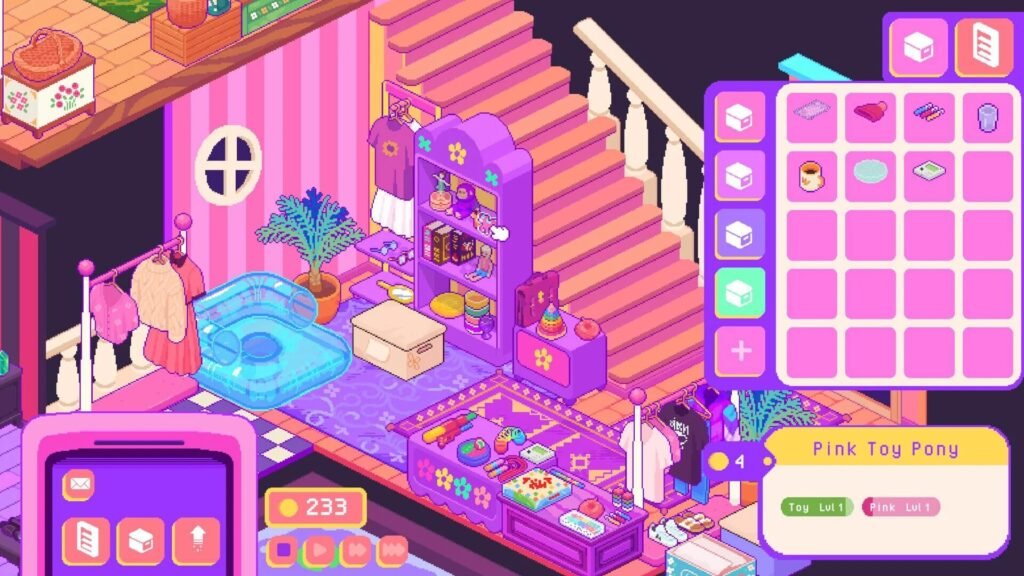
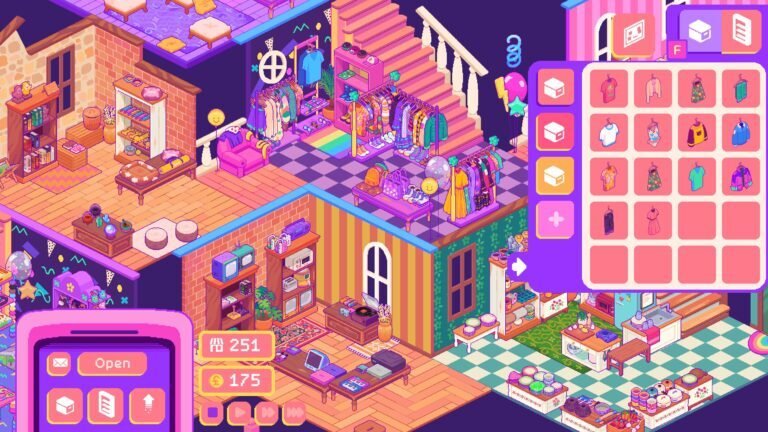
The basic gameplay loop is easy to understand. You purchase mystery boxes containing second-hand items, unpack whatever happens to be inside, arrange everything around your store, and then open the doors to customers.
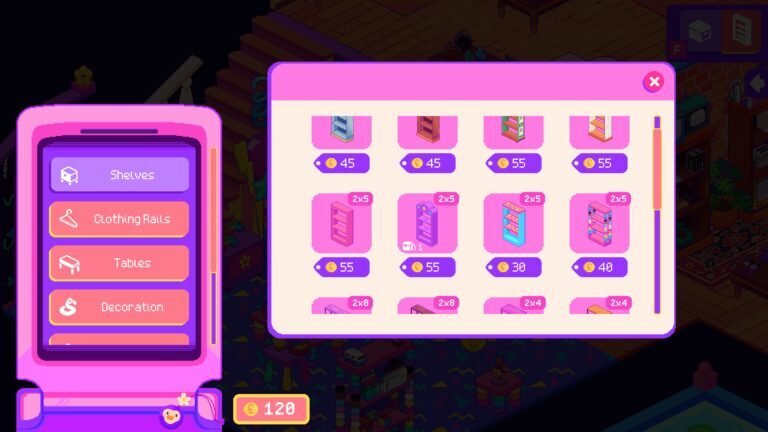
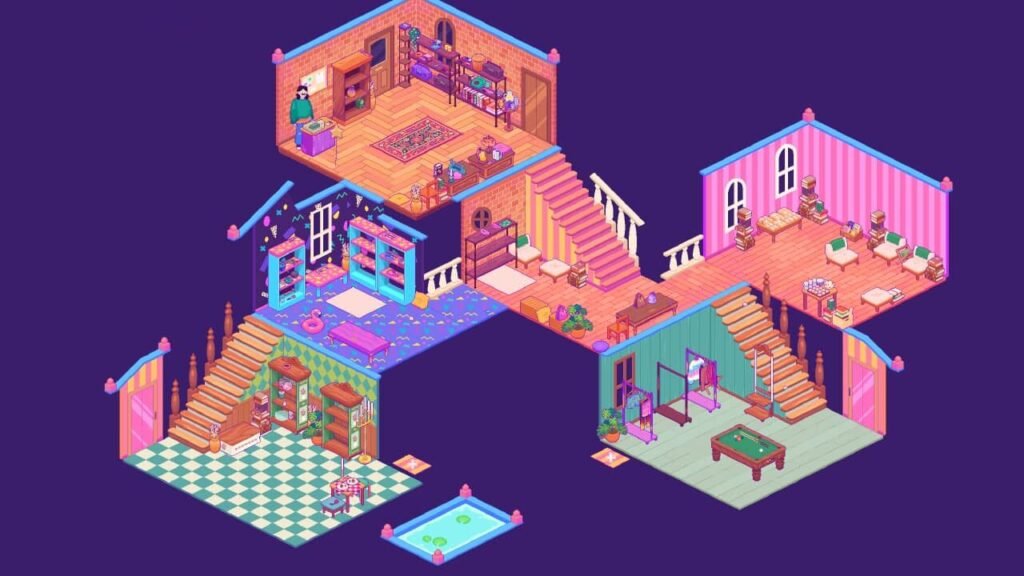
As money starts coming in, you can purchase more furniture, expand into additional rooms and completely customise your store with different floors, wallpapers and decorations. There are more than 500 different items available, so your shelves quickly transform from a few neatly organised displays into something resembling controlled chaos.
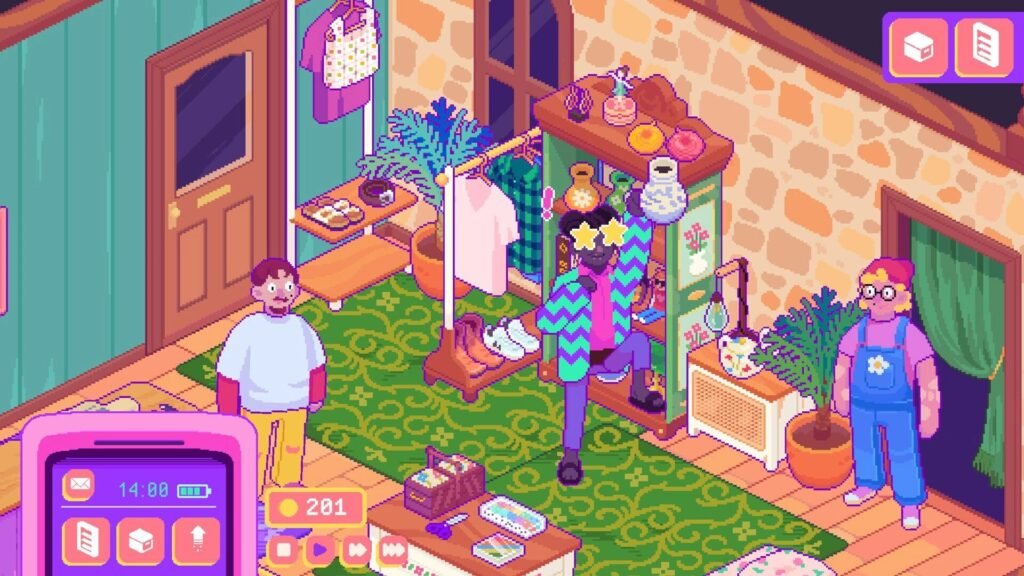
Placement is also more important than you’d think, beyond just simply cramming everything onto whatever shelf has space (for those who would try, I see you). Items can be grouped according to themes, colours and purposes, with better organisation contributing towards community points and further progression. It gives the otherwise simple act of moving objects around just enough purpose to keep it engaging.
Organising Junk Is Weirdly Addictive
This is easily where Thrifty Business works best. Opening a mystery box and discovering what is inside provides a small but constant sense of anticipation. Maybe you get some useful kitchenware. Maybe you find another piece for your electronics section. Maybe you receive something completely ridiculous that now needs its own corner of the store.
Then comes the real challenge: figuring out where to put everything. The level of control over item placement makes decorating surprisingly satisfying, particularly once your store becomes larger and you start creating deliberately themed rooms and displays.
There is also an impressive amount of visual variety between the different objects, which prevents unpacking new stock from immediately becoming predictable. It scratches much of the same organisational itch as games such as Unpacking, except your carefully arranged collection is constantly being dismantled by customers actually buying things.
More Than Just Making Money
Thrifty Business also wisely avoids making profit the only reason to keep playing. Regular customers gradually introduce their own stories and requests. Finding particular items for them progresses those relationships, while your shop can eventually host community activities including book clubs, mixers and other events.
Events can also increase demand for particular categories of products, giving them a small gameplay benefit alongside the narrative progression. It helps make the store feel less like a machine for generating money, and more like an actual neighbourhood space.
That distinction is important because Thrifty Business intentionally removes many of the stressful mechanics normally associated with management games. You aren’t manually setting prices, haggling with customers or desperately trying to stop impatient shoppers from leaving.
For a cozy game, that works – but for a serious business simulator, perhaps not so much.
Where Thrifty Business Falls Short
The game’s biggest weakness is also a direct consequence of its biggest strength: Thrifty Business might simply be too relaxed for some players. There isn’t much financial pressure, complex optimisation or genuine threat of failure. If you enjoy management games because you like squeezing maximum profit out of every square metre, this probably isn’t going to challenge you for very long.
The interface can also become cumbersome once your inventories start filling up. Switching between item and furniture inventories can require more navigation than it really should, which becomes increasingly noticeable when you’re constantly rearranging stock.
Then there are smaller irritations. Customers repeatedly leave rubbish that needs to be manually collected, inventory can become cluttered with unopened boxes, and the soundtrack doesn’t have enough variety to completely avoid repetition during longer sessions.
None of these problems ruin the experience, but they become easier to notice the longer you play.
Who Should Play Thrifty Business?
Thrifty Business is an easy recommendation if you enjoy cozy management games, decorating, collecting objects or organising virtual spaces.
Fans of Sticky Business should feel immediately at home, while players who enjoyed the organisational satisfaction of Unpacking or the shopkeeping side of games like Tiny Bookshop will probably find plenty to like here. It is also particularly well suited to players who want something relaxing after work rather than another game demanding constant attention and optimisation.
On the other hand, players looking for something closer to a hardcore tycoon game should probably look elsewhere. The business side exists primarily to support the decorating, collecting and community systems rather than become the central challenge.

Verdict
Thrifty Business knows exactly what sort of game it wants to be. It isn’t really about becoming the world’s greatest second-hand retail entrepreneur. It is about opening another mystery box, discovering a strange little treasure and immediately wondering where you’re going to put it.
The management mechanics could certainly have more depth, and some interface and repetition issues stop the experience from being completely effortless. But the combination of collecting, decorating, character stories and relaxed progression creates an extremely effective cozy gameplay loop.
Sometimes you don’t need another complicated simulation demanding perfect efficiency. Sometimes you just need 500 pieces of junk and somewhere nice to put them.
What’s Good
- Extremely satisfying item collecting and organisation
- Huge variety of objects to discover
- Plenty of freedom when decorating your store
- Relaxed gameplay with almost no unnecessary pressure
- Charming recurring customers and community events
- Distinctive 1990s-inspired presentation (Which can be rare these days)
What’s Bad
- Management mechanics are relatively shallow
- Limited challenge for experienced simulation players
- Inventory interface can become clunky
- Cleaning rubbish becomes repetitive – very repetitive
- Soundtrack could use more variety