






Prep your stations for a cozy cooking game with attitude! Prepare unique meals for quirky small-town locals, upgrade and customize your shop, compete in thrilling cooking battles to become top chef, and protect your family’s long-running restaurant alongside a cast of curious companions!
Developed by: Gambir Studio
Played on: Steam
Length: 15 hours
A review key was provided by Raw Fury.
There is a very specific kind of comfort that comes from food games. Not just the satisfaction of chopping, boiling, serving, and upgrading, but the quiet fantasy that every bowl you make can somehow fix a little piece of the world. A warm meal becomes more than a task. It becomes a memory, a family legacy, a promise, and sometimes, a declaration of war against a dramatic cooking rival who looks like they walked straight out of an anime opening.
That is where KuloNiku: Bowl Up! finds its flavour. Developed by Gambir Studio and published by Raw Fury, KuloNiku: Bowl Up! is a cozy cooking management sim about returning to your hometown and taking over your grandmother’s beloved meatball restaurant. On paper, it sounds familiar: serve customers, earn money, upgrade your shop, bond with quirky locals, and slowly restore a family business to its former glory.
But what makes KuloNiku stand out is not just the loop itself. It is the way it seasons that loop with Indonesian food culture, anime melodrama, small-town sincerity, and just enough mechanical pressure to keep your hands busy without burning out your brain. This is a game about cooking, yes. But more importantly, it is a game about why food matters.

A Small Town Built Around Big Bowls
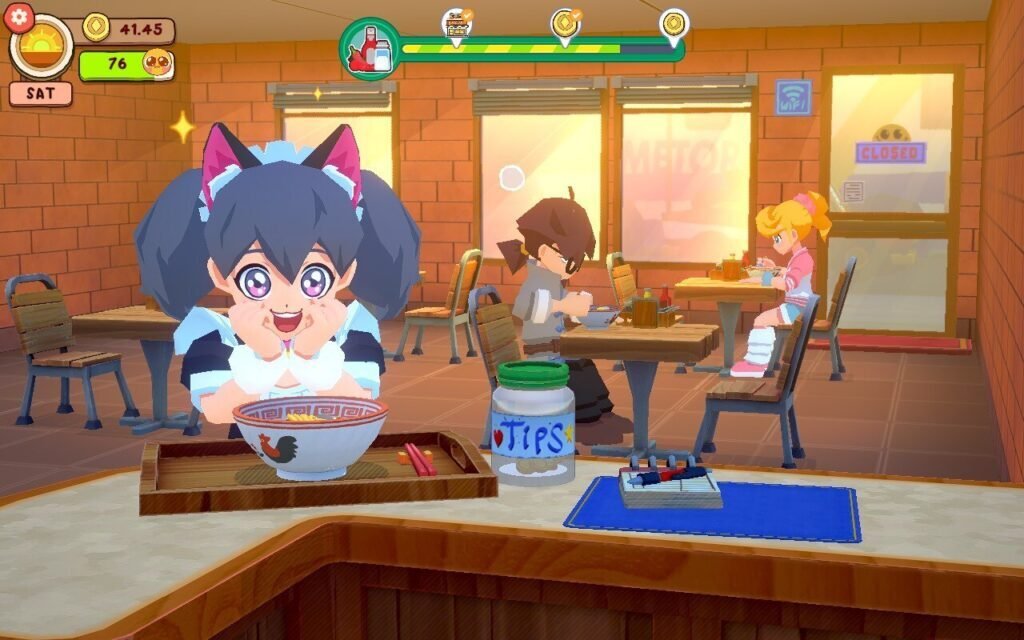
KuloNiku begins with a familiar cozy-game setup: you come home, inherit responsibility, and begin rebuilding something that once meant everything to your family. In this case, that legacy is a meatball restaurant in the town of Bakuso, a place filled with oddball locals, dramatic personalities, and customers who seem to treat a good bowl of food like a matter of civic pride.
What immediately gives KuloNiku its identity is how specific it feels. This is not a generic “cute restaurant” game with vaguely comforting food slapped onto it. Its heart is built around bakso-inspired cooking, broth, toppings, sauces, meatballs, and the kind of food that feels communal by nature. Every bowl is assembled with a sense of place. Every order feels like part of the town’s rhythm.
That cultural flavour gives KuloNiku a warmth that many cozy games try to manufacture but do not always earn. The restaurant is not just a business. It is a family heirloom. The townsfolk are not just walking quest markers. They are people whose relationships with food, rivalry, nostalgia, and pride make the world feel lived in.
And then, just when you think the game is simply about wholesome soup and friendly neighbours, it throws in over-the-top cooking battles, dramatic rival energy, and a surprisingly playful anime-inspired story that makes the whole thing feel much more ridiculous in the best way possible.
The Cooking Loop Is Simple, Satisfying, And Secretly Addictive
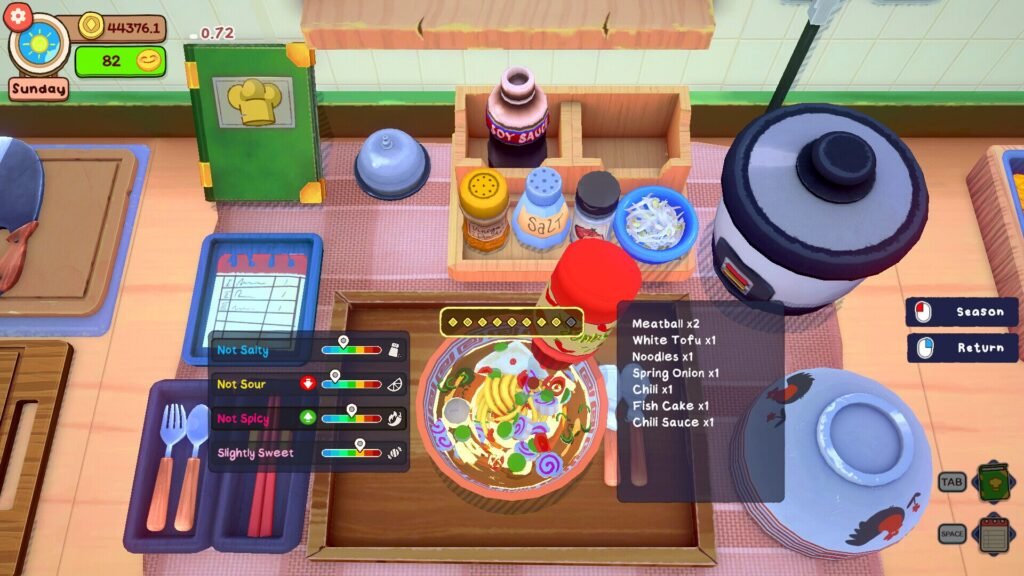
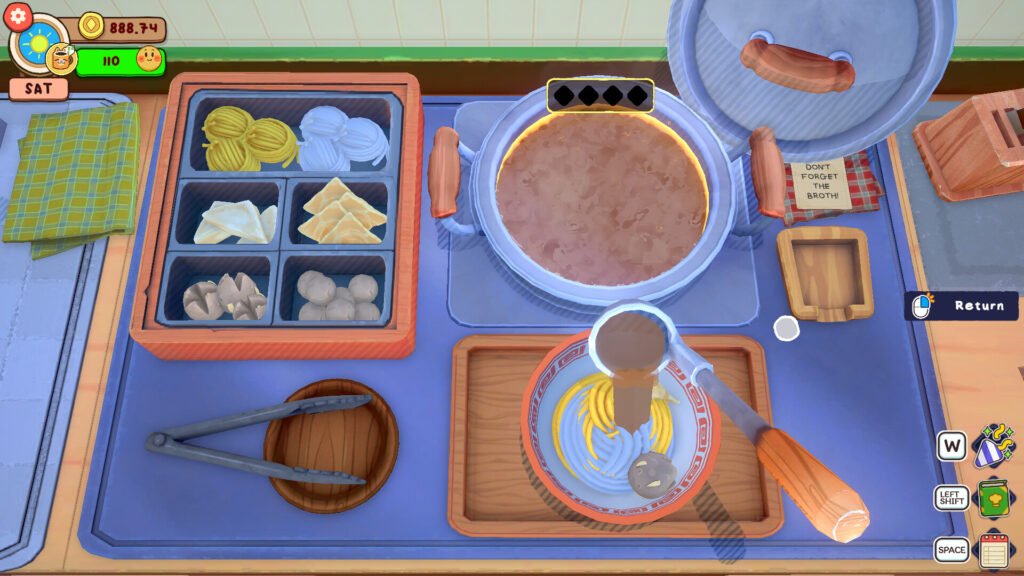
The strongest part of KuloNiku: Bowl Up! is its core cooking loop. Each day, customers arrive with different orders, and you prepare their bowls by moving between stations, handling ingredients, assembling meals, and trying to keep up with the pace of service.
It is not punishing in the way something like Overcooked can be. KuloNiku is more controlled, more readable, and more forgiving. But that does not mean it is mindless. The joy comes from entering a flow state: chop, boil, season, serve, repeat.
At first, you think you are just following instructions. Then, slowly, your hands start moving before your brain catches up. You begin to remember recipes, anticipate orders, and shave seconds off your process without even realizing it. That is the magic of a good cooking sim. It turns repetition into rhythm.
KuloNiku also understands that progression matters. The money you earn can be used to improve your restaurant, unlock better equipment, expand what you can make, and smooth out the friction of service. The result is a satisfying cycle where every busy shift feeds directly into the next upgrade, and every upgrade makes you want to jump back into another shift. It is cozy, but it is not empty. It is calming, but it still asks you to pay attention.
Meatball Brawls Are The Game’s Secret Sauce
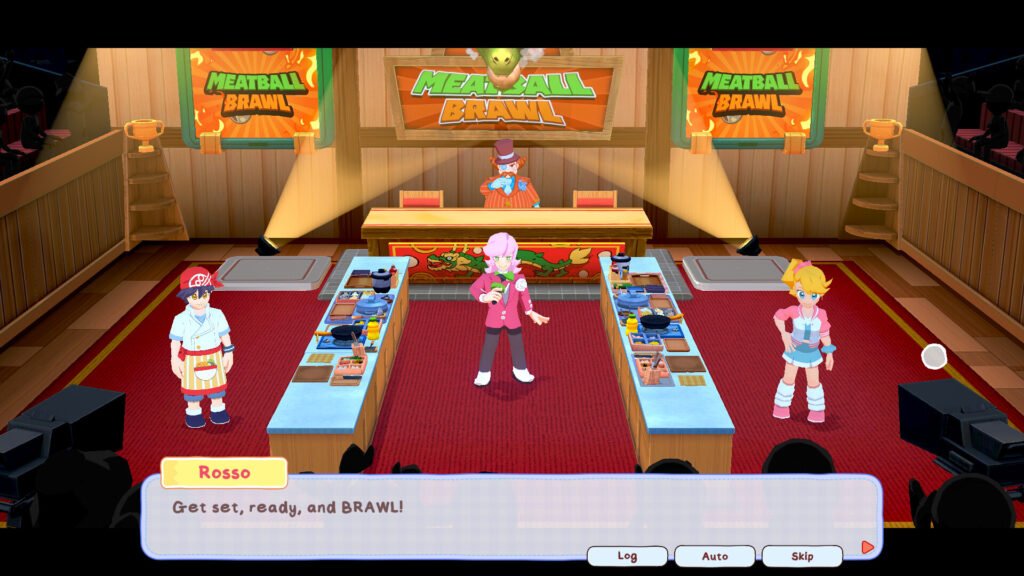
If the standard restaurant shifts are KuloNiku’s comfort food, the Meatball Brawls are its spicy side dish. These cooking battles give the game a much-needed burst of theatrical energy. Instead of simply serving daily customers, you are placed into more structured competitions where you need to satisfy specific flavour profiles, manage limited actions, and think more carefully about how to build the perfect dish.
It is a clever twist because it does not feel disconnected from the rest of the game. You are still using the same knowledge you have built through regular cooking, but the format changes just enough to make you think differently. It turns cooking into performance. Suddenly, food is not just service; it is strategy, pride, and spectacle.
This is also where KuloNiku’s anime DNA shines brightest. The rivalries, dramatic declarations, and competitive energy could easily feel silly, but the game commits to the bit with enough charm that it works. It knows exactly what kind of story it is telling and never seems embarrassed by its own exaggeration. Honestly, that confidence is part of its charm.
Cozy, But Not Completely Sleepy
One thing I appreciate about KuloNiku is that it understands the difference between cozy and boring. A lot of cozy games lean so hard into softness that they forget to give the player something engaging to do. KuloNiku avoids that by keeping its hands-on cooking tactile and active.
There is always something to manage, but rarely so much that it becomes frustrating. The game also includes a more relaxed mode for players who want less pressure, which is a smart accessibility choice. It means KuloNiku can work both as a light management challenge and as a comfort game you play after a long day when your brain has no interest in being yelled at by timers.
The social side adds another layer. Between shifts, you can spend time with characters, explore more of the town, and slowly uncover bits of story. The relationships are not necessarily genre-defining, but they do enough to make the world feel warmer and more connected. You are not just upgrading a restaurant. You are becoming part of a community again.

Aesthetic And Personality Do A Lot Of Heavy Lifting
Visually, KuloNiku has a bright, low-poly, anime-inspired style that gives it a very clear personality. It does not chase realism, nor does it need to. The food looks appetising, the characters are expressive, and the town has a cheerful charm that makes it easy to settle into.
The presentation supports the tone perfectly. Everything feels light, colourful, and slightly exaggerated, like a Saturday morning cooking anime that somehow got mixed with a restaurant management sim. The music and sound design also help keep things breezy, even when you are juggling multiple orders and trying not to mess up a customer’s bowl.
It is the kind of game where the vibe matters as much as the mechanics, and thankfully, the vibe is strong.

Where KuloNiku Gets A Little Undercooked
As charming as KuloNiku is, it is not without its softer spots. The most noticeable issue is repetition. While the cooking loop is satisfying, players who want deeper management systems or more intense challenge may eventually find the daily rhythm a little too comfortable. The game is designed to be approachable, which works in its favour most of the time, but it also means it rarely pushes back very hard.
Some dialogue and routine elements can also start to feel familiar after longer sessions. The social systems are pleasant, but not as deep as the best life sims. And depending on your setup, there may be some minor stutters or technical hiccups, though these do not seem severe enough to damage the overall experience.
In other words, KuloNiku is not a game that reinvents the genre. It refines a specific flavour of cozy cooking sim and serves it with enough heart to make the familiar ingredients taste fresh.
Verdict: A Deliciously Memorable Bowl
KuloNiku: Bowl Up! is one of those games that wins you over not through scale, but through sincerity. It is warm, funny, tactile, and full of personality. Its cooking loop is simple enough to relax into, but satisfying enough to keep you coming back for one more shift. Its Meatball Brawls add a playful competitive spark, while its cultural identity gives it a flavour that stands apart from the usual cozy-game menu.
It may not be the deepest management sim, and some players may wish for more challenge or variety over time. But as a cozy cooking game with heart, rhythm, and ridiculous anime energy, KuloNiku knows exactly what it is serving.
And most importantly, it serves it hot.