





Kyoto Animation held the world premiere of its newest original television series, Sparks of Tomorrow, at the Platinum Ballroom of the JW Marriott during Anime Expo 2026. Fans had the opportunity to catch the first two episodes of the series, which depict an alternate history Kyoto inspired by steampunk aesthetics.
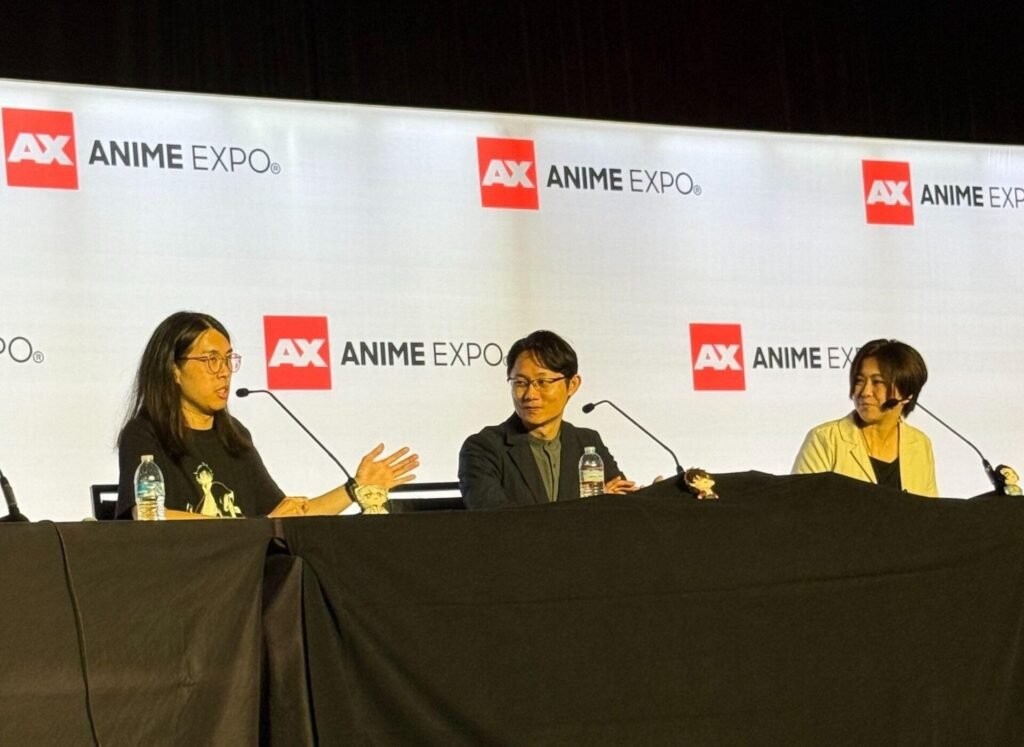
The premiere was followed by a discussion featuring director Minoru Ota and producer Satori Senami, with Ginger Root, the artist behind the series’ ending theme, serving as host and interpreter. Here’s what they had to say:
1. What is the key theme you hope audiences around the world will take away from Sparks of Tomorrow?
Minoru Ota explained that Sparks of Tomorrow takes place in an alternate-history Kyoto where steam technology has flourished while other technological progress has stalled, leaving society surrounded by despair.
The story follows Kihachi, Inako, and their companions as they pursue the mysterious 20th Century Electrical Catalog in an effort to reclaim what they have lost—including their dreams. Above all, he hopes audiences take away the spirit of trying again and never giving up.
2. Sparks of Tomorrow is positioned as Kyoto Animation’s “New Frontier.” What were the biggest challenges when launching the project, and how did you overcome them?
Minoru Ota explained that the creative team deliberately rejected ideas that felt familiar or derivative, striving to make both the story and visuals feel genuinely new. While this philosophy helped define the series’ identity, it also made brainstorming and communicating ideas to the staff significantly more challenging.
Satori Senami shared that because this was Ota’s first project as a director, the production team initially spent considerable time understanding his creative approach. She joked that she eventually realized he was “a strange person”, before explaining that embracing his individuality rather than restraining it ultimately became one of the production’s greatest strengths.
3. This series features many unique characters. Could you tell us about your approach to creating them?
Ota described the series as a story about personal growth. Kihachi and Inako were intentionally created as opposites, representing “doubt” and “belief” respectively. Through their encounters with people who see the world differently, they gradually grow and change.
He also explained that Yosuke’s determination never to give up contrasts with Kihachi, who had already given up on his dreams, making their opposing attitudes central to the narrative.
Senami added that Seiroku’s charisma serves as a major emotional influence on Yosuke,
becoming one of the key motivations driving his journey.
4. What do each of you consider to be the biggest highlight of Sparks of Tomorrow?
Ota encouraged viewers to look forward to the continuing development of the series’ colorful cast, noting that each character’s personality and story would be explored in greater depth as the series progresses.
Senami highlighted the unique balance between comedy and drama, explaining that Ota’s
distinctive creative sensibility becomes increasingly apparent after Episode 3.
MyAnimeList Fan Questions
The panel concluded with several questions submitted in advance by MyAnimeList users.
1. Since Sparks of Tomorrow is set in an alternate-history Kyoto, I was wondering how the team decided which Kyoto locations should be incorporated into this steam-powered world. How did you decide what should feel familiar and what should feel completely different?
Although the series is set in a steampunk-inspired world, Ota explained that the team wanted to avoid creating a stereotypical steampunk setting. Instead, the focus remained on making Kihachi, Inako, and the other characters feel as though they genuinely lived in the city. Steam pipes, industrial elements, and environmental pollution were carefully balanced to support the atmosphere without overwhelming the story.
Senami added that while the world contains many steampunk-inspired details, it was equally important that audiences could still recognize Kyoto through the characters’ everyday lives. Maintaining that balance between familiarity and imagination became one of the guiding principles behind the world-building.
2. Director Minoru Ota mentioned that the backgrounds in Sparks of Tomorrow have a matte, gritty finish inspired by Impressionist paintings. What new digital or traditional techniques did the Kyoto Animation art team develop to achieve this look?
Ota explained that the team pursued an Impressionist-inspired visual style by creating an extensive library of digital brush textures capable of reproducing realistic brushstrokes. Approximately 80% of the backgrounds were produced digitally, while traditional analog techniques continue to serve as the foundation for training new artists at Kyoto Animation. He joked that constantly switching between different digital brushes required an enormous amount of effort.
Returning to the production process, Ota praised the background art team for tirelessly refining his vision, noting that although he could not paint the backgrounds himself, the art director and her team continually developed new ideas and worked through numerous revisions to bring the world to life.
Senami explained that Kyoto Animation continues to teach analog techniques before artists transition to digital production, preserving the studio’s artistic tradition while adapting to modern workflows.
3. For Ginger Root: How did the opportunity to create the ending theme come about, and what are you most looking forward to seeing in Sparks of Tomorrow?
Laughing, Ginger Root said his involvement began with a simple email from Bandai asking whether he would like to create the ending theme for Kyoto Animation’s newest series. As a longtime Kyoto Animation fan, he immediately accepted. Although he had heard the opening theme reportedly underwent around fifteen rounds of revisions, his own song was approved after just one take.
He credited that smooth process to director Ota’s clear creative direction during their online meetings. Ota provided him with a painting and a piece of writing as a starting point for inspiration and encouraged him to create a more futuristic sound using electronic instruments and guitar. “If I hadn’t received those notes, I probably would have had to rewrite the song fifteen times as well,” joked Ginger Root.
4. Is there a particular scene or episode that the production team is especially proud of?
Rather than highlighting a single scene or episode, Ota pointed to the series’ overall visual achievement. Because Sparks of Tomorrow introduces a completely new visual style unlike any previous Kyoto Animation production, maintaining that level of quality across an entire season—from daytime and nighttime scenes to flashbacks and a wide variety of settings was one of the team’s greatest challenges.
At the beginning of production, the experience gained from previous projects offered little guidance, and there were concerns about whether the team could sustain the same visual standard through the final episode. However, without compromising their vision, every department refined its production workflow, allowing the staff to consistently realize the series’ distinctive artistic style throughout the entire season. Looking back, Ota said that accomplishing this remains one of the achievements he is most proud of.
Senami added that Episode 1 underwent significant visual revisions during production in order to establish the overall artistic direction for the series. Although the process was demanding, she said it ultimately strengthened the production team and helped unify everyone’s creative vision.
5. The series is about imagining tomorrow. What is something today that you hope people 100 years from now will still value?
Ota reflected on how communication has changed dramatically through the rise of the internet and social media. While acknowledging the many benefits of technological progress, he noted that these advances have also brought new challenges. At the heart of human nature, he believes, is the desire not to be alone.
Although future developments in AI and technology may make it possible for people to live independently, Ota said he does not believe that would lead to a fulfilling life. Instead, he hopes people will continue to experience both happiness and hardship through genuine human relationships. In his view, the relationship between Kihachi and Inako resonates because it reflects authentic communication between two people.
Senami agreed that technology will continue to evolve, but emphasized that the people using it remain fundamentally the same. She concluded that, regardless of how society changes, the qualities she hopes future generations will continue to value are human wisdom, courage, and dignity.
Closing Remarks
As the session concluded, Director Ota admitted he had been anxious about showing the series to audiences for the first time. Seeing viewers laugh, react, and enjoy the premiere gave him great confidence moving forward. He closed by teasing that the story becomes especially exciting beginning around Episode 11, encouraging fans to continue watching the series.
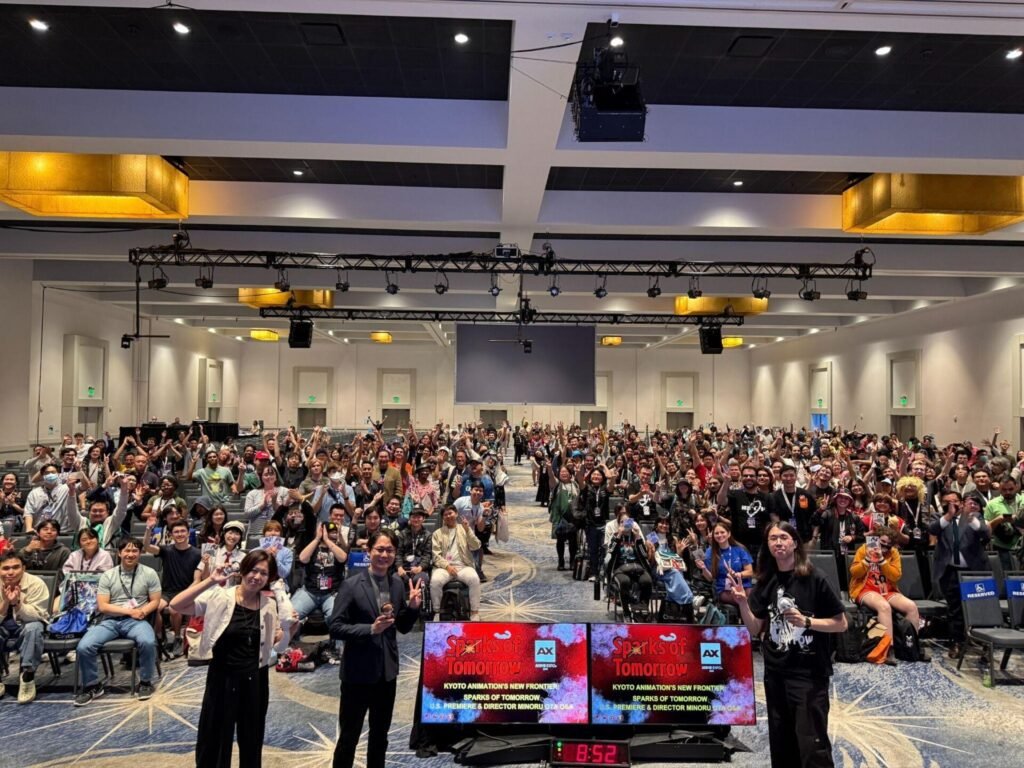
Producer Senami added that Yosuke’s role would continue to expand as the story unfolds. The panel concluded with a reminder that Sparks of Tomorrow is now streaming worldwide on Netflix. Following a commemorative group photo, the guests left the stage to another warm round of applause, bringing the successful world premiere to a close.
Sparks of Tomorrow is Kyoto Animation’s newest original television anime, set in an
alternate-history Kyoto where steam technology shapes everyday life. The series is now
streaming worldwide on Netflix.