





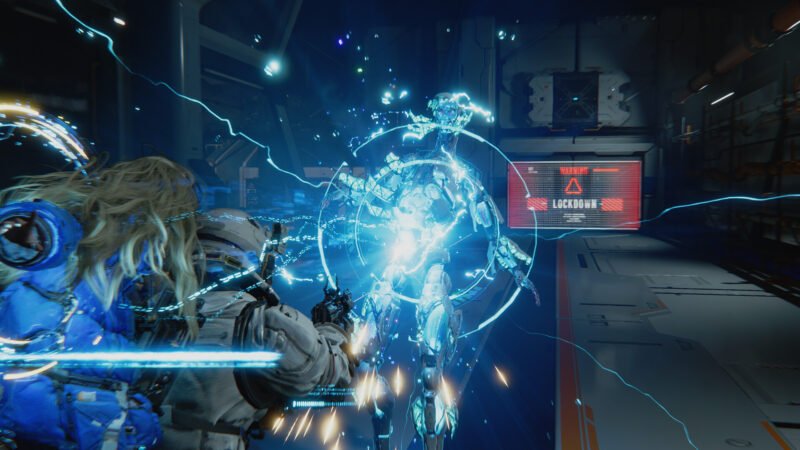
CAPCOM’s newest IP, PRAGMATA, is a science-fiction action adventure with a unique hacking twist. Set in the near future, protagonists Hugh and his android companion Diana must work together as they make their way through the cold lunar research station.
Developed by: CAPCOM
Played on: PlayStation 5
Length: 16 hours
A review key was provided by CAPCOM.
CAPCOM has spent the last few years as the ‘sequel studio’ and nobody batted an eye. We were there to play all the remasters, we cheered when the next Resident Evil was announced, and it was a pleasant surprise when the Onimusha franchise came back from the dead. A project like PRAGMATA, which began production half a decade ago and had already been delayed three times, felt like something far into the distant future.
Well, that future is today — in more ways than one.
Set in a dystopian future, PRAGMATA tells a story about a space engineer named Hugh, who becomes stranded on a moon station with a mysterious android named Diana. Together, they must fight a hostile artificial intelligence known as IDUS that is controlling the station and find a way to safely return to Earth.
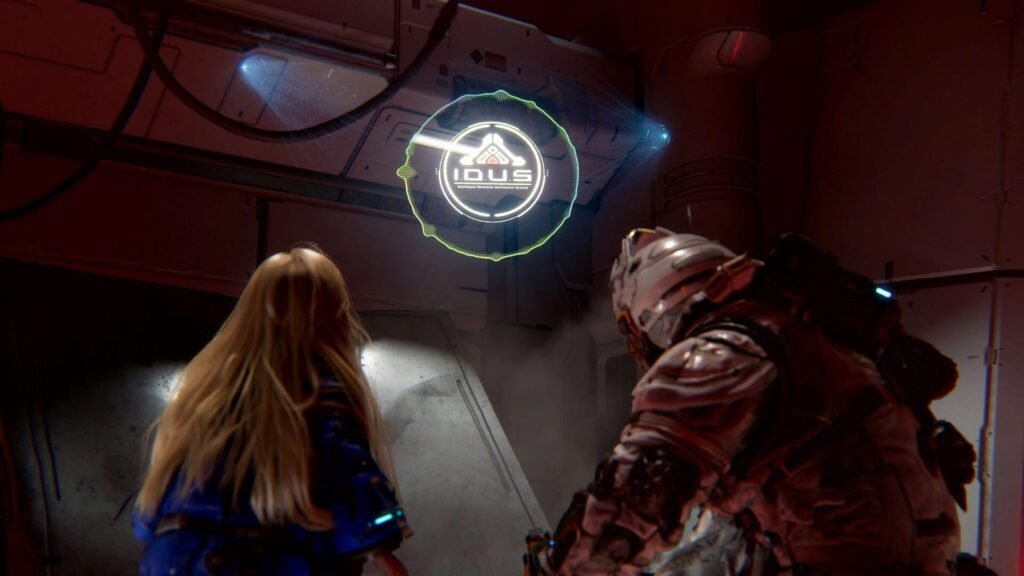
Although I’d like to jump into my thoughts on PRAGMATA’s story right away, the narrative generally plays second fiddle to its incredible mechanics. In the game, you control two characters at once: Hugh, your standard long-ranger who deals damage with a variety of weapons, but plays the more important role of transporting Diana, your hacker extraordinaire trapped in the body of a child.
Neither character can function without the other. Diana is required to hack enemies and expose their weak points, but is vulnerable to being disrupted and can’t deal constant damage; while Hugh has weapons that can disable enemy movements and make things go boom, but struggles to deal substantial damage if the enemy isn’t hacked first.
How this plays out practically in-game is a minor stroke of genius. First, there’s the hacking grid on the right side of the screen. Your goal is to reach the green square to initiate the hack, but the more hacking nodes you activate along your path, the more debuffs you trigger when the hack finally lands. All of this happens in real time, requiring you to dodge enemy attacks while staying within range, and if you get disrupted at any point in time, you risk having to start the hack all over again from the beginning.
Thankfully, Hugh is more than just an overglorified transporter. Besides his primary weapon, he can cycle through a library of other weapons that each serve a different purpose. This includes Defense Units, which send out decoys or shields that serve as distractions, and Tactical Units, which send out traps or bombs that disrupt the enemy’s movements. Rounding it out are Attack Units, which are heavy damage-dealers and perfect when your primary fire just doesn’t hit hard enough.
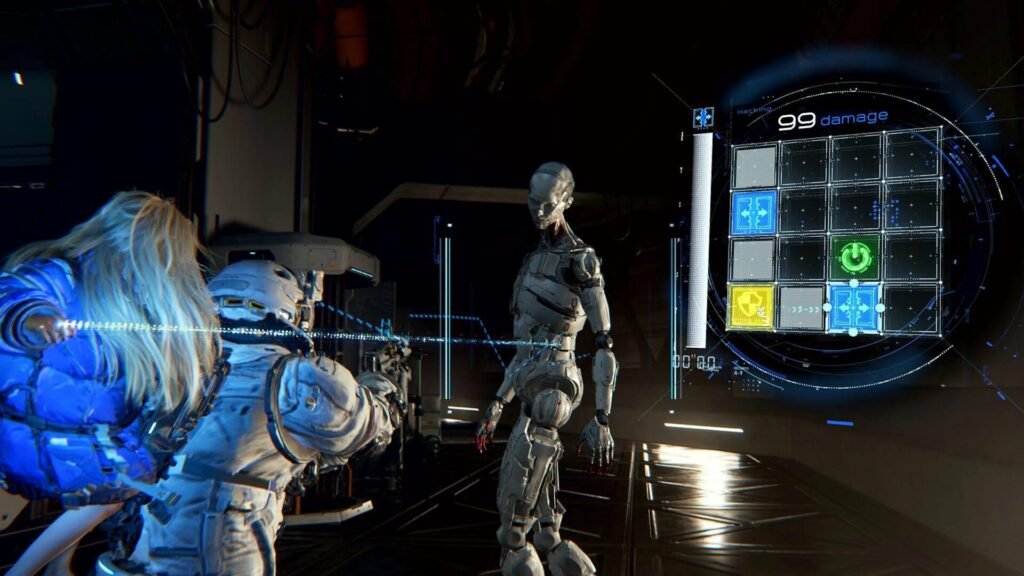
It takes awhile to get used to juggling between hacking and shooting, but there’s no better feeling once you hit that perfect cycle of uninterrupted damage. Being able to successfully dodge, while constantly shooting the enemy, while simultaneously initiating a hack, feels like a lot to do at once; but the game does a good job of training you to juggle like a pro, before they throw in another ball.
In this case the ball is resource management, and it’s on fire, and you can’t put it down. How it works is simple: all weapons except your Primary Unit will break after a few uses, and the same goes for your hacking nodes, which will disappear from the grid after they’ve been used up. While there are plenty of new weapons and nodes scattered across the map, it essentially ensures one thing. There is no way to beat PRAGMATA without becoming passably decent at every single weapon in this game.
In an era of video games serving up personalisation on a silver platter, it is almost refreshing to play a game that forces you to become well-rounded. Of course, this gets easier as you progress further into the game, when you unlock more options for weapons, better character upgrades, bigger loadout sizes, and even the handy dandy ability to auto-hack. But until then, learn the fundamentals, you must.
Not only that, the best way to beat PRAGMATA is through the cruel exercise of self-restraint. You want to save your hardest hitters for the biggest enemies, which means saving ammo on your weapons, but also means going out of your way to avoid triggering certain hacking nodes on the grid. For instance, triggering a multihack in a room with one enemy is a complete waste, but you might have to take a longer path on the grid to avoid activating it; all while continuing to avoid enemy attacks and dealing damage.
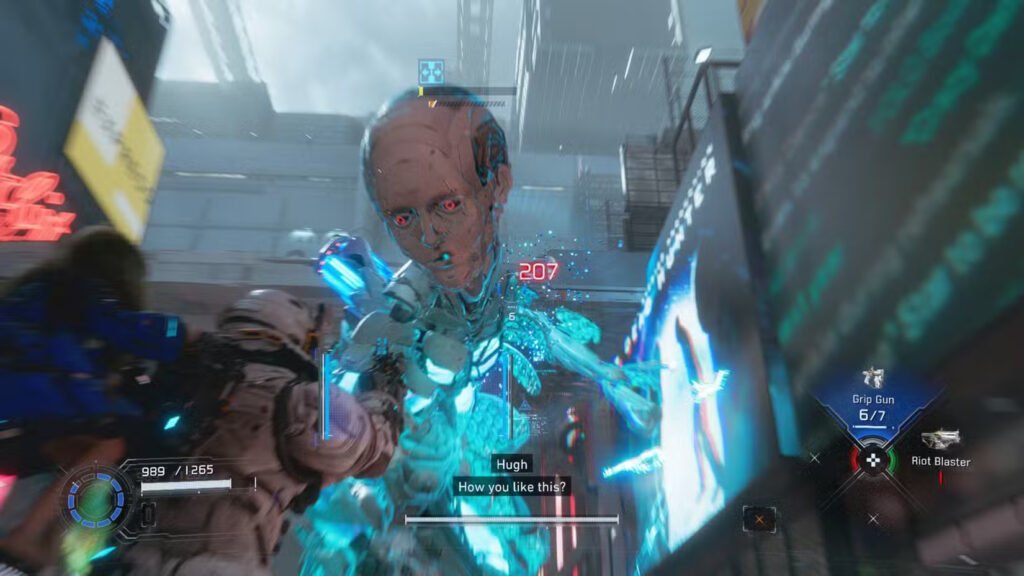
All that build-up aside, PRAGMATA is not the most challenging action-adventure game out there. Normal Mode was perfectly doable, and there’s always the option to switch to Easy Mode for weaker enemies. However, the game features a manual save system, not unlike the Resident Evil franchise, where your progress gets reset each time you die. While you can regularly return to the shelter to save your progress, it also causes enemies to respawn and puzzles to reset.
That being said, PRAGMATA is at its best when it is difficult. I had the most fun challenging the optional Red Zones, which are locked rooms with high-difficulty enemies and rare rewards. There’s also a surprising amount of gameplay in its training simulators and post-game content, which really push your mastery of the gameplay mechanics to the limit. All of these are optional content and aren’t required to complete the game, but definitely give you a good excuse to spend more time with the game and its unique mechanics.
While I cannot comment on whether the overall experience is better on keyboard or controller, most CAPCOM titles tend to be built with controller in mind and PRAGMATA doesn’t seem to be the exception to the rule. The controller experience is especially intuitive, as the entire right side focuses more on hacking while your left side focuses on movement, reflecting how it appears on-screen. It also helps that the game isn’t overly aim-intensive despite being a shooter, so turning on aim assist here goes a long way.
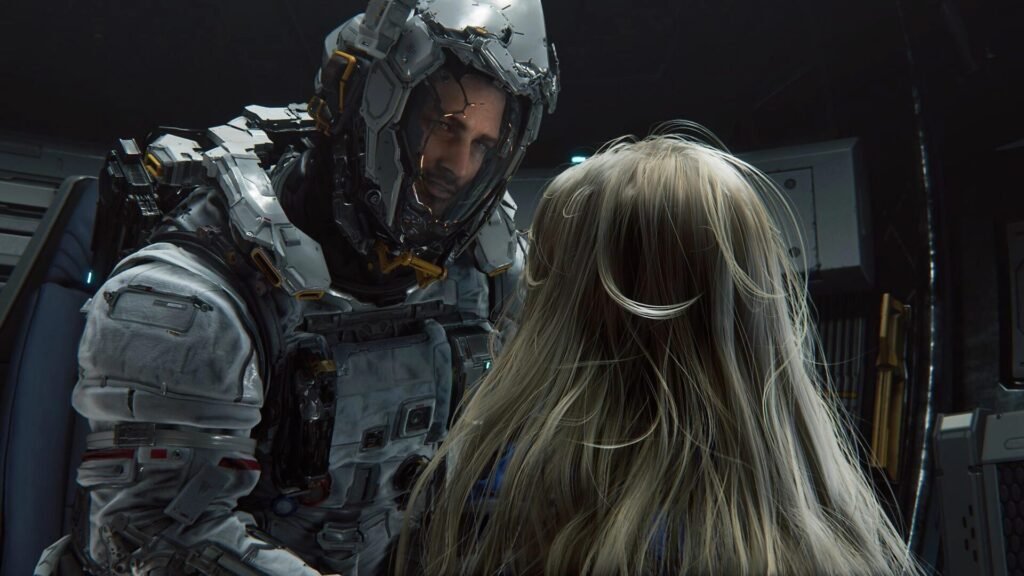
Last but not least, let’s touch on the story. There’s a lot about the PRAGMATA formula that will be familiar to players. After all, it is hardly the first time we’re seeing a grumpy middle-aged man change his mind about children after meeting the embodiment of childlike wonder in a hopeless place. But between the father-daughter duo, Diana easily steals the show with her childlike mannerisms and enthusiastic disposition.
She is adorable, but she is also fairly realistic, which only adds to the players’ immersion as a new father to this android girl. In the shelter, you can even talk to Diana and answer her questions about Earth, or simply sit back and observe as she plays with the toys you bring back to the shelter. Some dialogue and behaviour choices were so true to life, that they left no doubt in my mind that the game’s writers have young children of their own.
Outside of the obvious adorable factor, PRAGMATA presents a contemplative narrative about artificial intelligence, machine consciousness, and the ever-present evils of corporate greed. Some of the themes addressed are so relevant today, that it’s hard to believe that development of this game began half a decade ago, and yet, it still manages to hit home on so many fronts. That said, PRAGMATA doesn’t quite manage to push the needle when it comes to its narrative. There are heartfelt moments, and even tear-jerking moments, but most of it still takes a backseat to the gameplay.
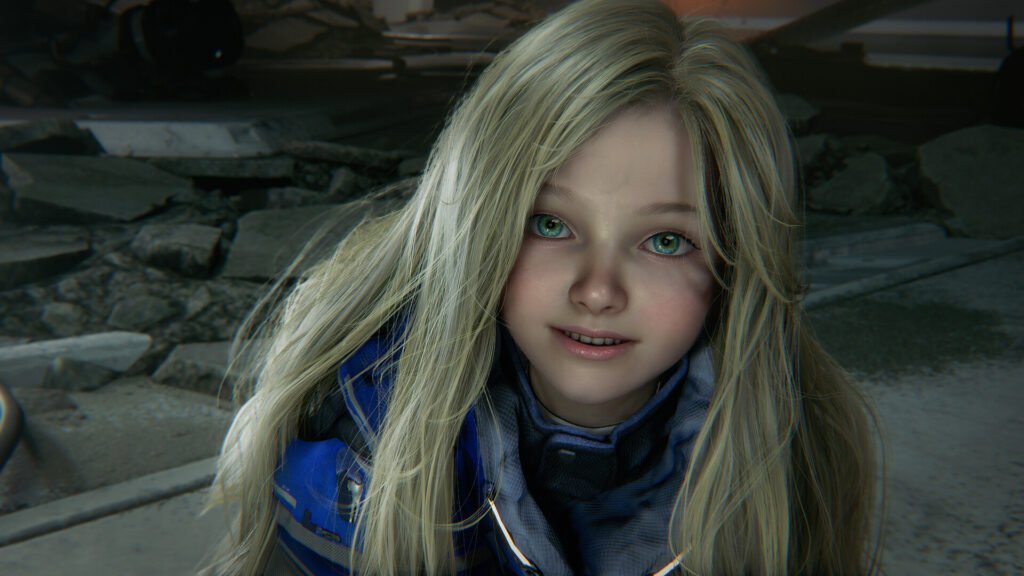
All in all, CAPCOM may not be best known for their sci-fi titles, but PRAGMATA finds a comfortable spot on its catalogue regardless. It is rare for video games to innovate on mechanics, especially from a control scheme perspective, and the extra years spent polishing its controls have definitely paid off. For those looking for a well-balanced and mechanically fun time, PRAGMATA is a much-needed breath of fresh air and a must-play from this year.
Verdict: Honey, I Adopted A Robot From Space
CAPCOM’s newest original science fiction game may be half a decade delayed, but it was well worth the wait. PRAGMATA presents a mechanically innovative approach to combat that is fun to learn and even more fun to master. It features a unique blend of gunplay and hacking that will keep you coming back to the game, even if the narrative tends to take a backseat to its combat.