
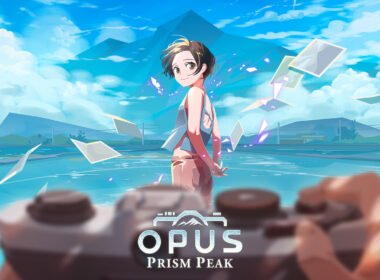


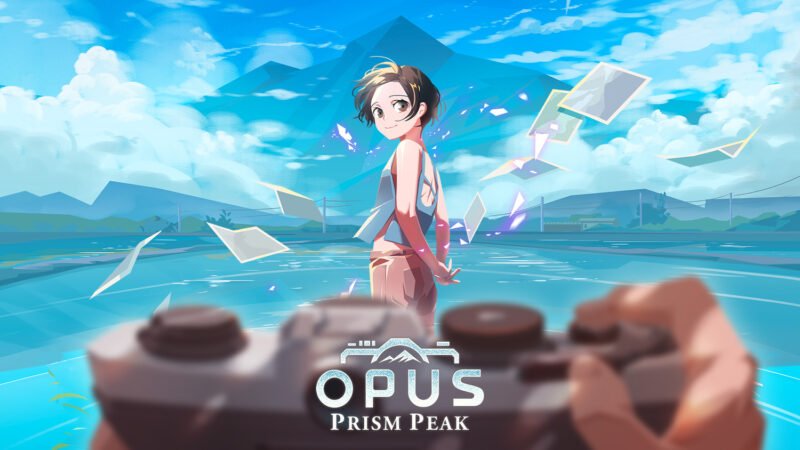
OPUS: Prism Peak is a narrative adventure where you play as a weary photographer stranded in the Dusklands, traveling with a girl who’s lost her memories. Together, you’ll uncover the mysteries of this land through your camera and find your way home.
Developed by: SIGONO
Played on: Steam
Length: 10 hours
A review key was provided by SIGONO.
Note: The following review contains no narrative spoilers.
This isn’t the first time that Taiwanese studio SIGONO are threatening to make its players cry, and it certainly won’t be the last time. OPUS: Prism Peak is the fourth instalment in their long-running OPUS series, and if this is your first introduction to SIGONO as a studio, it is a fantastic place to start.
Unlike the epic intergalactic settings in their previous titles, OPUS: Prism Peak presents a standalone setting that feels a little closer to home without abandoning its signature fantasy elements. You play as Eugene, a weary photographer who finds himself caught outside of reality, traveling with a young girl who has lost her memories. Together, you uncover the mysteries of this ethereal realm through your camera and find your way home.
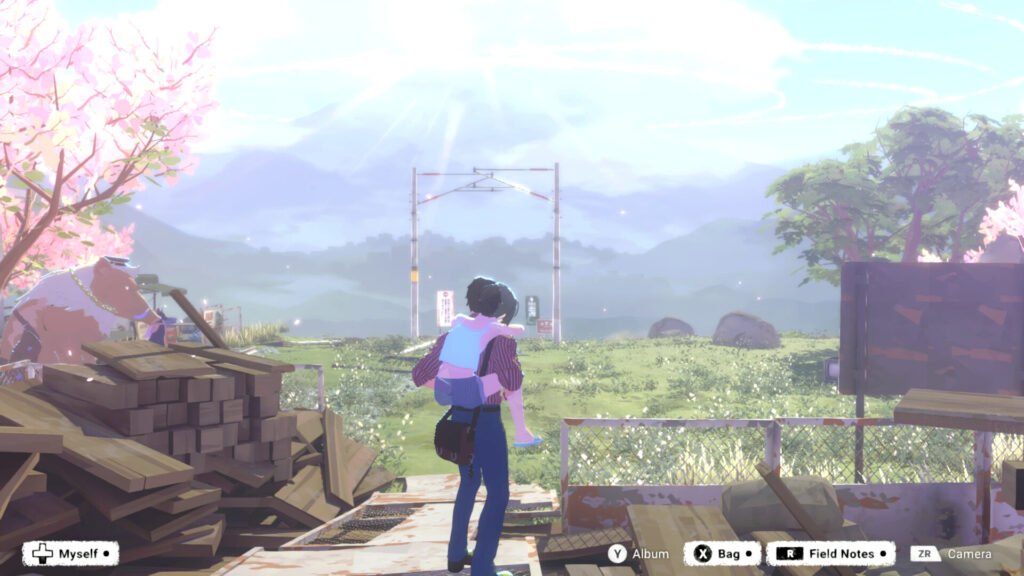
From the moment you hit start, it is clear that OPUS: Prism Peak is a far bigger game than anything SIGONO has created before. Its opening moments are ambitious and dramatic, and the rest of the prologue unfurls with cinematic splendour. Every single moment that follows, from narrative pacing to sound design, feels curated and intentional, drawing you deeper into its fantastical world where animals talk and cameras can change reality.
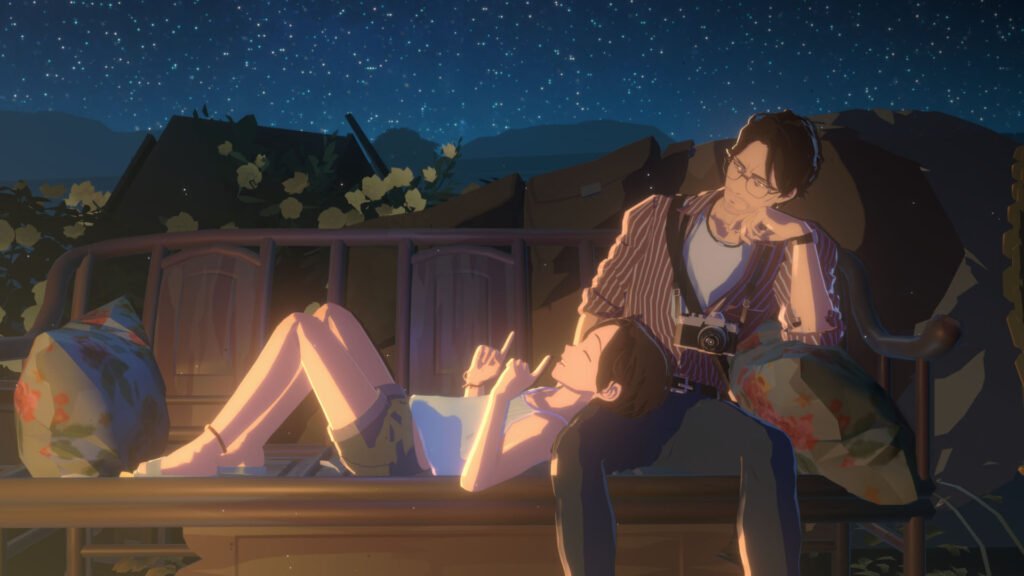
The journey you go on is nothing short of magical, spanning weathered countryside towns to gloomy metropolitans, with anime-inspired cel-shaded graphics reminiscent of the newer The Legend of Zelda games. The environment design alone makes you want to run around with the camera and completely forget the objective of the game, and thankfully, this is the kind of game that encourages thorough exploration and an eye for detail.
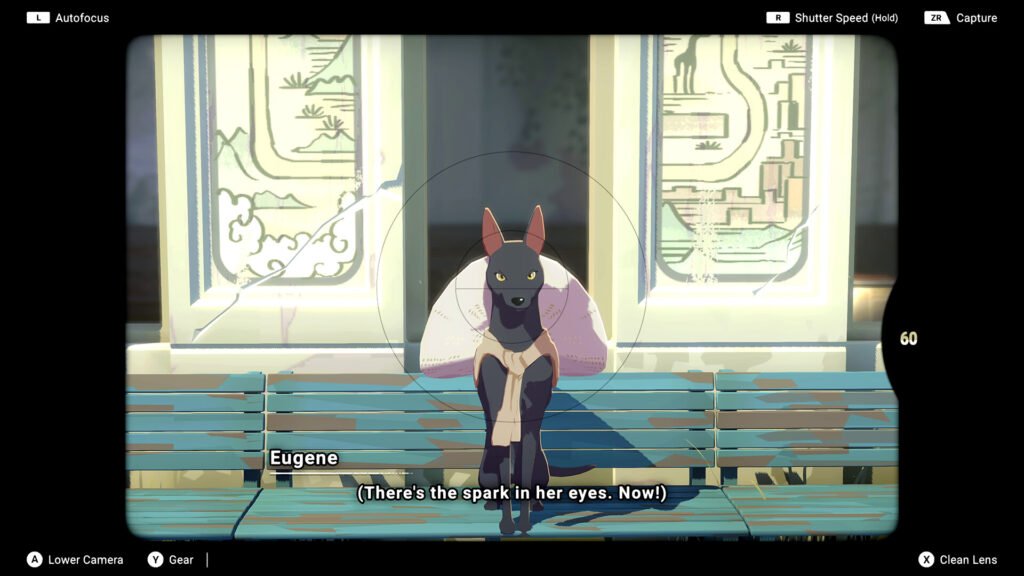
OPUS: Prism Peak is a photography game at heart. Using your camera, you navigate through the narrative by capturing photos of the right moments and unlocking items that will help you progress to the next stage of the game. There is a main objective at stake here, but it is the optional objectives that make up the full experience. Completing all the optional objectives not only gives you a fuller picture of the spirit animals and the vibrant world they live in, but also guides you to make the right choices in dialogue and even impacts which ending you get when the credits roll.
Since the game’s launch back in April, OPUS: Prism Peak has added a “Comfort Mode” which blurs out the photos you missed, and basically ensures you won’t miss out on any content during your playthrough. But for a game that encourages slow and careful exploration, I would highly recommend you go with the default game mode on your first playthrough for the intended experience. You may miss out on some things along the way, but sometimes missing out is part of the journey too.
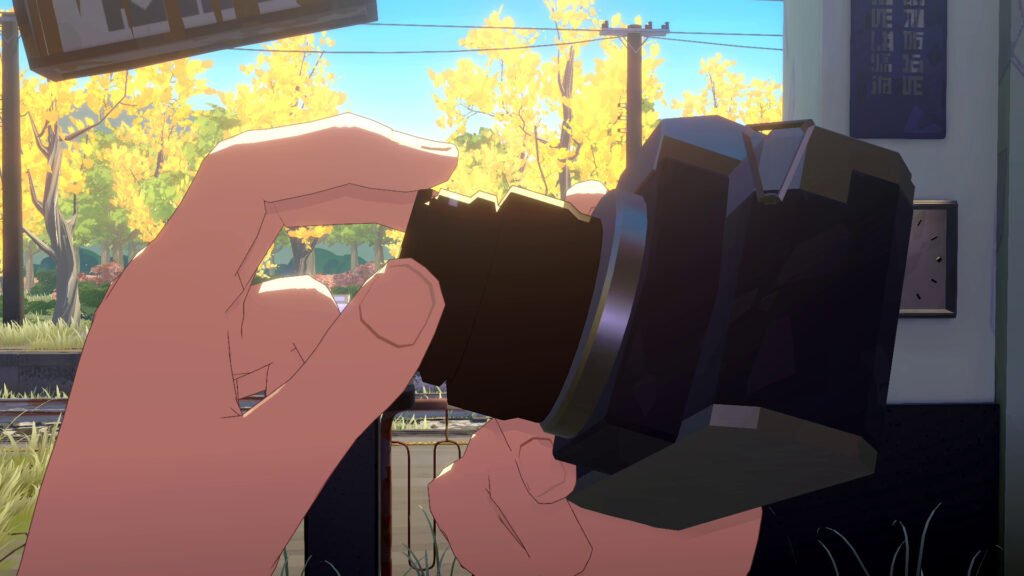
The game takes its photography gameplay one step further by introducing more camera components as you progress through the game. From manually adjusting exposure, to equipping different camera lens, OPUS: Prism Peak perfectly simulates the feeling of fiddling around with your camera to capture the perfect shot. Even as someone who doesn’t typically play around with in-game Photo Mode, the camera mechanics were so satisfying that I found myself taking plenty of photos that had nothing to do with the main story, just for my own personal collection.
The gameplay doesn’t end when you click the shutter either. Throughout your journey, your Field Notes will continuously update with notes about the spirit animals and the world around you. Much of this is reminiscent of Return of the Obra Dinn, where you need to fill in two or three blanks accurately before the game allows you to progress. This ranges from observations about the spirit animals, to decoding the foreign language of this world. Not only is it satisfying to watch your Field Notes fill up throughout your journey, but your performance here also impacts which ending you get.
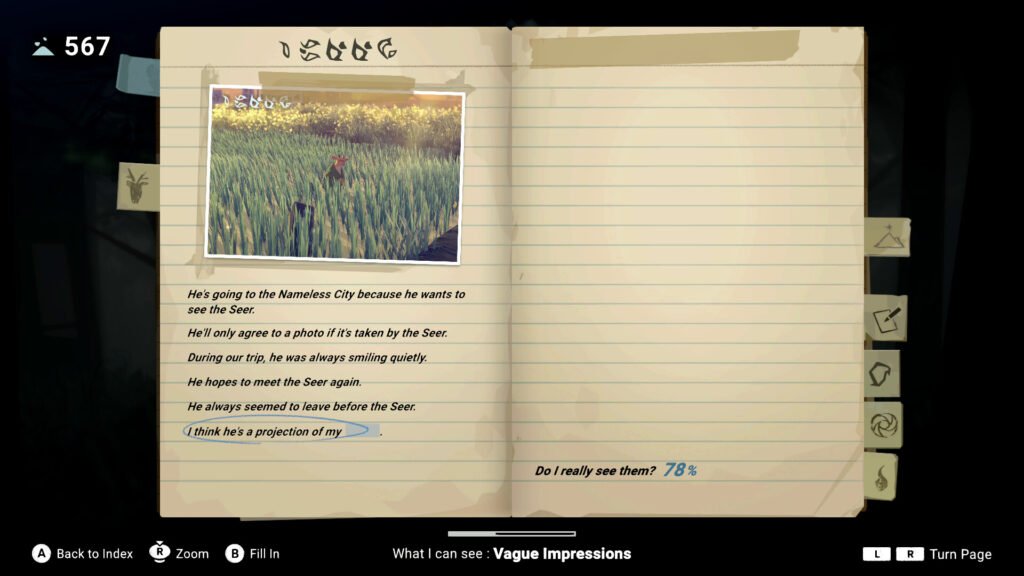
From start to finish, OPUS: Prism Peak was an absorbing experience that I couldn’t tear my eyes away from. Beyond its technical achievements, its narrative tenderly addresses aspects of adulthood that can oftentimes feel too painful to face, while leaving you with a sense of raw optimism that feels like a rarity in today’s cultural climate.
Not forgetting, the entire game is fully voiced featuring strong performances from Eddy Yeung and Diana Garnet in English, and Shinichiro Miki and Kana Ichinose in Japanese. The rest of the English cast is rounded out by Brian Jeffords, chiisa, Peter von Gomme, Chris Nelson, Hannah Grace, Adrian Howard, Eric Kelso, Connor Colquhoun (CDawgVA), Maxwell Powers, and a particularly outstanding performance from Soness Stevens.
Overall, OPUS: Prism Peak was one of the strongest games of the year and a masterclass in narrative-driven games. Whether you’re a fan of SIGONO’s work or picking it up for the first time, we highly recommend this one as a must-play.
Verdict: Beautiful Everywhere You Look
OPUS: Prism Peak is another narrative triumph from SIGONO and their most ambitious technical undertaking so far. From a tender narrative that unfurls with cinematic splendour, to breathtaking anime-inspired cel-shaded graphics, each moment is carefully curated to make every emotional beat hit harder — and make every click of the shutter matter. Simply put, a masterclass in narrative-driven games from one of the best in the business.
Read our interview with the SIGONO at gamescom asia 2024 here.