

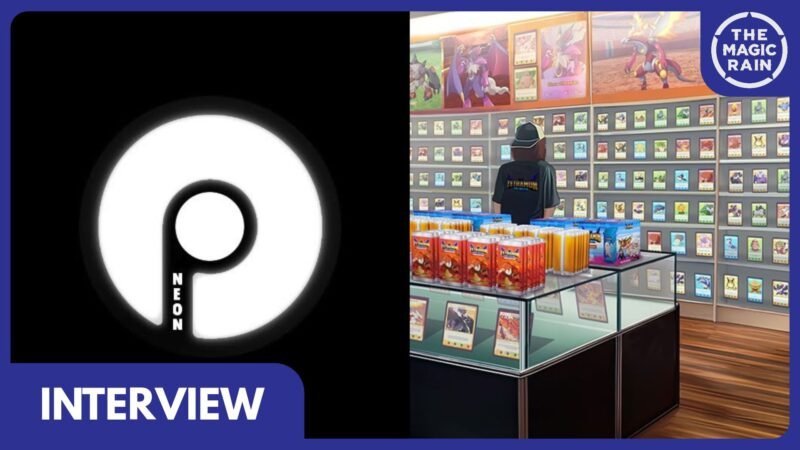
TCG Card Shop Simulator has emerged as one of Malaysia’s biggest indie game success stories in recent years. Launched in 2024 by solo developer Ding Shen Sia, the game quickly became a viral sensation, gaining traction among popular streamers and content creators who helped it to reach a much wider audience.
The game recently launched its 1.0 release on Steam, introducing several highly anticipated features, including a fully playable version of its fictional trading card game, Tetramon Duel Master. The launch also marks a series of milestones for the game, which has surpassed 4 million players on Steam, and recently won Best Game Design at the SEA Game Awards 2026.
Now the founder of OP Neon Games, Ding Shen Sia reflects on his development journey with TCG Card Shop Simulator, sharing insights into the game’s success and the experience of bringing his vision to life.
TCG Card Shop Simulator launched into early access two years ago and sold over 3.5 million copies before hitting Version 1.0. When you first embarked on the project, did you ever imagine it would receive this kind of response?
I never imagined it would receive this kind of global response. Back in 2023, I was feeling aimless and burned out after working on solo mobile games. I decided to challenge myself with making a PC game, mostly because I wanted to see if I could get my own Steam Trading Cards to work.
From there, I worked like a madman, putting in at least 90 hours every week for six months straight. I launched the game into Steam Early Access on September 15, 2024, a month earlier than planned. My initial expectation was modest: I told myself I would be very happy if it sold 100,000 copies in a full year.
Instead, it sold 100,000 copies in just three days, eventually reaching over 4 million players across PC, Xbox, and other platforms. It was also picked up organically by popular streamers and VTubers without me contacting them, which brought immense attention. Going from a solo developer in Selangor working on an experiment to seeing millions of players enjoy it feels completely surreal.
TCG Card Shop Simulator captures a lot of the obsession that comes with real trading card culture. Are there any personal experiences with TCG that directly influenced the game?
Yes, my personal experiences with trading card games directly shaped the core mechanics. As a child, I loved collecting Pokémon and Digimon monster cards, but I didn’t have much money back then so I couldn’t collect all the characters I wanted.
Years later, while working at Passion Republic, my colleagues reintroduced me to physical card games like Magic: The Gathering and Digimon. Every Friday night, I visited a local game store to compete in MTG tournaments and win booster packs. For weeks, I pulled dud after dud, until one night I opened a pack and pulled a rare chase card worth $200. My hand was actually shaking because it was the most valuable card I had ever opened.
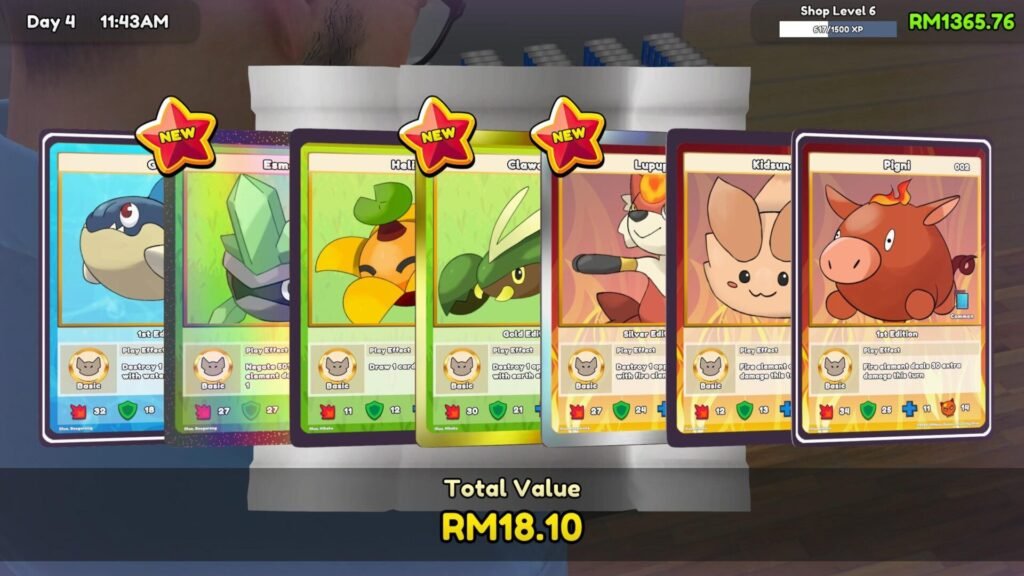
That memory stuck with me, and I put a lot of effort into replicating that exact tactile thrill in the game—from ripping open the foil wrapper to revealing the card and displaying its market value. Creating the simulator also allowed me to scratch my own pack-opening itch without spending real-world money.
One of the game’s biggest positive aspects is how players can experiment with the systems in unexpected ways, from funny pricing strategy and furniture management around the shop. How intentionally did you design the game to support this kind of player-driven chaos?
My goal was never to create a hyper-realistic simulator, but rather a fun card shop owner fantasy. In real life, you wouldn’t sit in a pitch-black corner ripping cases of booster packs hoping to make bank, or forcefully spray your customers with deodorant.
While I designed simple, satisfying shop management mechanics inspired by games like Recettear and Supermarket Simulator, players surprised me by optimizing the game in ways I never anticipated. Some players fill their entire shop with Pack Opening Machines (POMs) or specialize in selling only a single item type to maximize profit. Others set up POM farms to pull every rare card in the game.
I love seeing this kind of player-driven creativity, and I believe players should be free to play however they want as long as they enjoy the experience.
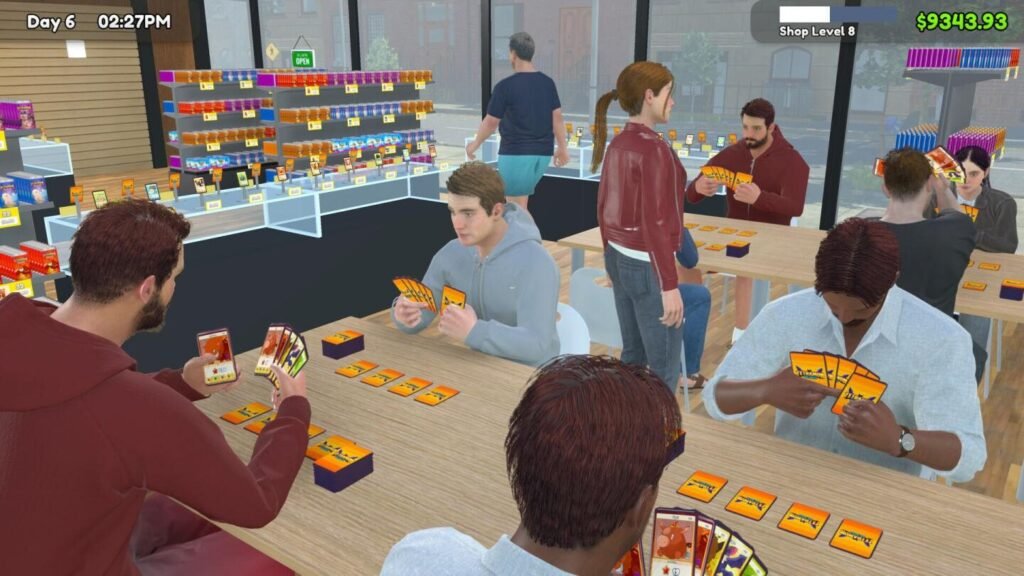
The game feels simple on the surface, but there are many systems working together behind the scenes. Which technical system was the most difficult to build or balance, and why?
Performance optimization was definitely the most difficult technical challenge. Because a growing store can accumulate an endless amount of items, decorations, staff, customers, and individual cards, early builds suffered from severe rendering lag and long load times.
As a solo developer, I spent a massive amount of time profiling, culling, and reducing unnecessary rendering throughout Early Access. I didn’t build every tool from scratch; instead, I saved time by utilizing pre-existing Unity Asset Store plugins like A* Pathfinding Pro for customer walking paths and I2 Localization.
When it came to porting the game across consoles like Xbox, PS5, Switch, and Switch 2 while simultaneously updating Early Access, doing it alone was impossible, so I partnered with General Arcade to handle console porting. That freed me up to focus on core features like the playable TCG for version 1.0.
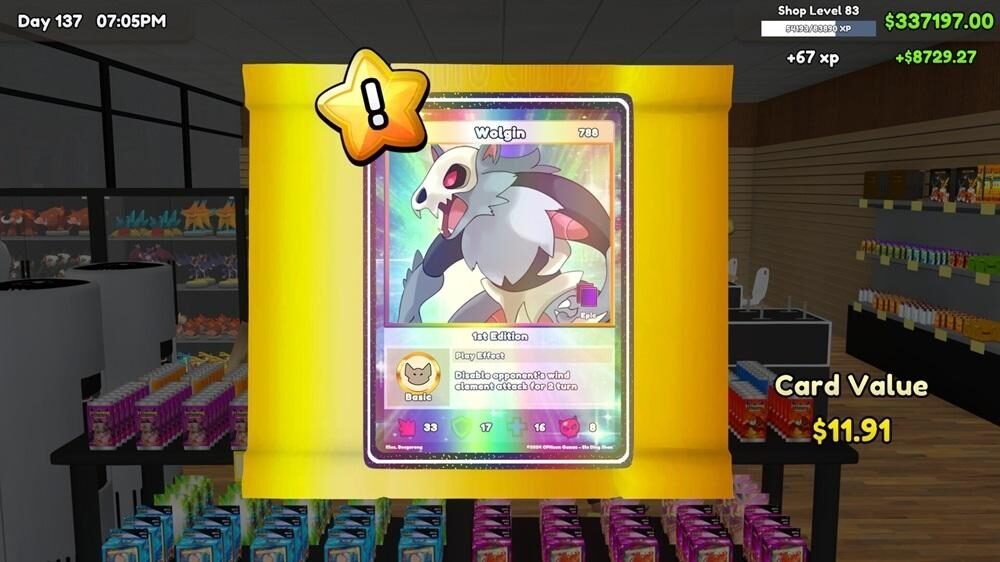
Player feedback has clearly shaped the game throughout Early Access. Was there any feature, mechanic, or design decision that changed significantly because of how players actually behaved rather than how you expected them to play?
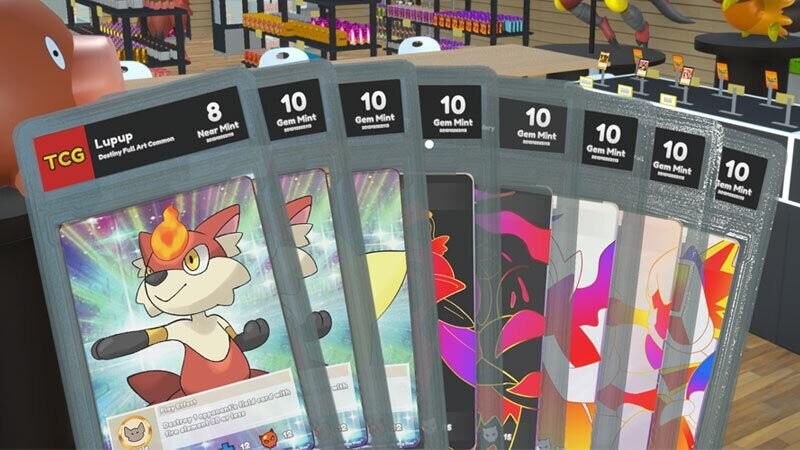
Player behavior and feedback reshaped several key decisions. Before developing the game, I knew nothing about real-world card grading services. It was only after many players requested it that I researched card grading and introduced it in update 0.60 as an optional, high-margin secondary market loop.
We also introduced Camera Mode as a direct response to how local game stores take photos of tournament participants to post on social media and verify events. Early Access proved invaluable because it prevents you from spending time on features you think players want versus what they actually care about.
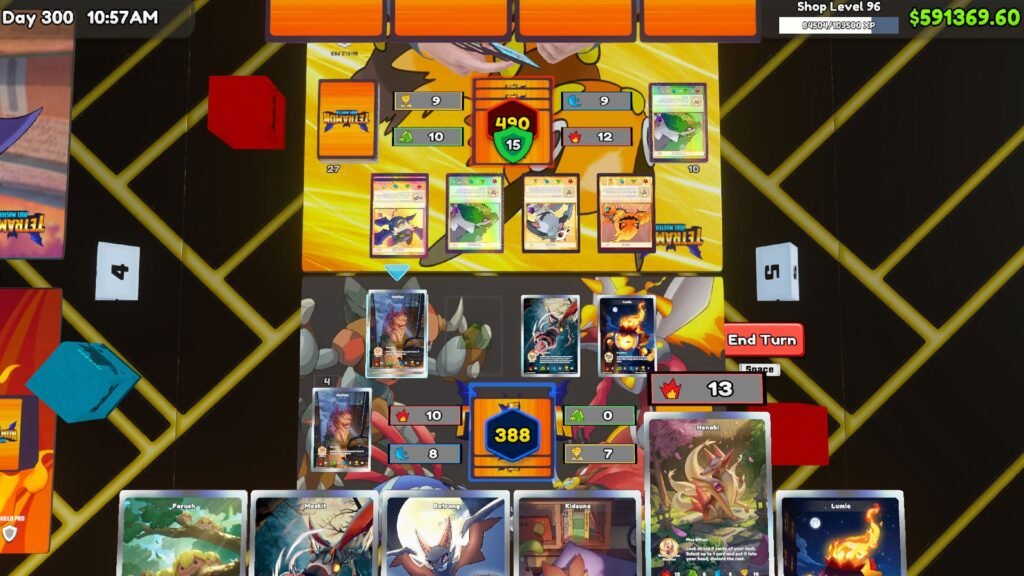
With the 1.0 release expanding the role of Tetramon, how challenging was it to turn a fictional card game inside a simulator into something players can actually play and understand?
Turning Tetramon Duel Master into a fully playable TCG was a huge undertaking, but it completes the soul of the game. From the start of Early Access, the ability to actually play the card game sitting on store shelves was our most requested feature.
We designed the duels around 50-card decks capped at four copies per named card, where duelists start with 500 Tamer Points and draw an opening hand of 5 cards with 1 optional mulligan. Matches feature four Elemental Areas—Fire, Earth, Water, and Wind—where Tetramons battle, triggering Play Effects like Burpig’s elemental power boost. Attack power combines a Tetramon’s base strength with its Elemental Area slot.
We also added a Guardian Area comeback mechanic: the top 4 cards of your deck are placed face-down, and taking damage past 400, 300, 200, or 100 Tamer Points lets you draw a Guardian card directly into your hand. With nearly 2,000 new cards added in version 1.0, players now have 4,436 total cards to collect and battle with.
Now that the game is reaching 1.0, what part of TCG Card Shop Simulator are you most proud of, and what do you hope players remember about the game beyond simply running a card shop?
I am most proud of how the game captures the tactile emotion of pack opening, as well as specific designs like the foil “Ghost” cards and my favorite vampire Tetramon, Dracunix. I am also deeply proud of our ‘Buatan Malaysia’ identity, including adding the Malaysian Ringgit (RM) in-game as an Easter egg celebrating my roots in Selangor.
Beyond shop management, I hope players remember TCG Card Shop Simulator as a balanced experience that equally prioritizes being a shop owner and a card collector, where running a business and hunting rare cards constantly fuel each other. I started this project when I felt aimless, and I am forever grateful to the millions of players who supported a game I originally built just for fun.
Read more stories from the 2026 SEA Game Awards here, and check out our review of TCG Card Shop Simulator here.