


Onimusha: Way of the Sword is the first new entry in Capcom’s Onimusha franchise in over twenty years. First revealed at The Game Awards 2024, the game takes place in Kyoto during the early Edo period, where the demonic Genma have taken over. Armed with an Oni Gauntlet, the legendary samurai Miyamoto Musashi will have to fight back their evil forces, while also grappling with inner demons of his own.
At gamescom asia x Thailand Game Show, we had the opportunity to speak with the game’s producer Akihito Kadowaki and director Satoru Nihei to learn more.
This interview has been paraphrased for ease of reading.
In the latest trailer from TGS 2025, we saw Sasaki Ganryu also wearing an Oni Gauntlet, putting him on equal footing with Musashi. What was the creative reasoning behind giving your hero’s greatest rival the same power that he has, and how does that shape their relationship in this story?
The main reason is because Musashi and Ganryu existed in the history of Japan. They are real swordsmen, they fought proudly, and both of them were very strong. We wanted to give the same power to both of them, to respect the history of Japan where they were both equally good swordsmen. So in order to make their power equal, we gave both of them the gauntlet.
Additionally, we have always wanted to build up the relationship between these two characters, Musashi and Ganryu, not just because they really existed but they are the main characters of this entire series as well. We want everyone to stick along until the end of the end to see the battle between these two. In so many aspects, we want everyone to be with us to see the end. So it’s very important to make their fight equal.
Onimusha: Way of the Sword has evolved into something quite different from its previous entries. Could you talk us through your goals and direction which led to how Way of the Sword turned out?
The subtitle, Way of the Sword, has already kind of summarized a little bit of the plotline and direction. History-wise, Musashi is supposed to be the most powerful swordsman. That’s his final form, and he’s going to get there. But within the game, he’s younger, he is on his journey to become the best swordsman.
He wanted to do it with his own power, but he is also given the gauntlet, and in the beginning, there’s a struggle of “I don’t want to be strong because of this, I want to do it myself“. Throughout the game, you will see how he will accept his fate. So direction-wise, we really wanted to portray that journey of becoming strong, plus the struggle within himself as he does so.
Another part we wanted to highlight on this story is, if you play any game or watch any anime, the protagonist gains their power, then accepts it and becomes super strong. They just fight through everything, getting super strong. That seems to be the pattern, but for Musashi, he does not want this power. He is constantly fighting with it, and that is probably another interesting part of the game, of how he’s actually struggling with having the power.
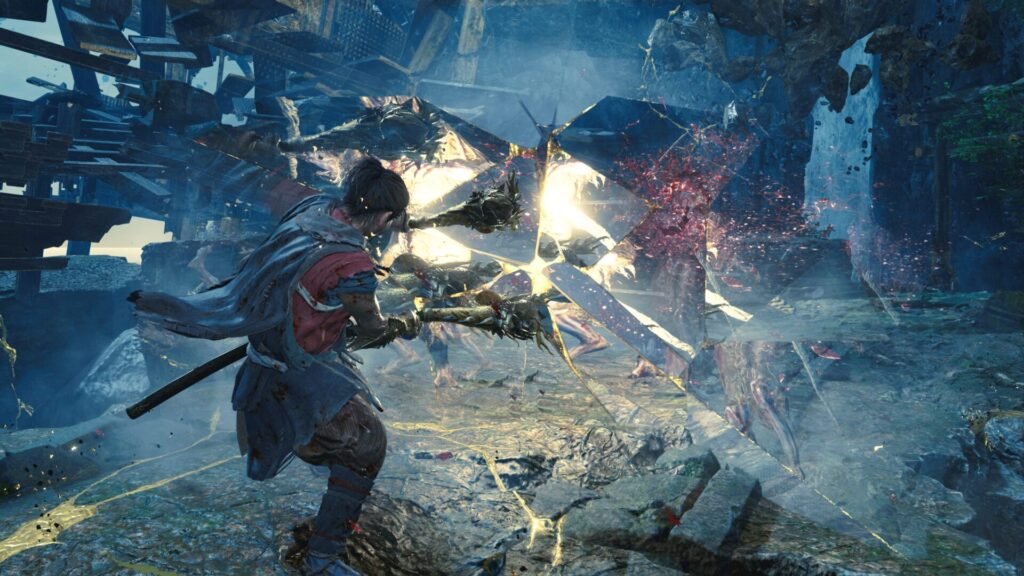
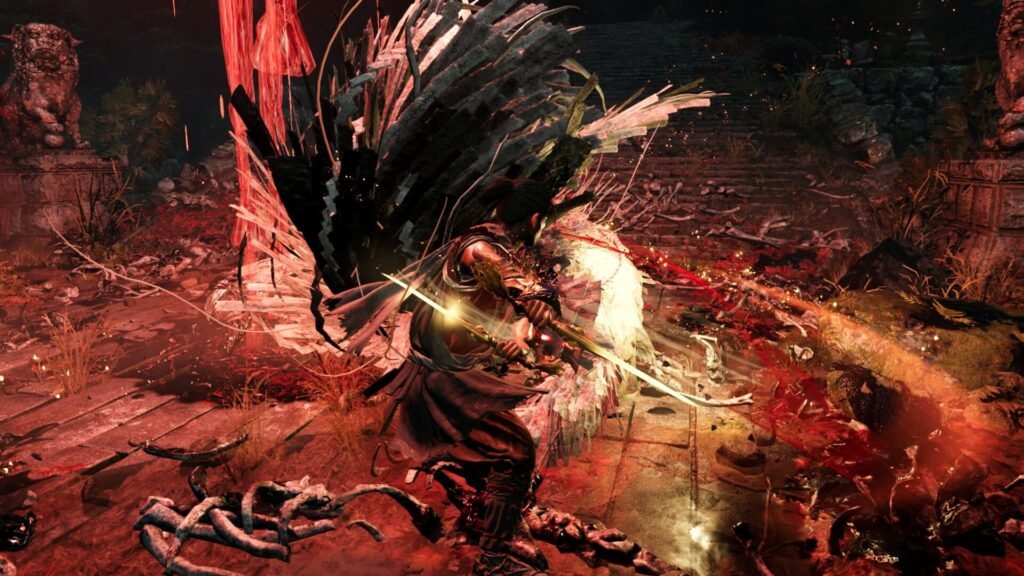
In terms of gameplay, we focused a lot on the sword, from the kinds of swords to the types of movement we wanted to use. We even hired a professional swordsman to show us the movements and how each sword has a particular usage. We had a long discussion on how to make the sword fighting scenes and usage be as realistic and as interesting as much as possible, as at the same time it is a game, it has to be interesting to play. Also Onimusha is, as we all know, a dark fantasy. There’s a lot of inhuman movement, where we’ve tried to put on some speed to enhance the vibes further.
It has been almost 20 years already since the last Onimusha, and we understand that the market has changed and people have changed, but we started from thinking what makes Onimusha, Onimusha. We tried to keep whatever that’s iconic from the previous games so the fans still love the world it is, but at the same time we develop the world within for a new user. They can just come in and they will get the vibe immediately, they will understand the story.
Even though we have kept the world of Onimusha the way it should be, we have added so many aspects that would satisfy both old and new players. If you played the demo, you probably saw the fighting scene where the swords hit each other. The effect and the satisfaction of cutting your enemy is way more than the last one, that’s for sure. So when you play this, at the end we want you to think “This is the satisfaction you’re going to get from playing action games from Capcom.” That’s how much thought that went into the action.
I have read an article that stated your team picked Musashi as the main character because you want to attract more global audiences. Did the old original PlayStation 2 titles fail to do that, or is the statement mainly just to reassure global fans?
If I’m going to say no, I did not plan for a global audience, that would be a total lie. Yes, we were aiming for a global market as well, but to dig deep into it, it was because it used to be just plain swordsmen back in the day. However, like I said, we wanted new users to start playing this game as well. When a new user plays a game, if there’s a character that they’re already familiar with, that is probably the easiest entrance for a new user to start having interest in the game. So that is how it started.
Additionally, this time we wanted to write a story about a samurai that actually fights until he’s all covered up in mud and blood, a little bit of an eerie scene. We wanted a samurai that’s a little bit on the dirtier side. So Miyamoto Musashi was kind of the right character for this version.
Do you see Onimusha: Way of the Sword as both a continuation of the past, but also setting the stage for the future?
As a team, we all already love Onimusha, the vibes and the world that have already been created. But creating this new Way of the Sword, we tried to put in a lot of character and personality, and we really tried to make this game as entertaining as possible and as interesting as possible.
The reason is because we want you to be satisfied with this game within itself. We’re not planning to lure you in and then come up with a sequel. If you like it, and if the feedback is great, the possibility of expanding into the future, into a new series, is possible. But it’s not like we’re doing this expecting we’re going to have the next one. We’re trying to make this the best game as it is, and if you like it, the next series could bring up some of the characters from this one, and maybe dig deeper into their story.
What role does historical setting and myth play in the game’s level and anime design, and how did you aim to balance history with fantasy?
In terms of location, this game is set in Kyoto. If you go to Kyoto, you would hear lots of folklore, tales, and all these ghost-related supernatural stories, which fits perfectly into the dark fantasy world we wanted to create. You can also see it in the designs, like the designs of the location or the enemies in the game. That’s how we built that world.
In terms of balancing reality and fantasy, with every design we do, we actually have to consult a professional. Like with the buildings or the scenery, a lot of it looks just like the real thing, and and a lot of it has been through a lot of changes and modifications. But every single modification has been cleared with a professional. We spoke to the authorities, even spoke to the Tourism Association of Kyoto and people involved in that area, to say, “We want to recreate this. Is this okay? Are these changes okay?“, et cetera. So you can enjoy a balance of the real historical location, and some part of it being fantasy, but know all the fantasies have been been approved.
What degree of gore or violence can we expect from this game?
Well, it’s a sword fighting game. There’s going to be slashing, there’s going to be bodies being severed, and you’re going to see a lot of blood and corpses. All that is a must, but if your heart is a little bit on the softer side, you can actually trigger the setting so you cannot see it. You can even change the blood color.
In terms of storytelling, you’re going to see more enemies that look really crazy and scary. The gore and violence is definitely there.
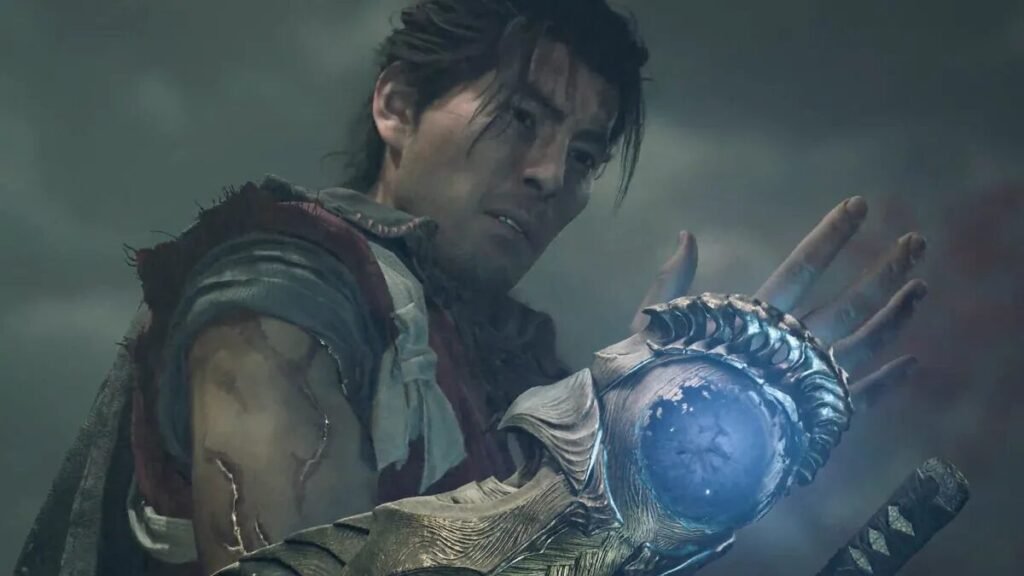
In this game, Miyamoto Musashi is modeled after the legendary Japanese actor Toshiro Mifune. Why was Mifune chosen, and how will he be portrayed? Will he be similar to any of his movie characters?
Yes, you can definitely expect a lot of references, like his facial expression and movement. But to be honest, in the beginning, we did not set him as an example. As we designed Musashi, he became more like Toshiro Mifune, and then people were like, hey, this guy looks like Toshiro Mifune. So from then onward, we started thinking, “Oh, why don’t we just model Musashi after him?” Also, in our team, there’s a lot of people who love Toshiro Mifune, so that was a lucky thing.
Additionally, going back to the previous question, we wanted to create a samurai who’s more down-to-earth, covered in blood, and a samurai who fits this Musashi is Toshiro Mifune. Also, we all have to accept the fact that he is a global samurai. Everyone knows Toshiro Mifune. If you talk about globally accepted samurai, it’s him. We literally face-modeled him to the character, that’s how much he really fit this Musashi.
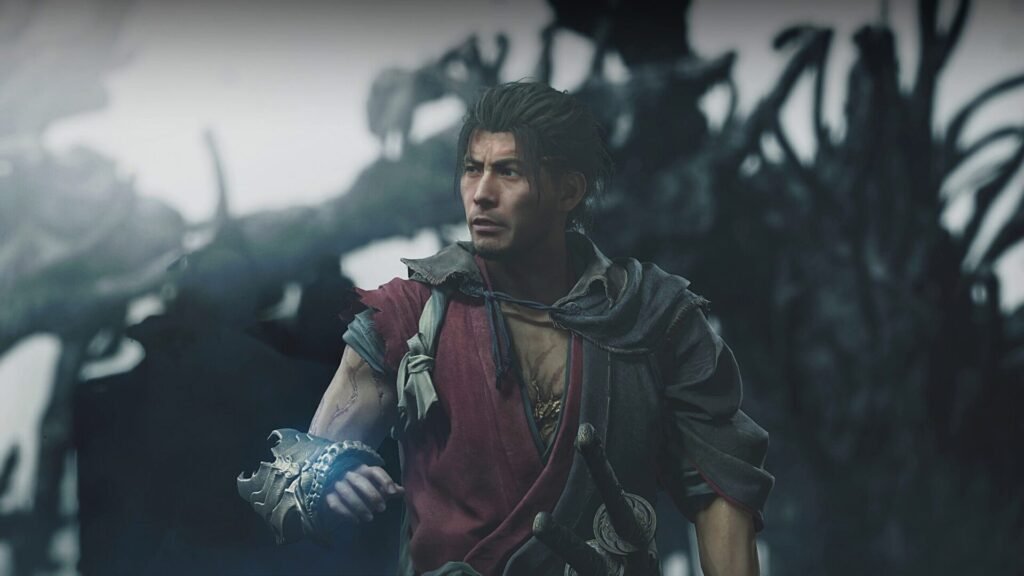
But while we had him as an ideal, we want also want to emphasize that this time the character is still Miyamoto Musashi, not Toshiro Mifune. We modeled after him, but we would like everyone to play and follow the story of Miyamoto Musashi. The reason we emphasize this is because the last time we did it, we had Kaneshiro Takeshi as Samanosuke Akechi, and people played the game thinking the character is the actor.
This time, we may have modeled after Toshiro Mifune, but he is still Miyamoto Musashi. We would like you to focus on the story about Miyamoto Musashi. So the voice and everything is Miyamoto, not Toshiro Mifune.
Continuing from the previous question, we now know the reason why you picked Miyamoto Musashi as the protagonist of Way of the Sword, but if it wasn’t Miyamoto, who else in your mind could be a protagonist, and why?
So we actually did not have anyone specifically in mind before Musashi, but we did think about making him a samurai with armor. You know, a samurai during the Sengoku period, that kind of image. It was not a specific person, but the image was along that line.
This will be the first Onimusha title in nearly twenty years. What inspired you to continue the Onimusha series?
The most important reason why it did not happen for so long was just the amount of people. We just did not have enough manpower to work on it for a long, long time. And then in 2020, it just so happened that we had an opportunity to get the right people to do it. Because you have to understand, within Capcom, there was always this thought of wanting to bring back Onimusha, but it was just so hard because the game industry will prioritize the games that the market wants first, whether it’s Monster Hunter, Resident Evil, or Street Fighter; the games that are currently popular.
It’s really hard to find people to work on your project because back in the day, you only needed like 10, 20 people, that was enough. Now we need hundreds, we need two hundred people to work on one project. So it’s just a real hassle to get that much people to work on one project. But in 2020, that became possible. That’s why we brought it back.
How challenging was it to develop this game?
So, it’s been 20 years, and, like we said, we finally had the right amount of people to do it. But you have to understand, within the team, there were people who already know the series, and there were people who were not as familiar as the others. So, in the beginning, the challenge was literally trying to put everyone in the same space to understand this world they were about to create. In terms of mindset, that was pretty challenging.
Also, in terms of gameplay, we thought about how we can make sure players can feel satisfied after every fight scene. This includes considering every aspect of how the animation works, all the way to how to use the controller. “How do we make sure that it goes smoothly? How do we make sure that the gameplay will flow? What kind of action should play? What kind of game controls should we put on?” Pretty much everything was a challenge in order to make this game.
How do you decide which ideas from the team make it into the game, and which ones get cut?
The things we cut or did not use were usually not bad ideas, but were too hard to communicate or difficult for the player to understand. This is not really answering the question, but more something to add as an overall from all the questions.
So, as we all know by now, it was really hard to bring this series back because of the number of team members and the opportunities and all that. It was really hard. The part we wanted to really focus on was action game players. For the people who love action games, we wanted to make sure you play this game, enjoy it, and feel satisfaction from every slash from the game. The more we developed this, the more feedback we got, the more ideas we had.
From the first promotional trailer until now, there has been a lot of improvement, a lot of stuff and details that have been added in. We made sure that the balance is good for both people who are first-time players or those who are already familiar with the series. If you are a first-time player, you can enjoy the swordplay from the very first slash. You don’t have to go super high-level to enjoy it. From the first slash, the first battle, you can easily experience the satisfaction of the action scenes. And until it’s officially released, we will keep trying to make it as fun as possible.
We’d like to once again thank the Onimusha: Way of the Sword team for sharing their thoughts with us! Check out more about the game and its latest updates via the official Capcom website.