



Sheriff James Cooper is slowly bleeding to death in an unfamiliar hospital. But the moment his life ends, everything starts over. He has fifteen minutes to break this endless cycle, uncover the truth, and find a way out before it’s too late.
Developed by: TacoEaters
Played on: Steam
Length: 7 hours
A review key was provided by PlayWay.
There are few horror game locations that are quite as iconic as the Resident Evil 2 police station. From its staggeringly unrealistic lock systems, to the terror of being chased down its narrow corridors by the hulking Mr. X, it only took one section to truly encapsulate what I’ve come to know as the Resident Evil experience. Now, imagine that as a full game.
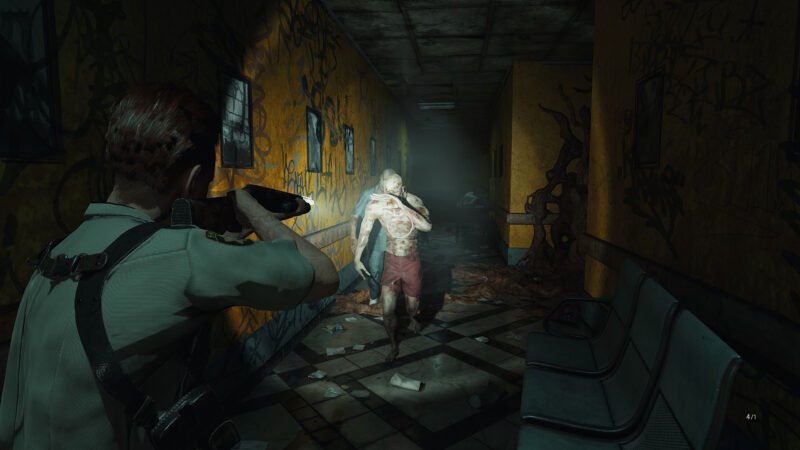
Fear The Timeloop is the debut game from developers TacoEaters, and the Resident Evil 2 inspiration couldn’t be clearer. You play as Sheriff James Cooper, who is slowly bleeding to death in a labyrinthian hospital filled with bloodthirsty monsters. Except the moment his life ends, the cycle begins all over again.
The timeloop mechanic alone makes this game stand out, but there are still many parts of it that will immediately feel familiar to any Resident Evil fan. For instance, its main gameplay involves hunting for clues in a maze-like hospital filled with overly elaborate lock systems, while collecting resources like ammo and healing items. There are even safe rooms where you can hide from monsters, but you have to find video tapes to save your progress. Sound familiar yet?
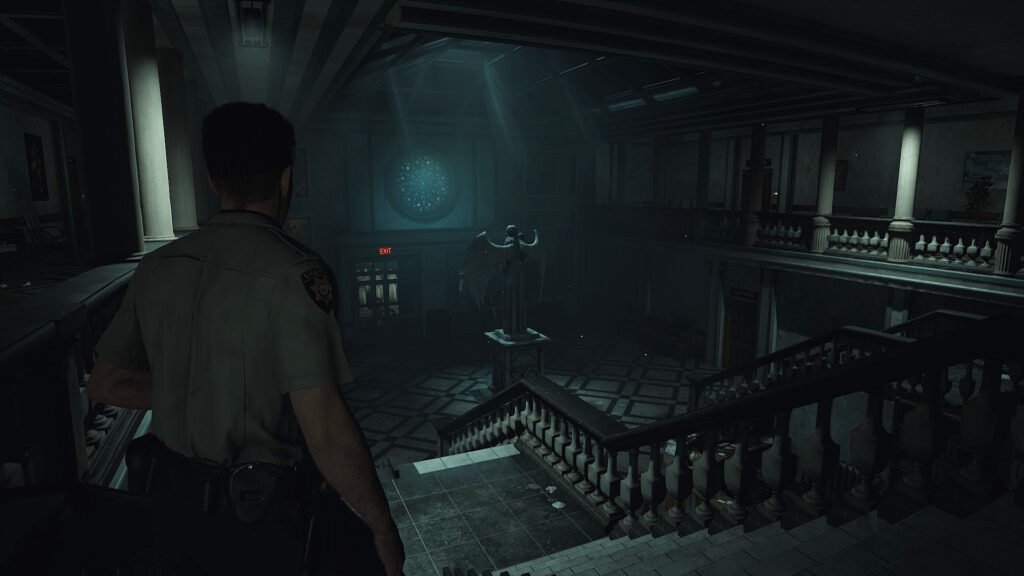
But there’s a lot here that’s new too. In lieu of a traditional health bar, Fear The Timeloop ties everything to the fifteen minute timer around your wrist. If the timer hits zero, you bleed out and the loop restarts. If you get attacked by monsters and bleed out, the loop also restarts. While you can consume healing items that add more time to your clock, or even pause your bleeding for a short while, your timer maxes out at 17:30 minutes and there are no permanent health upgrades available.
There’s nothing that adds more stakes to a survival horror game than having a real-time clock counting down to your death at all times, especially when you have to manually check said clock to see how much time you have left. But at the same time, the game isn’t nearly as punishing about its timeloop as it makes itself out to be.
On normal difficulty, the game gives you a generous amount of Archive Tapes, which you can use to save your progress mid-loop. Even if you die, or have to quit the game midway, you can pick up right where you left off at your last manual save. There are also Red Video Tapes, which serve to progress the story and refresh your life counter back to fifteen minutes. Between those two save systems, I managed to comfortably make my way past the halfway point without dying even once.
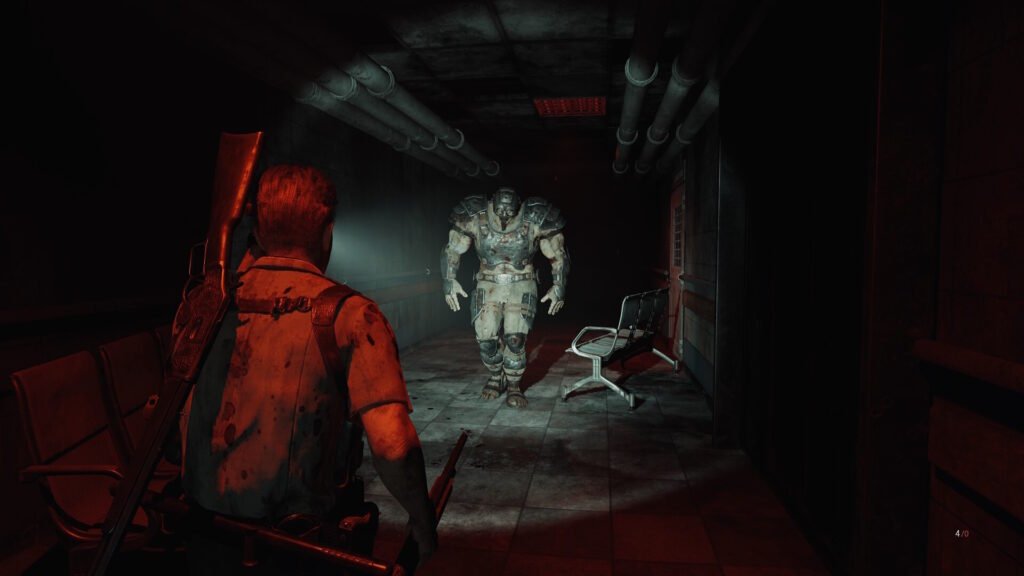
The last few chapters is where the game gets a little rough. Even at the start of my playthrough, there were some glaring visual bugs, but I was largely able to power through them because the game was more slow paced and puzzle-heavy, and any combat had sparse enemies. My only frustrations came from the lack of inventory slots — only around 5-6 total slots excluding weapon slots — which meant I had to run back to my safe room to access my storage more often than I’d liked.
However, as the game becomes more action-oriented in the last few chapters, the difficulty begins to feel more imbalanced and the poor graphics optimisation begins to catch up. For one, you’re working with a narrow field of view and extremely dark surroundings that force you to rely on your flashlight to even make out what’s in front of you. Field of view can’t be adjusted in the settings, and even max brightness wasn’t enough to solve this issue.
I also began to experience frequent frame rate drops during these action sequences, even though I’ve run bigger and heavier games on my PC in the past with no issues. All of this made the last few chapters more of a chore than it should be, especially as the game ups the ante with fewer resources and more unkillable enemies.
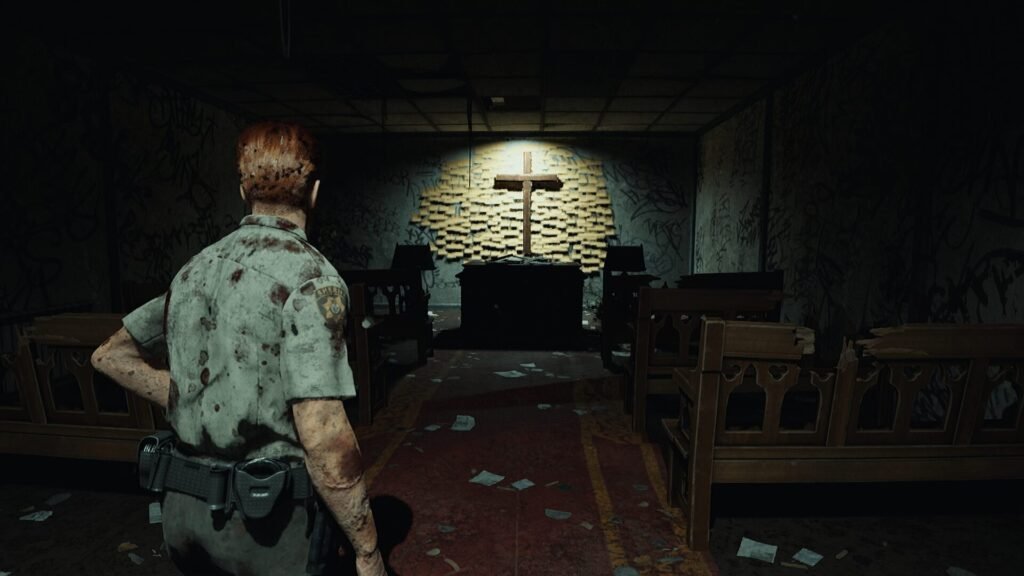
It’s a shame that Fear The Timeloop becomes such a frustrating experience at its tail end, because I enjoyed most of my time with the game. Even with the visual glitches, the game contains an intruiging narrative and innovative mechanics that does a good enough job of differentiating itself from its inspirations. I especially enjoyed how the story was told through radio conversations with the outside world, leaving us wondering until the end whether everything the Sheriff was experiencing was real or just in his head.
That said, players who are thinking of trying Fear The Timeloop should take my review with a pinch of salt. You may be able to overcome the issues I faced through sheer skill, or by lowering the graphics settings even further than I did. Just take note that you can’t change the difficulty mid-game, so pick Easy Mode from the get-go if you want to have an easier time with this one.
Verdict: Good, But Could Be Great
Fear The Timeloop may take plenty of inspiration from Resident Evil 2, but this survival horror game finds its own identity through a unique health system and timeloop mechanic that keeps players on their toes. Even thoughn its execution is iterative, the game shines as a puzzle-survival experience. Unfortunately, poor graphics optimisation becomes a major hurdle as the game becomes more action-oriented in later chapters.