





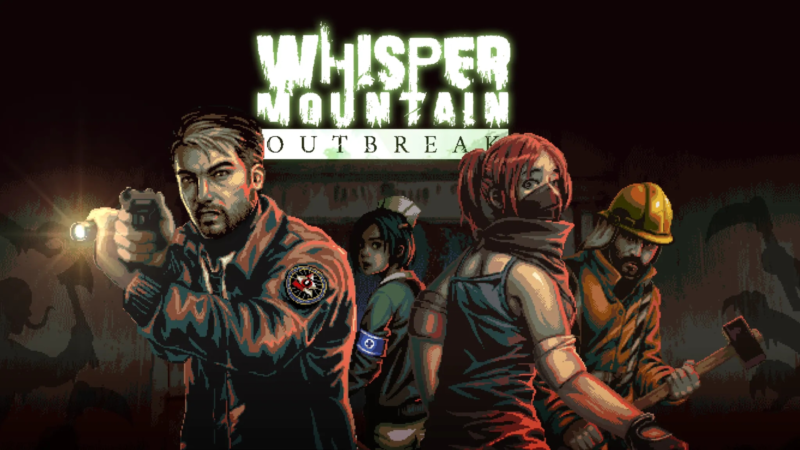
‘Resident Evil meets Left 4 Dead meets PS1-era pixel art graphics’. If you’re like me, that pitch alone would have sold you on checking out Whisper Mountain Outbreak, the newest survival horror game developed and published by Toge Productions. The game draws inspiration from its aforementioned influences to deliver a tense and fast-paced co-op experience – think trying to solve an escape room, but with deadly zombies on your tail to worry about.
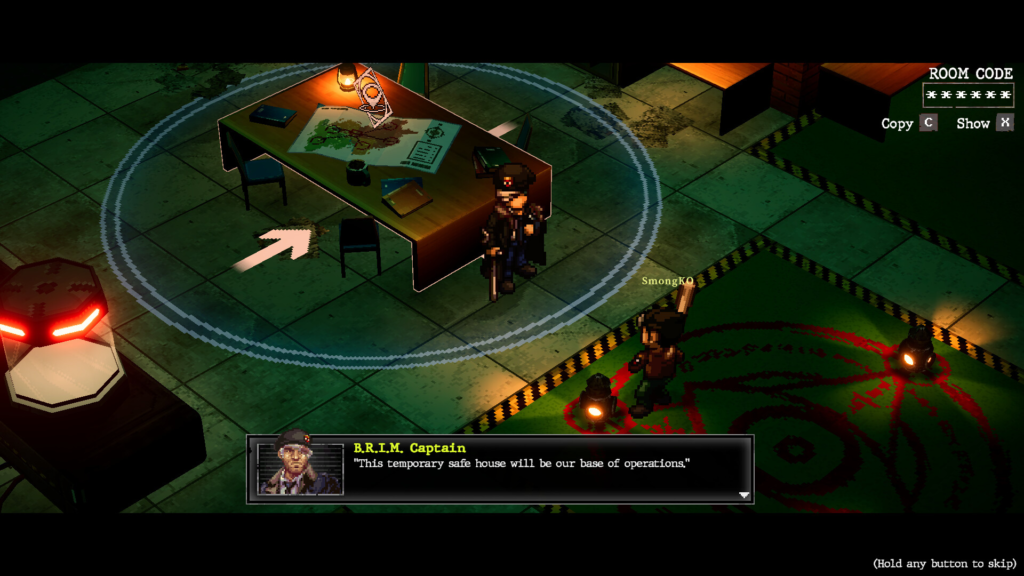
Set in the Republic of Indonesia in 1998, the events of Whisper Mountain Outbreak take place when an evil spirit trapped in the ruins beneath Mount Bisik is awakened by a mining operation, unleashing a terrible curse that turns the residents of the neighboring Daha City into possessed monsters. You play as agents from the Bureau of Research and Investigation of Metaphysics (B.R.I.M.), a government agency built to deal with such paranormal events. To that end, your missions will largely involve searching for artifacts as you explore key locations throughout the city, witnessing the effects of the curse firsthand.
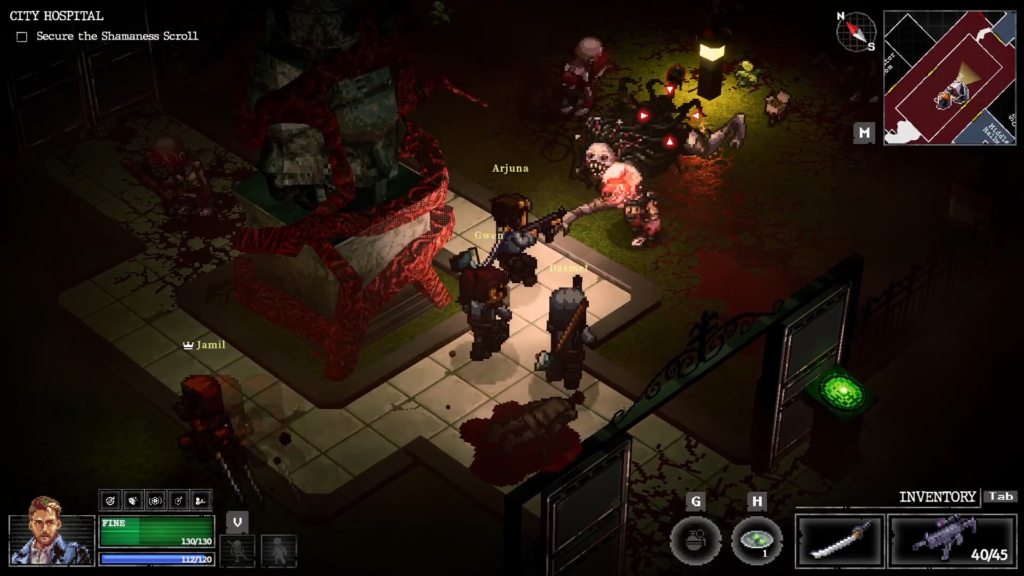
The game’s visual style boasts a blend of 3D environments and pixel art sprites/textures, viewed from an isometric perspective. Much like most apocalyptic settings, the areas you navigate are often familiar environments left derelict – a city hospital, a police station, an abandoned factory. When the walls and floors aren’t covered in demonic runes and circles painted in blood, they’re infested with veinous tentacular growths reminiscent of the Dead Space games.
When it comes to gameplay, one of the biggest challenges when it comes to designing a survival horror game (in my opinion) is walking the tightrope of intentionally crafting ‘the struggle’. How can you make the game cumbersome, but not a slog to play through? How do you give the player enough power to survive the horrors, but also take away enough from them that it feels like they’re making it out by the skin of their teeth?
Whisper Mountain Outbreak achieves this through a variety of familiar mechanics. A stamina bar limits how long you can run and how frequently you can melee. Inventory slots are limited, making you weigh between hoarding ammo, medicinal Green Herbs, or picking up a new weapon. Scarce resources are scattered throughout the map, but the game’s arsenal of weapons and ammo types is varied enough that the one you need might not be found as often as you might like, encouraging you to switch things up on the fly.
Like any good horror game, Whisper Mountain Outbreak does a lot to keep you on your toes. Horde encounters are periodically triggered as your mission drags on. Zombies hide in the ceilings, dropping down when you least expect it. Throughout the map, you might run into special enemies that pose various threats: a giant crawler that strangles you with her hair, a spitter that spews toxic sludge, a hulking beast with a mouth for a torso that threatens to one-shot you (fans of Indonesian ghost stories and folklore may recognise the influences for their designs). Once you complete the mission objective, an endless horde starts coming after you, forcing you to fight your way back to the van and make a narrow escape.
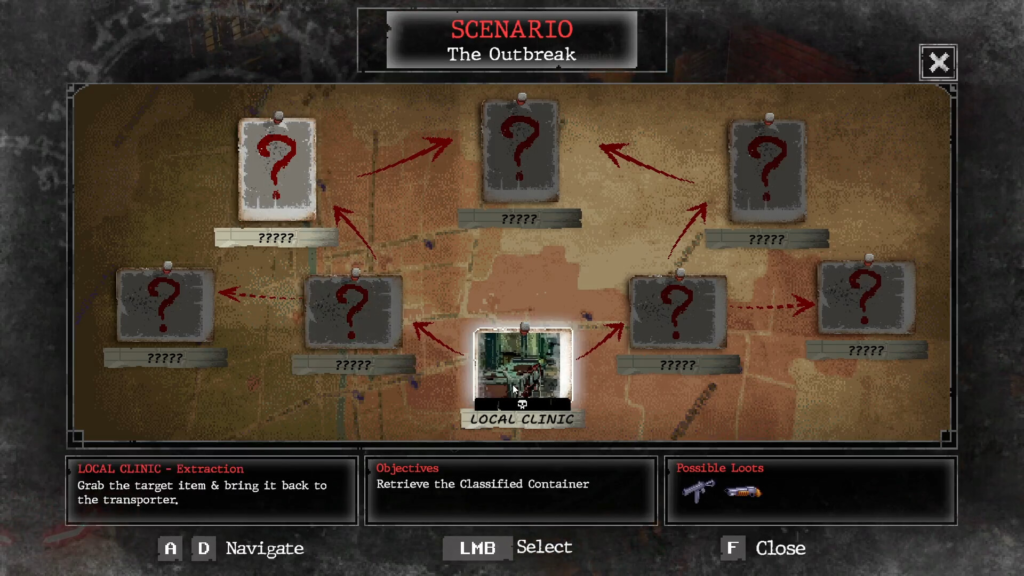
The game also adds a lot of replayability in the way of randomisation, borrowing some roguelike mechanics to keep each run feeling fresh and encourage shifting playstyles. From the moment you load in, the game gives you a choice between three classes, each with their respective tradeoffs (e.g. gain more max health but reduce max stamina, or hit harder but sprint slower). The skill upgrades that you can buy with points from completing missions are somewhat random, so that two players leveling the same skill tree might still end up with slightly different builds. Maps and missions largely remain the same between runs, but you might spawn in at different points and the solutions to each mission’s puzzles are also randomised.
These mechanics all lend to a co-op experience that requires a different level of communication and thoughtfulness compared to a more action-oriented game like Left 4 Dead, and I’m not just talking about the escape room elements. For example, in one of my first runs, our party made it to the final level (an endless wave mode as of early access) only to realise that more than one of us had levelled up the ability to craft medkits but nobody learned how to craft ammo – leading to a very short-lived final battle.
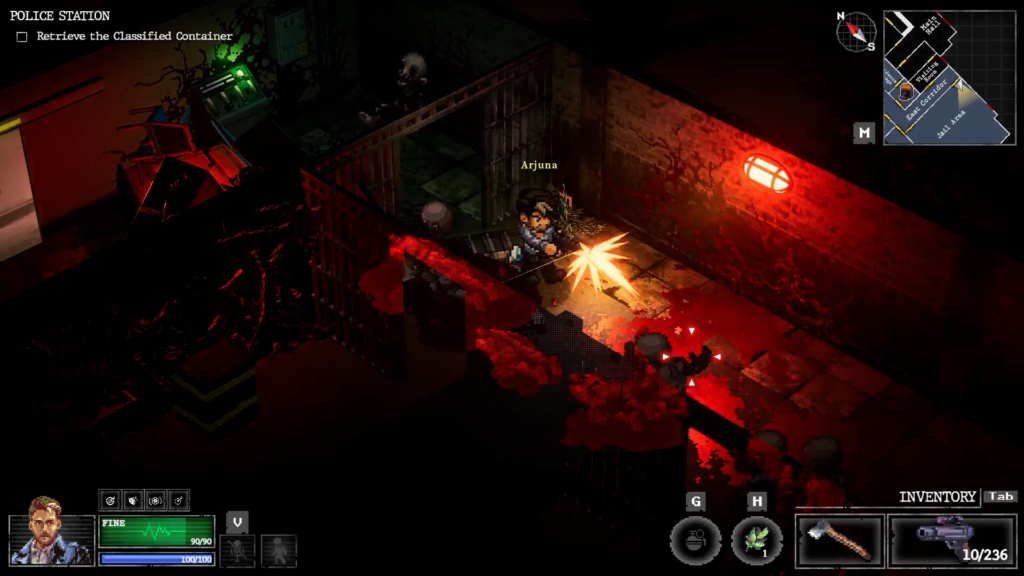
The game is, however, very much built with a co-op experience in mind. Players running the game solo are likely going to have a drastically harder experience, since the amount of resources you can manage alone will be smaller and the game currently doesn’t appear to have scaling or balancing to compensate.
To make up for that, the developers strongly incentivise partying up with the inclusion of a free Friend’s Pass, meaning only one person in the group needs to own the full game for all 4 to be able to play together. (If you happen to be lacking in the friends department, worry not: Toge has also confirmed that a random matchmaking system is in the works, to be included in a future build.)
Verdict: You’re Gonna Wanna Squad Up For This
Overall, Whisper Mountain Outbreak in its current state delivers a solid multiplayer co-op experience and is a strong execution on an incredibly effective core concept: solve puzzles, manage resources, and fight zombies. I can safely say that this is a great choice to pick up and play with friends right now, and I’m excited to see what further content lies in store as the game develops throughout early access.
This article was contributed by Fjordyboy, an avid indie game enthusiast, content creator, and member of The Cham Drinkers. You can find him on various platforms (linked here).