





Going into Pioneers of Pagonia, I had no prior experience with the game itself — but I wasn’t new to the genre. I’ve spent countless hours with city-builders and strategy games like Banished, Frostpunk, SimCity, and RTS classics like Warcraft and StarCraft. I enjoy systems-heavy games, careful planning, and watching towns grow from nothing into something that feels alive.
So when I first booted up Pioneers of Pagonia, my immediate question was simple:
Where does this fit among the city-builders I already love?
After spending a significant amount of time with it, the answer became very clear — Pioneers of Pagonia is one of the most flexible and player-friendly town-building experiences I’ve played in a long time.
A Campaign That Teaches Without Punishing
The first thing I played was the campaign, and that turned out to be the best possible introduction. Spread across seven islands, the campaign slowly introduces mechanics through natural progression rather than overwhelming tutorials. Each new island adds buildings, resources, or challenges in a way that feels intuitive.
Coming from games like Banished and Frostpunk, where early mistakes can snowball into total collapse, this was refreshing. I didn’t feel like I was being tested immediately — instead, I felt like I was being taught. The campaign never dumps information on you all at once, and for once, I didn’t spend the first few hours confused or constantly checking menus to remember what the game told me ten minutes ago.
The story itself is light, but it does its job. It gives context to your journey as you move from island to island, reconnecting settlements and uncovering bits of mystery and magic along the way. While I don’t see myself replaying the campaign often, it serves as an excellent onboarding experience.
Freedom Compared to Other City-Builders
Where Pioneers of Pagonia truly shines is what happens after — or even instead of — the campaign. Unlike Banished, which is a pure survival sandbox with no real “win” state, or Frostpunk, which constantly pressures you with moral choices and looming failure, Pioneers of Pagonia lets you decide what kind of experience you want.
You can turn combat off entirely, adjust enemy difficulty, focus only on objectives, conquer an island by force, or ignore victory conditions altogether and just build.
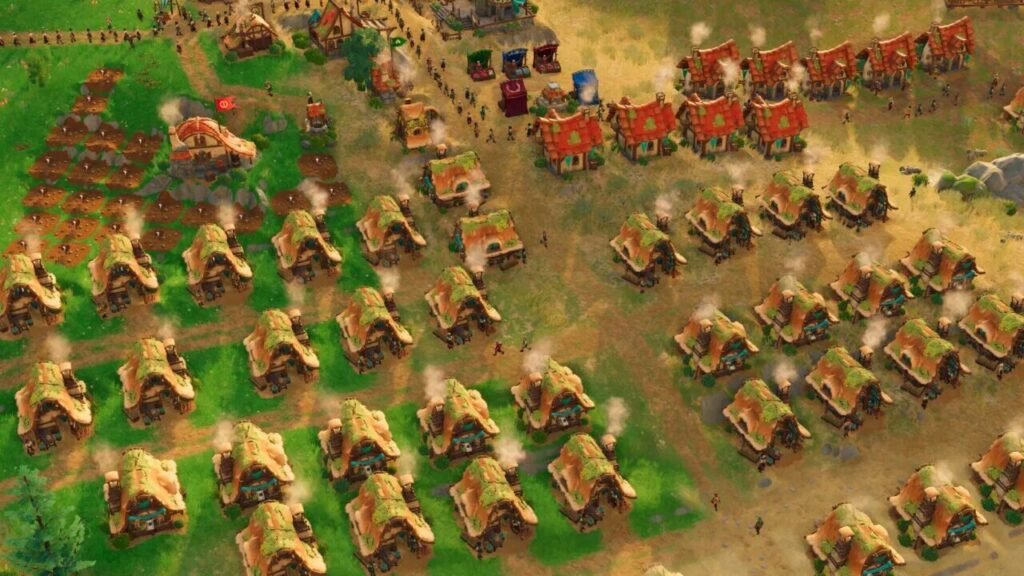
Maps can be customized in size, lighting, population count, and rulesets. There are campaign maps, standalone maps, developer-made challenges, and user-created maps via a built-in editor. Every island feels like a different puzzle — not just visually, but mechanically.
There are nine island types, each affecting resource availability, terrain layout, soil quality, ore distribution, and overall difficulty. This directly impacts how your settlement develops, making map choice a strategic decision rather than a cosmetic one.
Logistics Over Panic
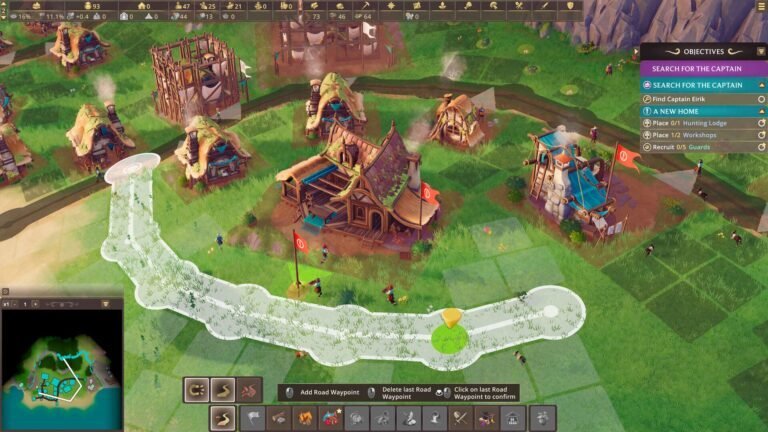
Compared to Frostpunk’s constant survival pressure or Banished’s brutal population cycles, Pioneers of Pagonia focuses more on logistics and flow. You start with basic gathering huts, houses for population growth, and guard towers to expand your borders.
Expansion isn’t instant — borders grow through guards and military presence, which makes territory feel earned. Resources move through visible supply chains, with carriers transporting goods between buildings. Watching the town function (and occasionally clog up due to poor road planning) is oddly satisfying.
Progression is slow, especially early on. Buildings can take minutes to complete at normal speed, and military development is a long-term investment. There is time acceleration, and I used it often, but the game clearly wants you to take things at a steady pace rather than rush optimization like in an RTS.
Military Systems: Optional Depth
Coming from Warcraft and StarCraft, I didn’t expect to care much about the military side — and honestly, you don’t have to. Combat is largely indirect. You don’t micromanage units; instead, you prepare infrastructure and let battles resolve themselves.
There are many unit types and specialists, each effective against specific threats. If you enjoy that layer, there’s depth to explore. Personally, when playing with combat disabled, the sheer number of military buildings felt excessive. Seeing unused structures with “0” indicators made parts of the tech tree feel unnecessary in peaceful runs.
That said, it never forces combat on you, which I appreciate.
Friction Points
Not everything is perfect. A few design decisions stood out as frustrating:
- No universal demolish tool — large redesigns require clicking buildings one by one
- Housing upgrades require demolition instead of direct upgrading
- Terrain like trees and rocks often block ideal layouts, slowing planning
These issues don’t ruin the experience, but they become noticeable during longer sessions or larger settlements.
Visuals, Performance, and Atmosphere
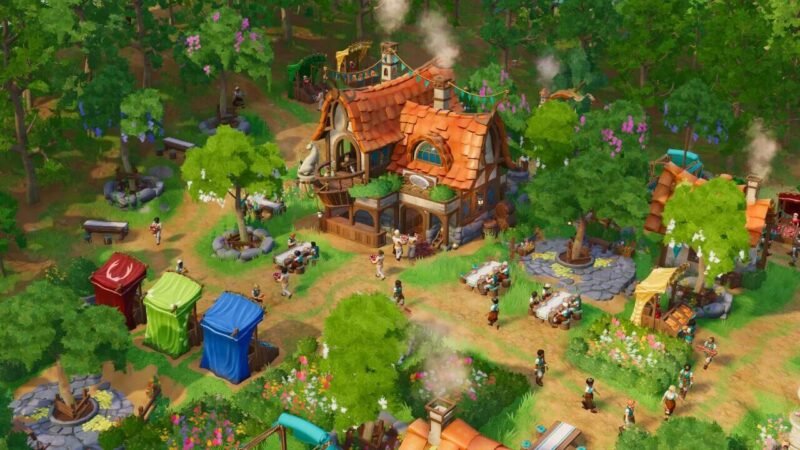
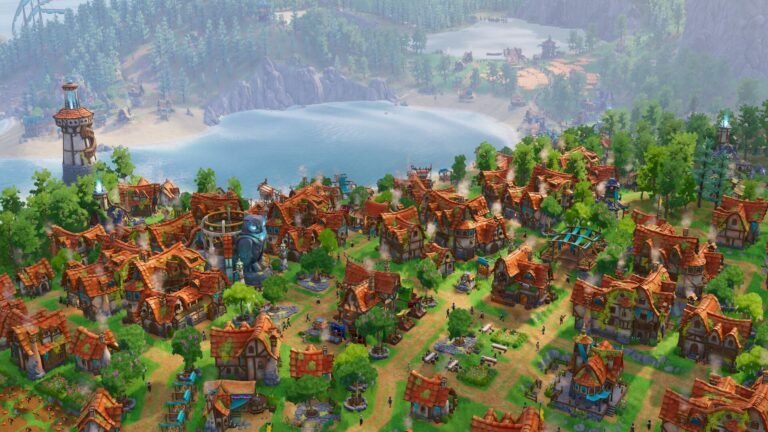
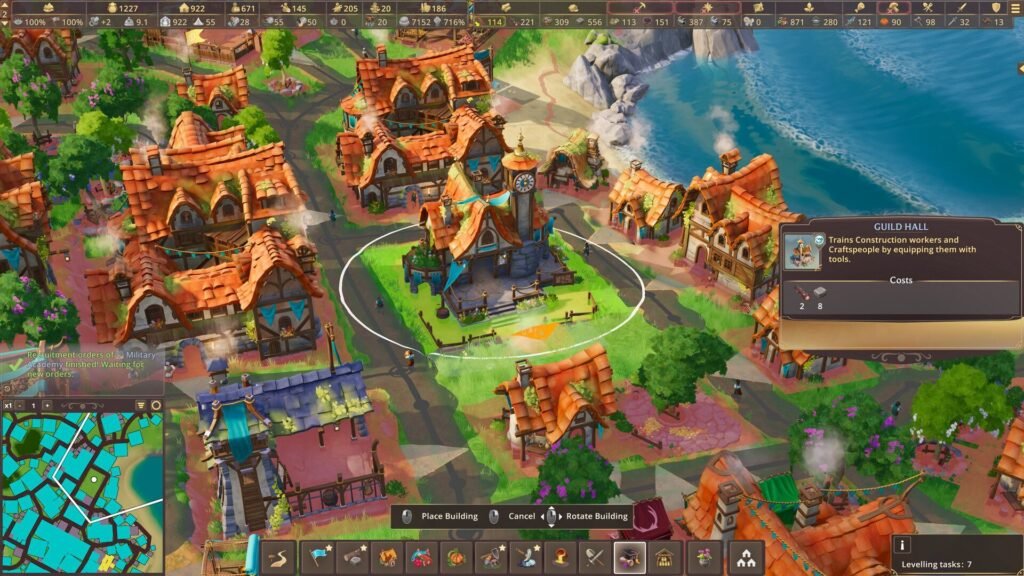
Visually, Pioneers of Pagonia is charming. The art style is colorful and readable, and I often found myself zooming in just to watch villagers work. Seeing exactly what carriers are transporting — berries, tools, stone — adds a sense of life to the town.
Performance-wise, the game runs smoothly and isn’t particularly demanding, though compatibility issues with certain integrated GPUs are worth noting.
Final Thoughts
As someone who enjoys the harsh survival of Banished, the moral pressure of Frostpunk, and the structure of classic RTS games, Pioneers of Pagonia feels like a comfortably deep middle ground.
It doesn’t punish you for experimenting. It doesn’t demand perfection. Instead, it gives you systems, tools, and freedom, and lets you decide how intense or relaxed the experience should be.
If you love town-building games and want something that rewards planning without constantly threatening collapse, Pioneers of Pagonia is absolutely worth your time. Don’t let the cute art style fool you — there’s a surprisingly deep and endlessly replayable game beneath it.