




Master the flipper, surpass your mortal limits and claim your awesome gift at the summit… if you’ve got what it takes. Become a Pinball Wizard in the debut rage quit inducing title from developers Azimuth Studios.
Developed by: Azimuth Studios
Played on: Steam
A review key was provided by Azimuth Studios.
Jump King. Only Up!. Get to Work. These aren’t just titles that I included for the SEO, but also examples of recent games in a steadily expanding sub-genre of rage-inducing platformers known commonly as “Foddian” games. The genre of course derives its name from Bennett Foddy, most well known for his work on QWOP and Getting Over It.
There isn’t a clear cut definition, but I would argue that Foddian games are generally defined by two central conceits:
- The movement mechanics are simple on paper, yet surprisingly complicated in practice
- No permanent progress is guaranteed, and the game is unforgiving – mistakes are costly and easy to make, and you are always at risk of falling all the way back to square one.
Given these criteria, the choice of pinball as a game format for an entry in the Foddian genre seems simply as inevitable as gravity (and the subsequent cursing of it that players of this game are bound to experience).
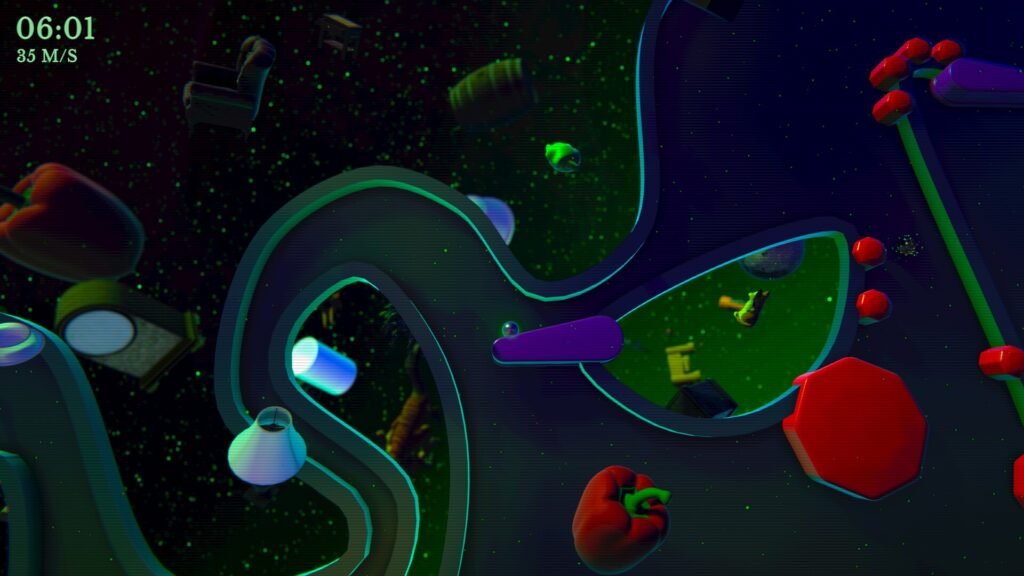
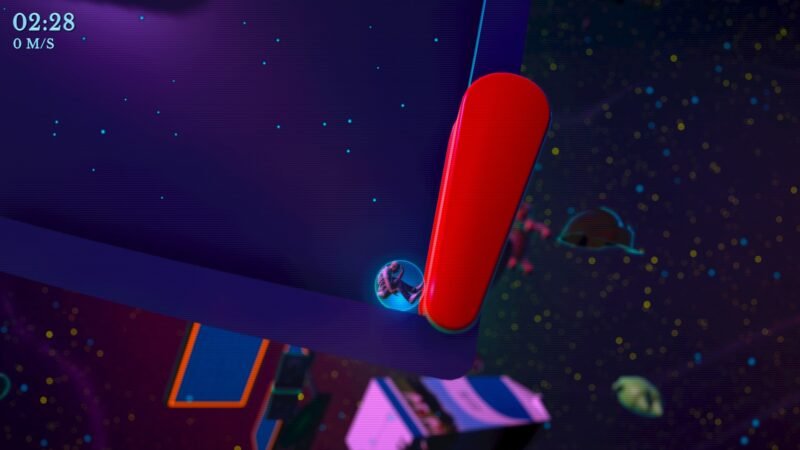
Developed by Devin Henderling of Azimuth Studios, A Pinball Game That Makes You Mad (I’ll call it ‘Pinball’ for short from here on out) delivers… well, exactly what it promises. In Pinball, you are tasked with navigating a pinball over the course of 3 challenging worlds, appropriately titled False Hope (An Introduction), Cruel Reality (The True Test), and Shattered Dream (The Final Awakening).
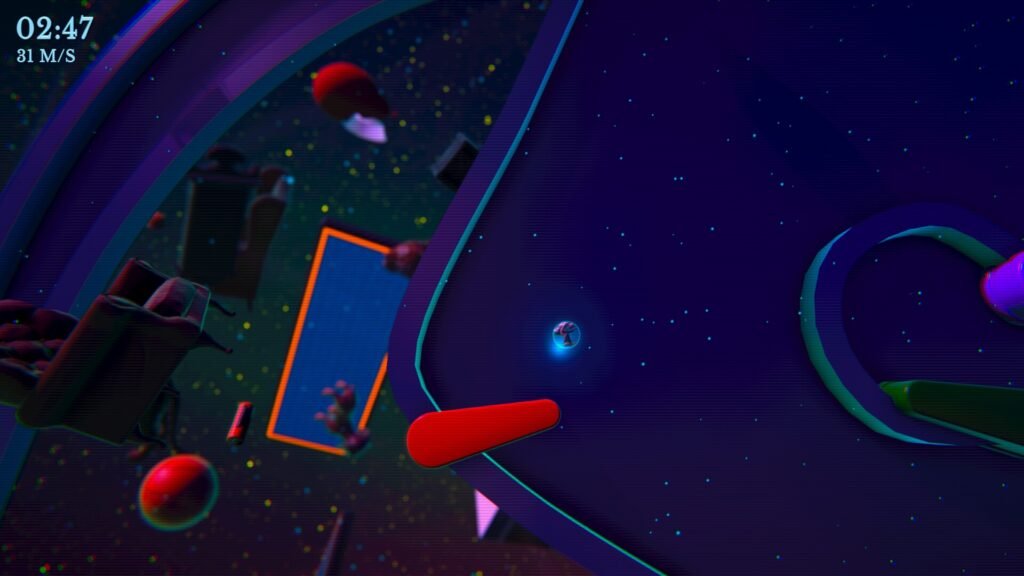
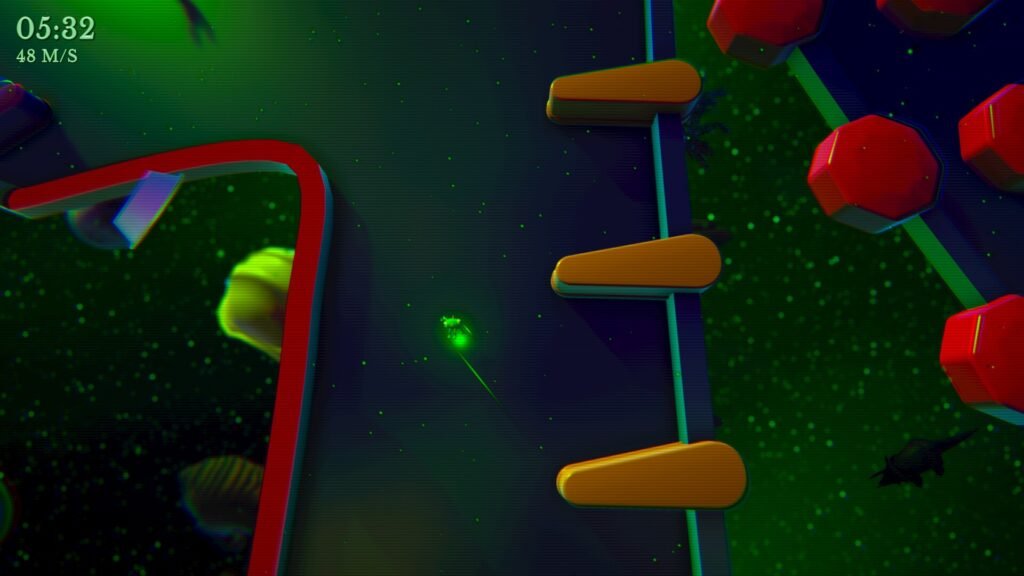
Controls are incredibly simple: you have one button that triggers all of the flippers in the map, as well as directional inputs to “nudge” the ball and shift your momentum ever so slightly. Movement in the game is also fleshed out by supporting mechanics that provide a decent depth to gameplay – flippers may flip at different speeds, colored surfaces can either increase or dampen the power of a bounce, even the way the ball spins can be a factor.
Like any good Foddian, Pinball uses these elements to its advantage against you with each successive section of the map: platforming challenges will have you rapidly ping-ponging between flippers in one moment and balancing a painfully slow see-saw the next. The map design in Pinball serves as an incredibly frustrating (like, in a good way?) test of coordination and timing (not to mention patience).
As a big fan of Getting Over It (I’d go so far as to say it’s one of my top games of all time), it’d be remiss for me to talk about this game without drawing some comparisons. On its surface, Pinball certainly wears its influence on its sleeve, bearing a lot of hallmarks of Getting Over It’s distinctive style:
Physics-based 2.5D precision platforming where you play as a weird little guy trapped in a round thing? Check. Narrator with a British(ish) accent making snide remarks every time you get set back? Check. World design that could be best described as “a haphazardly assembled collection of random garbage”? Check. A relaxing smooth jazz backing track juxtaposed against the significantly less relaxing gameplay? Also check.
However, the games do differ somewhat in tone. In Getting Over It, Foddy’s narration, quotes, and choice of needle drops (while stinging when you’ve just had a big setback) do read as more sincere, albeit a little tongue-in-cheek.
If you stick with the game long enough to look past the blinding rage – granted, a big “if” – and get good enough at climbing to make it through Foddy’s monologue reasonably uninterrupted, the experience is drastically more poignant and reflective. You get the sense that he actually wants you to succeed, to learn something about the value of perseverance and triumph over adversity.
By contrast, my initial impression is that Pinball seems a lot more interested in actively rage-baiting you as a player (true to its name). The narrator here is more eager to revel in your losses of progress – for example, you can trigger dialogue that appears to count your falls (“that was number 38, by the way”).
The cheekier tone certainly leans harder into trying to make you mad – which isn’t necessarily a bad thing, especially if you’re looking to get entertainment value out of your crashouts (e.g. as a streamer or YouTuber). After all, cathartic bursts of anger tend to be a pretty big draw when it comes to content.
Verdict: 10/10 Ragebait, Love That I Hate It
It’s tricky to evaluate the true merits and drawbacks of a game in a genre where frustration and difficulty is very much the point. The criteria becomes, in my view, how well the game navigates the balance between “insanely unreasonable” and “crazy, but kind of a skill issue on my part”. In that regard, A Pinball Game That Makes You Mad walks that tightrope pretty well from a gameplay standpoint. Combined with the snarky narration, the end result is a decently challenging game that delivers pretty much exactly what it promises to do.
Not for the short of temper, unless you’re trying to clip farm.
This article was contributed by Fjordyboy, an avid indie game enthusiast, content creator, and member of The Cham Drinkers. At time of writing, he has beaten Getting Over It over 100 times. You can find him on various platforms (linked here).