



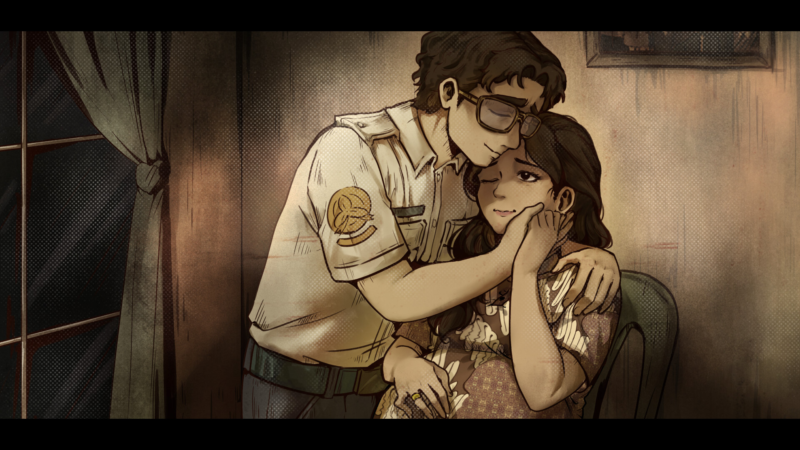
1998: The Toll Keeper Story is the latest title from GameChanger Studio, the developers behind the My Lovely trilogy (My Lovely Daughter, My Lovely Wife, and My Lovely Empress). It tells the story of Dewi, a pregnant toll worker as she endures incidents inspired by the Asian Financial Crisis and the Indonesian 1998 Riots.
We were fortunate enough to speak with Riris Marpaung, game director of 1998: The Toll Keeper Story and the CEO of GameChanger Studio, to learn more about the game’s development.
1. 1998: The Toll Keeper Story is your first foray into a more grounded and realistic setting. What made you decide to dabble in it after having developed mostly fantasy games?
It felt like a natural creative evolution for us. We realized that the design philosophy we developed in our fantasy games, where gameplay mechanics serve to heighten emotional impact, could be applied to a real-world setting.
We wanted to challenge ourselves to capture the intensity and horror not of demons or magic, but of real-life uncertainty. It was daunting to leave the safety of fantasy, but the story of 1998 was one we felt we had to tell.
2. Given the immensely rich history of Indonesia, why center the game around the 1998 Riots specifically?
For me, it isn’t just history, it’s a memory. I lived through the 1998 crisis as a college student. I remember the feeling of being far from family, the confusion, and the visceral fear of being trapped while the city burned.
We chose this specific period because it was a turning point for our nation, but it came at a massive human cost. We wanted to explore that cost, not from the perspective of the politicians or generals who are usually in the history books, but from the perspective of the ordinary people who just tried to survive the chaos.
We also want to ‘teach’ the younger generation, especially young Indonesians, to learn history through this game. Even though the game itself is not a replica of that real event, we must consider the victims of the riot who are still traumatized.
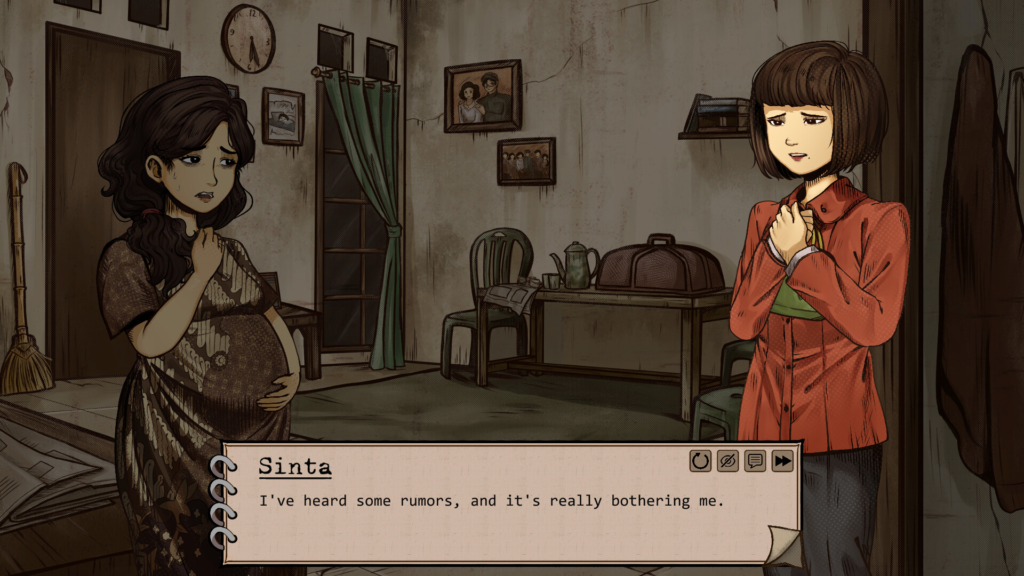
3. We felt that the grounded characters brought an emotional richness to the story. Were they based on anyone you know who experienced the 1998 Riots?
Yes, absolutely. That emotional richness comes from a very personal place. Many of the characters are composites of people I knew, friends, and family members who navigated that time with me.
Dewi, our protagonist, is actually named after my childhood best friend. By grounding these characters in reality, we wanted to make sure the players weren’t just managing resources for “NPCs,” but feeling the weight of protecting people who feel real, fragile, and important.
4. What was the most challenging aspect of developing such an emotionally heavy game?
The biggest challenge was balancing authenticity with gameplay. We made a conscious decision early on that we would not be making a documentary. We created the fictional country of “Janapa” to give us the freedom to explore the emotional truth of the events without being tied to specific, literal timelines that might constrain the player’s experience.
Walking that line was difficult. We had to design moral choices that felt genuinely painful and unfair, like choosing between your integrity and feeding your family, without it feeling like we were exploiting the tragedy. We had many intense debates within the team about how far we could push the player’s struggle while (again) remaining respectful to the victims of the real events.
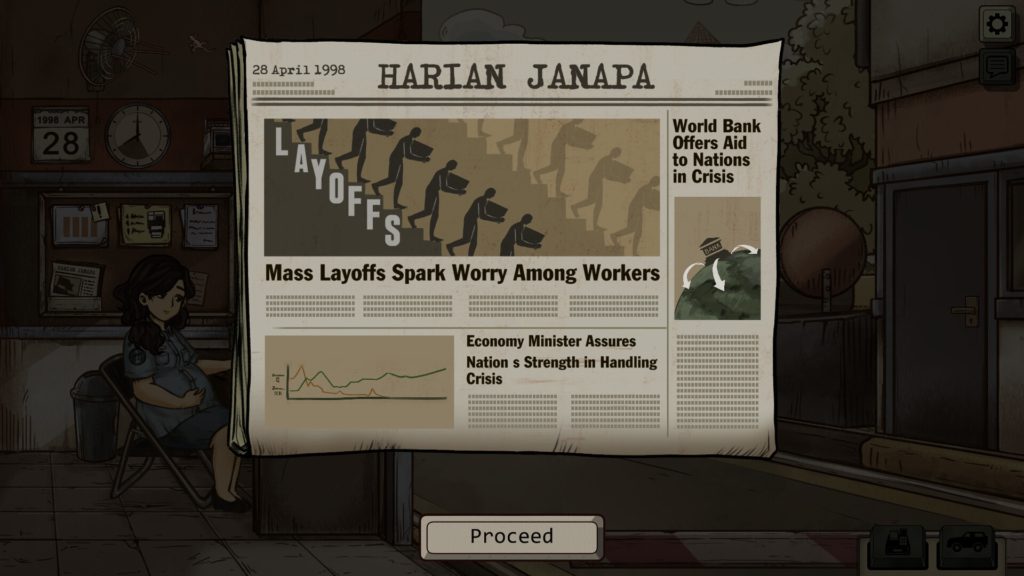
5. The art style appears very warm, yet the story is dark. What made you decide to go with this art style for the game?
That contrast was intentional. We didn’t want a gritty, hyper-realistic look. Instead, we wanted the game to feel like a memory or an artifact found in your storage garage.
We used a mix of dot textures, an old-paper aesthetic, and a sepia filter to mimic the limitations of printed materials from the late 90s, like old newspapers, flyers, or government documents.
The “warmth” isn’t meant to be happy. It’s meant to feel aged and nostalgic, grounding the player in the specific texture and atmosphere of that era.
6. How has the reception been from Indonesian gamers?
It has been incredibly moving. We’ve been overwhelmed by the support. A significant portion of our players are from Indonesia, and seeing the game break into the Top 10 Paid Google Play Games charts locally was a huge honor for us.
But more than the numbers, it’s the messages we receive. Players who lived through it have told us the atmosphere brought them right back to that time. Younger players have told us it helped them understand what their parents went through. Knowing that we successfully bridged that generational gap is the best reception we could have asked for.
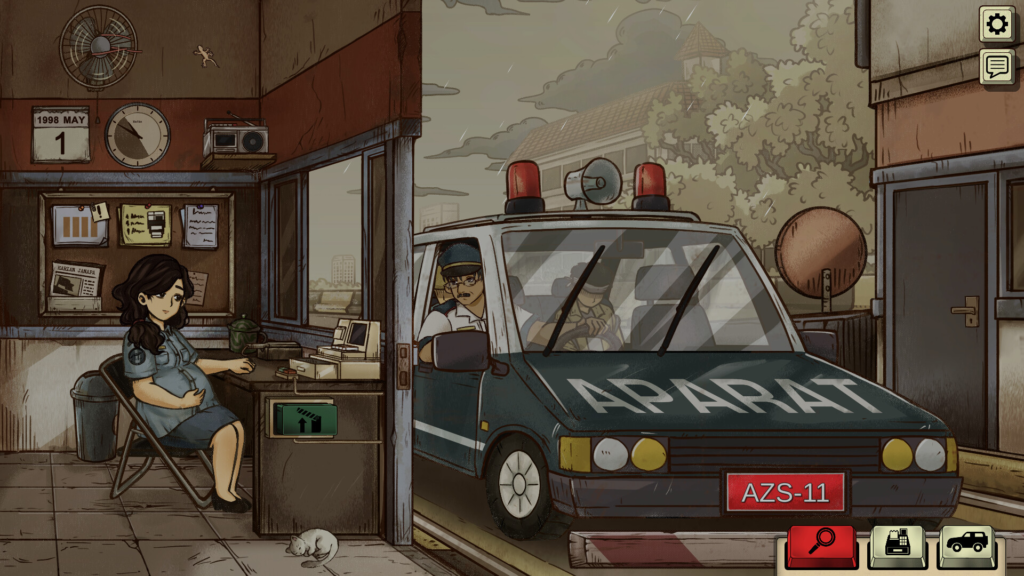
7. What message do you hope Indonesian and non-Indonesian gamers will take away with them after playing this game?
My co-writer, Pladidus, has a saying about the game: “This is a story about an ant trying to survive while the elephants are fighting.” That is the universal message we hope everyone takes away.
Whether you know Indonesian history or not, we want you to feel empathy for the “ants”, the ordinary people caught in the gears of history. We want players to understand that true courage isn’t always about fighting a war. Sometimes, it’s the quiet, desperate resilience of a mother doing whatever it takes to ensure her child has a better future.
8. Following this release, can we expect more games like this from your studio?
We learned a tremendous amount from developing 1998: The Toll Keeper Story, especially about handling sensitive, real-world themes. However, the future isn’t fixed. We love exploring different types of games, but we are also pragmatic. Before we commit to a new project or genre, we need to ensure two things: that we are fully comfortable developing it, and that we are certain of its potential for success. So, we will see where our creativity takes us next.
1998: The Toll Keeper Story is now available on Steam and the Google Play Store. You can also read our review of the game here.