

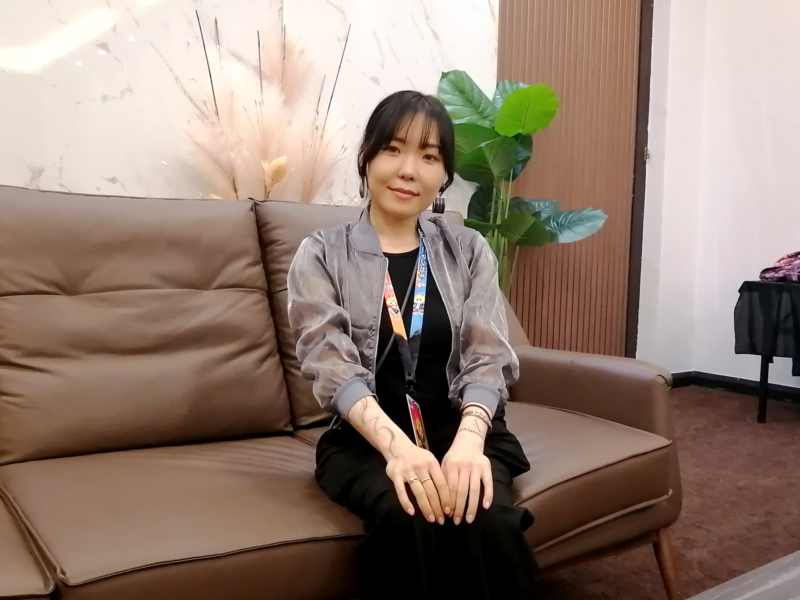
At AniManGaki 2025, we had the honour of interviewing MIT Photography, a cosplay photographer well-known for her unique conceptual and storytelling-based approach to cosplay photoshoots. Having last interviewed her in 2019, it was exciting to catch up with her and get her thoughts on some of the latest developments in the field.
Disclaimer: The following interview has been edited for clarity and ease of reading.
What is your creative process before a shoot, and how do you plan, such as storyboarding or visualising the concept?
First things first, I study about the character and their background thoroughly, and I think about my own interpretation, such as what kind of emotion or background or history. Most of the time I see more of the unwritten or unseen past and future that I really want to portray for the character, so I think about it and verbalise it, and after that I make a composition.
So it takes about two or one weeks, or at least I will prepare one or two weeks beforehand, and then if I need some props or anything like that, I buy it or make it, and then go to the photoshoot.
Can you share a bit of news of your most exciting recent project to all of us?
Well, the most recent exciting project is getting invited here (laughs). So I’m really honoured to come to Malaysia. Actually this is my second time, but I really wanted to come to Malaysia again to have a workshop or exhibition. Unfortunately this time I don’t really have an exhibition, but I would like to have one in the future.
If someone has about 100,000JPY (RM3,000) and they want to start photography, what kind of gear or advice do you have for them?
I think I would recommend them to buy an APS-C camera, which is not as high-end compared with a full-frame, because it’s really good as a starter to understand photography. Like if you purchase a full-frame camera and lens, it is super expensive, so I don’t recommend it, since sometimes you might change to being a cosplayer, or maybe just want to quit.
So I would go for an APS-C camera first, and then maybe buying a light flash, which is more portable and easy to utilise.The important thing is getting used to the camera and getting used to the lighting setup from the basics, so I would recommend those kind of things.
What makes you feel inspired to focus on cosplay photography specifically?
Actually, currently I do cosplay. I don’t know if you know, but I cosplay one time or two times a year. I rarely cosplay now, but before this I was a super active cosplayer, and I’d go for photo shooting with my friends. So we’d shoot each other, and my friends would shoot me. But I found myself really thinking about how I have a really ideal photograph in my mind, and even if I asked a photographer to shoot it for me, I still needed to tell them what kind of angle I want, or what kind of lens we need to use.
But, you know, despite the inputting and outputting, no one can get 100% accuracy from my brain, because the photographer has their own creativity. When they shoot through their camera, they actually have their own taste. Even if I persuade them, “we just shoot with this accurate composition”, it’s still not perfect. So, I thought, okay, why not? I can take the camera, and instead of doing a cosplay, maybe I can create my own idea for a shoot, cast the model and make their costume. That’s the reason I became a photographer.
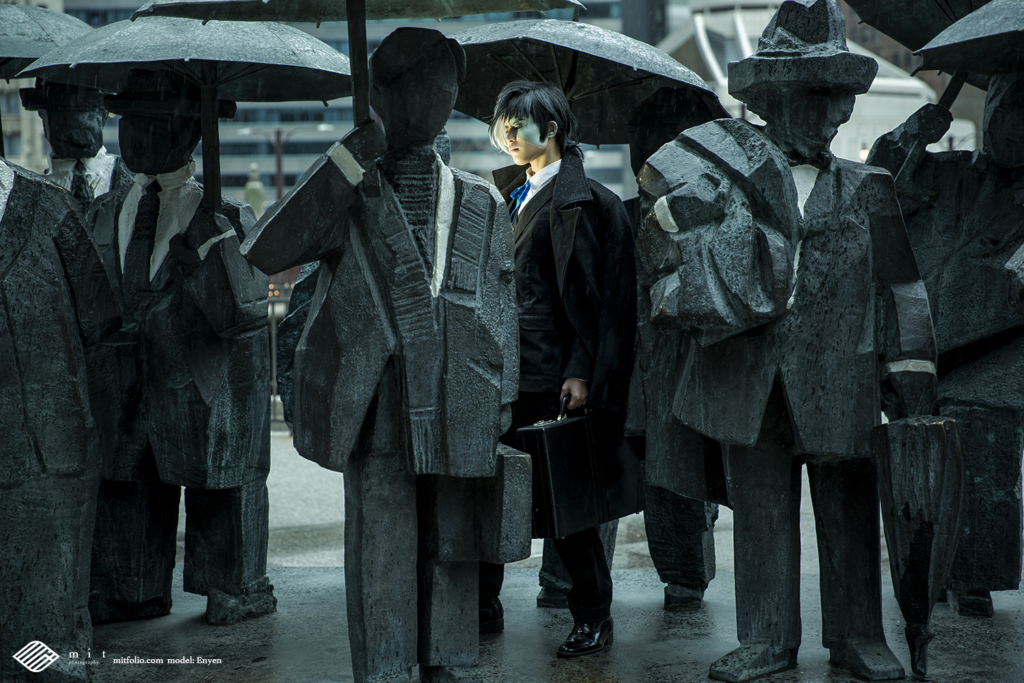
Between outdoor and indoor lighting, which do you find more challenging, and how do you navigate those challenges?
Well, the answer is outdoor shooting, because we need to chase the natural lighting as time passes. Also, the weather is really unstable, so sometimes we expect to go for a sunny shooting, but in the end it turns out on the day it’s raining. You have to deal with it, and we really need to get used to those kind of unexpected situations.
Even if we go inside for the shooting, let’s say if we go to a studio, most of the studios – maybe 50% or 60% of them – have different decorations than they have on their website. So even if we research beforehand on their website, sometimes when we go there, we find out most of the decorations have been changed. It happens all the time.
But what I do is to just think about what can we do right now. Even though we prepared for a a sunny shoot, if it rains, we can still do something creative, using for example the reflection of the water. Or using the rain, and, you know, flashing the light to make the rain kind of light up. So you don’t have to just stick to your original plan, and you don’t have to give up.You can just use a small detail to find some creative ideas and get good results.
Do you see photography more as an art, science, or a mix of both?
A mix of both, because photography is creative, but also a science. Because we need creativity, but also technique. The balance is really important. If you only have the technique, your work will be a bit boring, more like a textbook style. Which maybe looks clean, but there’s nothing creative there.
If you have tons of creativity, but you lack skills, then you really need to improve your skills so that you can actually control your intentions, and then you can actually more easily convey what you really want to.
Among your exhibitions and all the photoshoots you have done, has there ever been a funny moment or picture that you have taken by accident?
Well, this is not about photography, but in 2017 to 2018, I travelled around the world to meet models in each country that I had met on Facebook and Instagram. It was kind of a worldwide travel shooting with cosplayers around the world, and one of the stops was Israel. But before Israel, I was in Turkey, and on the last day of Turkey I had to use my cash to fly to the next country, and I bought some street snacks, but it gave me food poisoning.
And then after that, I had to fly to Israel, where we would be staying for only three days, and on the second day I had a photoshoot outdoors. But, you know, if I’d said “sorry, I got food poisoning”, the model would have been so worried, and maybe said “okay, don’t worry, we have to cancel”, or something like that. But I didn’t want to do that, because it was a rare opportunity since we’d only be staying three days in Israel. So I hid it.
But, actually, you know, once you go to the photo shooting, it’s kind of like when you eat a star in Mario, you don’t really feel the pain. It was like that kind of situation. I was really like, “okay, be patient, just click the shot because you already prepared the composition”.
It’s your second time to Malaysia. Did you find anything that impressed you in Malaysia, and any things that you’d love to try to capture here?
Well, in Malaysia, what is really interesting is the diversity. All the cultures are mixed together, so we can have really delicious food here. I really love it, especially the coconut, and also I love pandan as well.
And when I see the Malaysian cosplay community, I found that because of the religion, people sometimes wear cloth (hijab) on their heads, and used it to represent a wig. Using the coloured cloth to make some kind of hair, it was so inspiring to me. It was really nice to see that even if you are in a religion, and you focus on the religion, you can still have the creativity and passion to express the character in many ways. That’s really nice to see, it seems so interesting.
Do you feel excited about blending photography with future technology, like AR or AI?
Yeah, I really do. Honestly, I think it’s good to utilise new techniques. It’s good to refer to the old traditions, but you also need to input more like new technology such as AI. So I’m not really picky about AI, and I can really appreciate the new technology. I haven’t actually used AI in my photography yet, but I want to try some in some way.
What can photography capture about people that AI still cannot?
Anything you should feel, like the person’s interpretation, emotion and will. AI is one of the biggest knowledge boxes; so many people that are educated about AI will tell you it’s a huge knowledge box. But that is not someone’s will or one person’s interpretation. If you want to extract just one person’s interpretation, it’s hard as AI might not understand that. Only a human being, a living thing like us, can manipulate our feelings and will, and how to convey your interpretation. That is really exciting to see.
What is your opinion on using AI for photo editing?
I’ve tried one of the AI tools for photo editing. It’s called “Evoto”, and it’s really good for editing for posting on websites. Though I think personally, it still has some room to improvement for print, where I’d need to edit it some more. But if it’s just for posting on the internet, it doesn’t matter. It’s really, really creative and easy to use, so I really want to use those kind of things to save my time.
Is there a cosplay character you ever want to photograph one day?
Actually, I’m trying to get through my bucket list. But you know, since I make the costumes, it really takes time. Currently I’m so into Genshin Impact, and my husbando is Diluc Ragvindr (laughs) but because I do casting, and I’m really picky about casting, I have no clue if it’ll happen.
We’d like to once again thank AniManGaki and MIT Photography for the interview opportunity! You can find more of MIT’s work on Facebook, Instagram, and her official website.